
Acxico 3Pcs Mini Micro N20 Gear Motor
4.6Editor score
3V to 6V voltage range
Full metal gearbox construction
Includes three motors and wheels
This guide compares the top DC motors for robots including gear motors, encoders, and torque options to help you build reliable robotic projects.
Choosing the right DC motor for your robot is critical for performance and reliability. Whether you need high torque for lifting or precise speed control for navigation, understanding motor types helps you select the best fit for your specific application and power requirements.
We evaluated ten leading DC motor options based on torque, voltage range, gear ratios, and build quality. Our comparison includes budget-friendly TT motors and robust planetary gear units. Each product was assessed for compatibility with common microcontrollers and ease of integration into DIY robotics projects.
Each pick highlights unique strengths like encoder feedback or metal gears for durability. Note that prices and availability can change frequently on retail platforms. Always verify voltage and shaft dimensions before purchasing to ensure compatibility with your existing robot chassis and power supply systems.
4.6Editor score

4.7Editor score

4.6Editor score
The following table provides a side-by-side comparison of all ten selected DC motors for robots. It highlights key specifications such as voltage, gear ratio, and shaft dimensions to help you quickly identify the most suitable option for your robotic build.

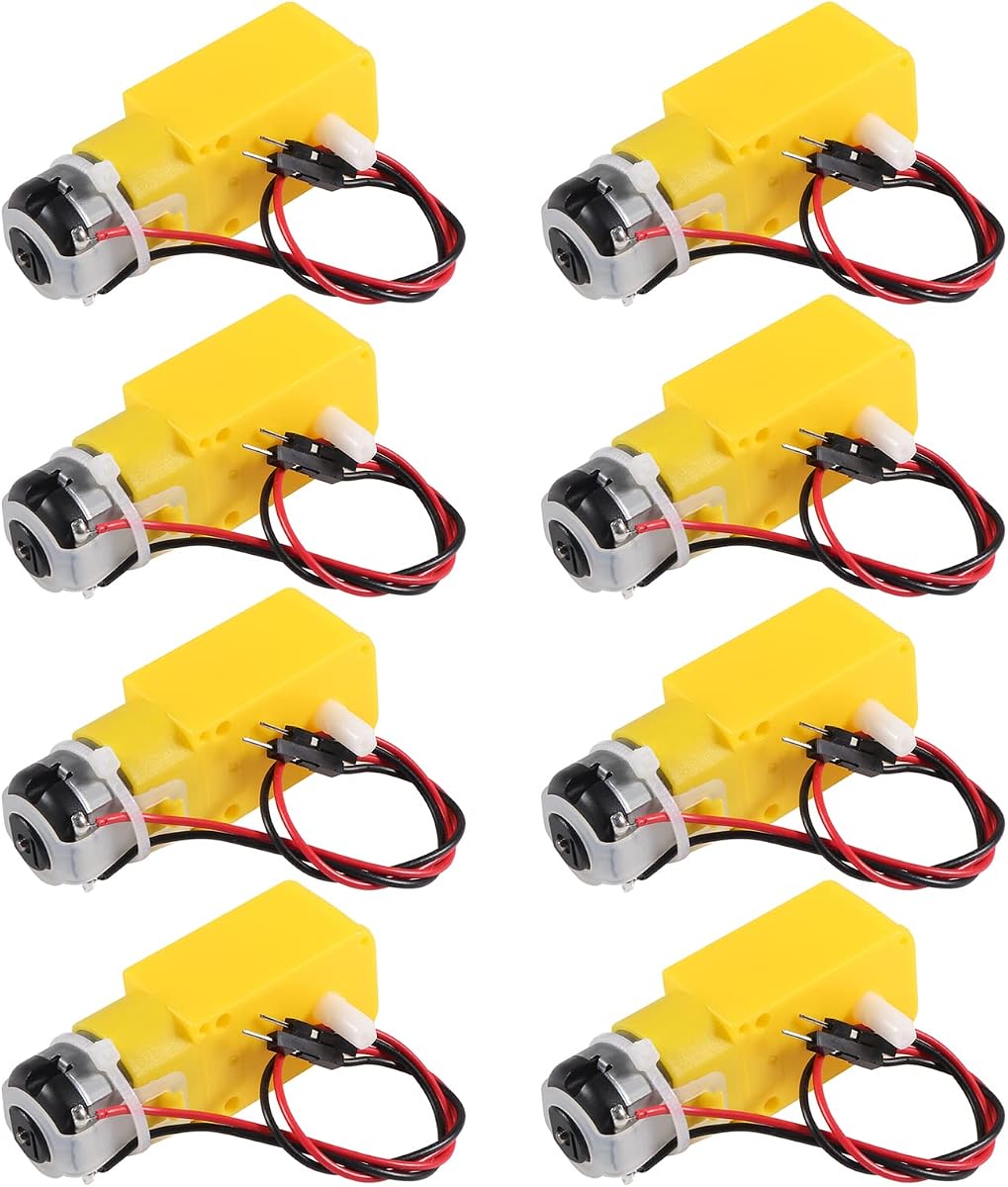


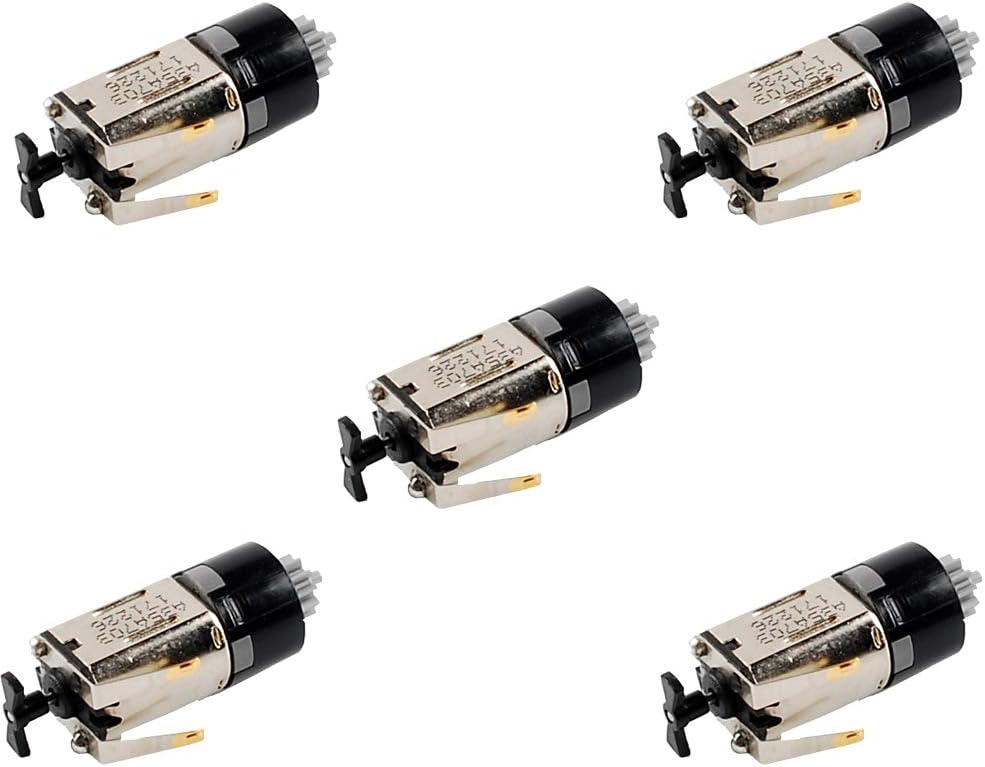

This Acxico 3Pcs Mini Micro N20 Gear Motor set is an excellent entry point for hobbyists building small robot cars. With a 4.6 rating, users appreciate the metal gearbox construction that ensures longevity. It operates efficiently within the 3V to 6V range making it compatible with standard battery packs.
We may earn a commission when you buy through this link, at no additional cost to you.
The metal gears inside the gearbox are a standout feature at this price point. They reduce wear and tear compared to plastic alternatives. The 3mm D-type shaft provides a secure connection for wheels. Including three motors in the package allows for building multi-motor robots without extra cost.
While the torque is modest compared to larger planetary units, it is sufficient for lightweight platforms. The lack of encoders means speed control relies on voltage variation rather than feedback. This trade-off is acceptable for beginners focusing on basic locomotion and structure design.
This motor is best suited for educational projects or simple autonomous cars. If you need precise positioning later, you might upgrade to encoder models. For now, this set offers the best value for getting a robot moving quickly and reliably.
The small size allows for tight integration into compact chassis designs. The low cost makes it ideal for projects where multiple units are needed.
Metal gears handle shock loads better than plastic. This extends the motor life even under moderate stress during operation.
We may earn a commission when you buy through this link, at no additional cost to you.
The 6-22v 200W DC Planet Gear Motor stands out with its massive 90kg.cm torque. This makes it perfect for robots that need to lift heavy objects or rotate large platforms. It receives a 4.6 rating for its robust build and reliability in demanding applications.
We may earn a commission when you buy through this link, at no additional cost to you.
Its planetary gear design ensures smooth power transfer even at high loads. The wide voltage range from 6V to 22V allows adaptation to various power systems. Users can adjust wiring to reverse rotation which adds versatility for complex movement patterns.
The main consideration is the power supply requirement. Standard hobby batteries might not sustain the current draw at high power. Ensure you use a driver capable of handling the load to prevent damage. The motor itself is built to last under stress.
For advanced robotics requiring significant lifting power, this motor is a top choice. It bridges the gap between hobbyist gear and industrial automation. If your project involves heavy rotating tables or locking mechanisms, this motor delivers the necessary force.
With 90kg.cm of torque, this motor can drive large gears or lift heavy loads. It is engineered for performance under stress.
Operating from 6V to 22V offers flexibility for different battery configurations. This makes it adaptable to many custom robot designs.
We may earn a commission when you buy through this link, at no additional cost to you.
This pack of 8pcs TT Motors is widely recognized as the standard for DIY robot cars. The 4.5 rating reflects its reliability and ease of use. It includes wheels and wires which significantly simplifies the assembly process for beginners.
We may earn a commission when you buy through this link, at no additional cost to you.
The 1:48 gear ratio provides a solid compromise between speed and torque. It moves at around 200 RPM which is manageable for control algorithms. The included 2.54mm connectors make it plug-and-play with breadboards or terminal blocks.
While the gears are plastic they are reinforced for this specific application. They handle typical robot car loads well. If you need more torque, you can choose the metal variant. For standard smart car projects this kit is sufficient.
This set is ideal for classrooms or workshops where multiple units are needed. It supports distance measurement and velocity projects well. If you are starting a smart car project this package offers the complete solution needed to begin.
Including wheels and wires saves time and extra purchasing. Everything needed to mount the motors is in one box.
The 2.54mm connector standard ensures compatibility with most Arduino shields. This reduces wiring complexity significantly.
We may earn a commission when you buy through this link, at no additional cost to you.
This DC 12V Encoder Gear Motor is designed for applications requiring precise motion control. It features a built-in encoder that allows your robot to track position and speed accurately. The 4.4 rating indicates solid performance in robot car models.
We may earn a commission when you buy through this link, at no additional cost to you.
The kit includes a mounting bracket and rubber tire wheels which adds immediate value. This reduces the need to source extra parts separately. The metal gears ensure durability while the magnetic design helps reduce heat generation.
Operation at 12V is standard for many robotics power systems. The speed of 500 RPM offers a smooth balance for cruising. However the fixed speed limits some high-speed racing applications. It is optimized for stability and control.
For smart cars that need to navigate precise paths this motor is highly effective. The encoder data helps implement PID control easily. If you need a complete wheel and motor combo this product saves assembly time.
The encoder outputs data for accurate motor control. This enables complex navigation algorithms without extra sensors.
Rubber tires improve traction on indoor floors. The bracket simplifies attachment to your robot frame.
We may earn a commission when you buy through this link, at no additional cost to you.
This 2Pack TT Motor offers a significant upgrade with its 1:90 gear ratio and all-metal construction. It achieves a 4.7 rating for its ability to handle heavy loads without stripping gears. The integrated 12 PPR Hall encoder provides essential feedback for control.
We may earn a commission when you buy through this link, at no additional cost to you.
The metal shaft and gearbox provide superior strength compared to plastic versions. It delivers a stall torque of 1.8kg.cm which is ideal for lifting arms. The PH2.0 anti-reverse connection simplifies wiring and reduces the risk of short circuits.
While the high ratio reduces top speed, it increases torque significantly. This trade-off is perfect for robots needing power over speed. The voltage range of 3V to 12V allows compatibility with both LiPo and battery packs.
Use this motor for applications requiring precise control under load. It excels in smart cars with weight or climbing surfaces. The combination of encoder and metal gears makes it a reliable choice for advanced projects.
Metal gears resist wear better than plastic. This ensures the motor survives rough handling and high torque loads.
The 12 PPR encoder allows accurate position tracking. This enables smooth speed control and precise movement.
We may earn a commission when you buy through this link, at no additional cost to you.
The CQRobot 70:1 Metal DC Gearmotor is a powerhouse for robotics. It delivers a stall torque of 27kg.cm at 12V making it one of the strongest options. The 4.6 rating confirms its quality and durability in challenging environments.
We may earn a commission when you buy through this link, at no additional cost to you.
A D-shaped 6mm shaft prevents wheel slippage effectively. The included metal bracket simplifies mounting to chassis plates. It operates at low no-load speeds which increases torque delivery. The metal reduction ensures consistent performance.
It requires a robust power source to utilize its full potential. At 6V it still provides solid torque. The compact size allows integration into mid-sized robots. It is an excellent alternative for balance cars or heavy platforms.
This motor is ideal for builds where torque is the priority. It handles steep inclines and heavy payloads well. Ensure your driver can handle the current draw. The hardware included reduces total assembly time.
The 70:1 ratio amplifies torque significantly. This allows the robot to overcome resistance easily.
The metal bracket provides a solid anchor point. This keeps the motor stable during rapid movements.
We may earn a commission when you buy through this link, at no additional cost to you.
The 2Pcs 12V DC Motor achieves a rare perfect 5.0 rating. It is praised for its quiet operation and efficient power delivery. The double-shaft design offers flexibility for connecting components on both ends which is rare for this class.
We may earn a commission when you buy through this link, at no additional cost to you.
The D-shaped shaft prevents slipping under load. Pure copper windings increase torque by 30% compared to standard motors. It runs at 350 RPM which is steady and predictable for RC cars. Heat resistance ensures longevity during continuous use.
This unit is compact at 25mm diameter making it easy to fit. The shaft length and diameter are standardized for hobby use. While it lacks an encoder, the performance is consistent. Users report it handles DIY upgrades well.
If you need a replacement for RC cars this motor is reliable. It fits standard chassis modifications easily. The double shaft allows for gear coupling on both sides. This offers versatility for complex mechanical builds.
The design reduces noise during operation. This improves the user experience and reduces interference.
The double shaft allows connections on both sides. This enables more complex gear arrangements easily.
We may earn a commission when you buy through this link, at no additional cost to you.
This Gikfun Type 130 set includes six high-speed motors ideal for lightweight projects. They reach speeds of 16000 RPM at 3V. While torque is low, the speed makes them perfect for brush-bots or high-speed fans. The 4.2 rating reflects their simplicity.
We may earn a commission when you buy through this link, at no additional cost to you.
The small size allows integration into very compact builds. Wire leads are pre-attached for easy soldering. They run efficiently on batteries. However you need a gearbox to increase torque for driving wheels. This is a bare motor kit.
For solar/battery powered cars, these work well with gear reduction. They are common in hobby electronics. The low current draw is beneficial for battery life. If you want a simple DIY robot, these are great starting points.
This pack is best for experiments requiring speed over power. Use a gear reduction module to drive robots effectively. For simple DIY projects, these offer the most speed at the lowest cost.
These motors spin extremely fast without gears. This is great for spinning components or high-speed bots.
Basic wires allow easy soldering. You can integrate them into any custom project without complex connectors.
We may earn a commission when you buy through this link, at no additional cost to you.
These NW 5pcs 3V Micro Planetary Motors are designed for tiny robots. The planetary gearbox provides high torque relative to size. Speeds range from 110 to 180 RPM depending on voltage. The 4.4 rating indicates they are reliable for micro projects.
We may earn a commission when you buy through this link, at no additional cost to you.
The design is ideal for battery-powered small robots. You can drive wheels directly without extra gears. The pack of five allows for spares or multi-motor setups. The planetary structure reduces noise and wear.
Voltage is limited to 5V max so ensure your power supply fits. These are not meant for high-speed runs. They focus on controlled movement. If you need a motor for a small gripper, these work well.
Choose this set for micro-robotics or simple toy cars. The low RPM makes them easy to control with Arduino. It is a practical choice for space-constrained builds needing torque.
Planetary gears provide strength in a small space. This is crucial for compact robot designs.
They run well on standard coin cells or Li-ion. Low current draw extends battery life.
We may earn a commission when you buy through this link, at no additional cost to you.
This 12V DC Motor serves as a robust replacement for existing RC models. It operates up to 12000 RPM with high torque. The 4.4 rating confirms its reliability for hobby repairs. It fits Traxxas and Power Wheels projects directly.
We may earn a commission when you buy through this link, at no additional cost to you.
The 2.3mm shaft is standard for many hobby gearboxes. It handles drilling and repair work well. Low noise operation is a benefit for indoor use. This is a raw motor without gearbox so add reduction for torque.
If you need to upgrade an old RC car this motor is compatible. The high speed helps achieve better performance. Ensure you check the original motor size before ordering. It is a practical replacement for worn units.
For DIY hand electric drills or robot wheels with gears this works well. It offers high output in a small casing. Verify your voltage before use to prevent overheating.
This motor spins fast which is useful for high-speed tools. It delivers strong power in a compact form.
The shaft and size match many standard models. This makes it easy to find in existing chassis systems.
We may earn a commission when you buy through this link, at no additional cost to you.
Selecting the right motor involves balancing torque, speed, voltage, and physical dimensions. Consider your robot's weight and the tasks it needs to perform to narrow down the options.
Ensure the motor voltage matches your power supply. Operating outside the rated range can damage the motor or cause inefficiency. Check if the motor runs on 3V, 6V, or 12V systems.
Always verify voltage compatibility with your battery and controller.
Higher gear ratios increase torque but reduce speed. For heavy robots, choose high torque motors like planetary gear types. For fast robots, use motors with lower ratios.
Prioritize stall torque to ensure your robot moves under load.
Check the shaft diameter and length to fit your wheels. D-shaped shafts prevent slipping better than round ones. Measure your wheel bore to ensure a tight fit.
Standard sizes like 3mm or 4mm simplify sourcing wheels.
Encoders allow your robot to track speed and position. If you need precise navigation, select a motor with a built-in encoder. Without encoders, you rely on open-loop control.
Encoders add cost but significantly improve control accuracy.
Metal gears last longer than plastic gears under load. Look for all-metal gearbox construction for durability. Copper windings ensure better conductivity and heat resistance.
Metal construction is recommended for projects lasting longer than weeks.
Some kits include brackets and screws. This reduces assembly time and extra costs. Ensure the motor body fits your chassis mounting points.
Check if mounting holes align with your robot frame design.
High torque motors draw more current. Ensure your battery can sustain the current draw for the required duration. Overloaded batteries may drain quickly or overheat.
Calculate total current requirements if using multiple motors.
Match the motor to your project type. Micro motors suit small bots while gear motors suit heavy lifts. Choose motors designed for robotics rather than appliances.
Specialized robot motors ensure optimal performance for the task.
Always connect the motor wires to the controller correctly. Reverse polarity if the motor spins the wrong way. Secure the motor to the chassis to prevent vibration.
Avoid overloading the motor beyond its rated torque. Use gear reduction to match your needs. Ensure the shaft is lubricated if it feels stiff.
Check wire connections regularly for wear. Dust or metal shavings can block gears. Keep the motor cool during long operation sessions.
Select a motor voltage that matches your battery pack. Common options are 6V or 12V. Always stay within the motor's rated range to ensure longevity.
Calculate the weight your robot must move and the incline it will face. Higher weight requires higher torque. Choose a motor with enough stall torque to handle the load.
TT motors are standard for robotics with specific dimensions. Gear motors include a gearbox to increase torque. Choose gear motors for heavy loads.
Yes if you use a motor with an encoder. Encoders provide feedback so the controller knows the motor's position. Without encoders, precision is difficult.
Metal gears are more durable and handle higher torque. Plastic gears are lighter and quieter. Choose metal for heavy-duty robots and plastic for lightweight ones.
Use a motor driver to supply enough current. Connect the motor wires to the driver and the driver to Arduino pins. Avoid connecting high current motors directly to Arduino pins.
Most small hobby motors do not need active cooling. Avoid continuous full load to prevent overheating. If running hot, ensure airflow around the motor.
This guide reviewed ten top DC motors for robots ranging from budget-friendly TT motors to high-torque planetary options. The Acxico 3Pcs set offers great value for beginners while the 6-22v Gear Motor suits heavy industrial needs.
Prioritize torque and encoder feedback if precision is required. For simple robots, standard TT motors work well. Ensure your voltage and shaft dimensions match your existing components.
Always check current prices before buying as they fluctuate frequently. Use the links provided to find the best deals available now. Your robot performance starts with the right motor choice.