
Pinhaijing LAN Ethernet 2 Way Relay Board
4.8Editor score
Low cost entry level module
TCP and UDP controller support
Compact PCB with status indicators
This comprehensive guide compares the top 10 Ethernet Relay Module options for industrial automation, smart home control, and IoT projects based on features
Ethernet relay modules provide robust industrial control solutions that connect your automation systems directly to local networks for reliable remote operation without cloud dependencies.
We evaluated ten leading models based on protocol support, isolation quality, power options, and real-world stability to help you find the right fit for your specific control needs.
Each selection highlights key strengths and limitations while showing pricing and availability since market conditions shift frequently and you should verify current listings before purchasing any unit.
4.8Editor score

4.8Editor score

4.2Editor score
The following table contrasts core specifications across all ten models to help you quickly identify which unit matches your required channel count, protocol needs, and power constraints.


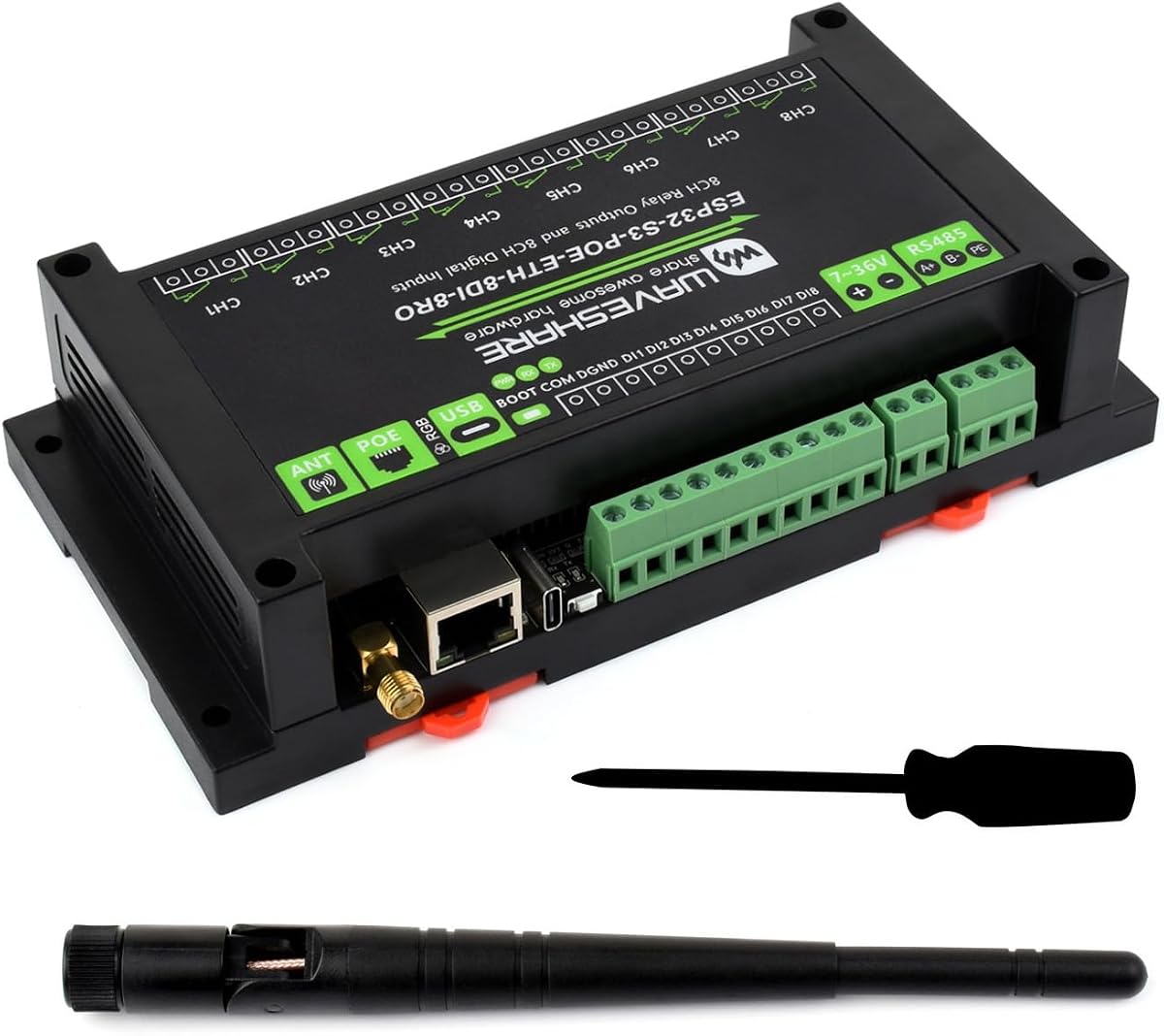
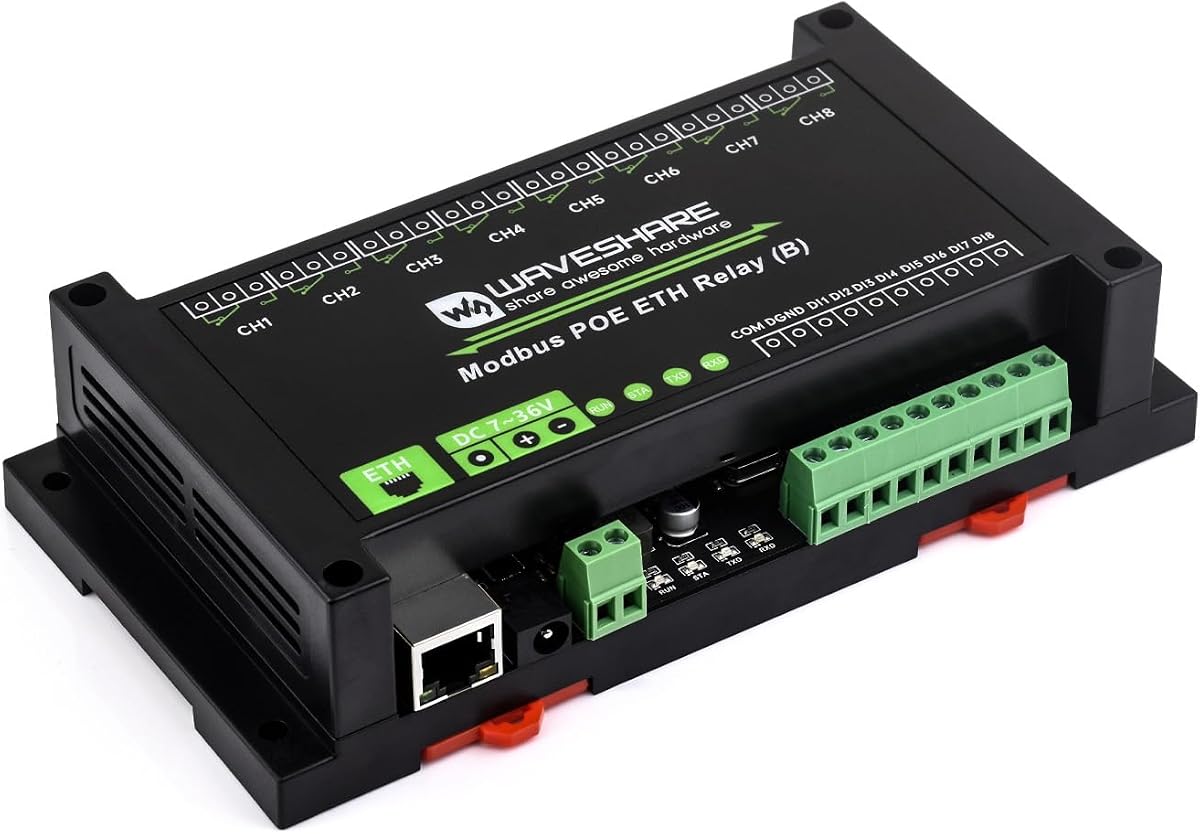

This Industrial 8-Ch ESP32-S3 WiFi Relay Module stands out as a top rated option with a 4.8 rating thanks to its powerful microcontroller and extensive connectivity features.
We may earn a commission when you buy through this link, at no additional cost to you.
Its onboard 32-bit dual core processor running at 240MHz ensures fast response times for automation tasks while integrated Wi-Fi and Bluetooth allow flexible remote access without extra hardware.
The inclusion of an Ethernet port alongside RS485 and digital inputs makes it suitable for complex industrial setups that need multiple communication paths and sensor integration in one unit.
Buyers seeking a reliable foundation for sophisticated control projects should choose this module because it balances performance, connectivity, and safety isolation better than most competitors in this category.
The dual core processor enables handling multiple relay operations and digital inputs simultaneously without lag or timing issues that could disrupt automated sequences.
Integrated PoE allows single cable network and power delivery while wireless protocols offer backup or primary control paths depending on your site infrastructure.
We may earn a commission when you buy through this link, at no additional cost to you.
The Pinhaijing LAN Ethernet 2 Way Relay Board earns its budget designation with a strong 4.8 rating and low cost while still delivering essential TCP and UDP control capabilities.
We may earn a commission when you buy through this link, at no additional cost to you.
Its simple interface and straightforward configuration make it ideal for basic home automation or small commercial tasks where only a couple of devices need remote switching control.
While it lacks the channel count of larger modules, its reliable performance and clear status indicators ensure you can monitor relay states without additional external sensors or software tools.
Choose this board if you need a no frills entry point into Ethernet control and value cost savings over expandability for simple single function projects.
At a fraction of the cost of eight channel units, this board provides a low risk way to test Ethernet relay integration before committing to larger systems.
Basic web server access allows immediate control through any browser without needing specialized clients or complex API setup for initial testing phases.
We may earn a commission when you buy through this link, at no additional cost to you.
The Waveshare 30-Ch Ethernet Relay Module justifies its premium status by offering thirty independent relay channels which is rare in this price range and essential for large facility automation.
We may earn a commission when you buy through this link, at no additional cost to you.
Its industrial grade ABS rail mount case ensures durability in harsh environments while dedicated driver chips with flyback diode protection extend component life under heavy switching loads.
Support for Modbus RTU and TCP protocols allows seamless integration into existing industrial networks and the PoE port reduces wiring complexity in distributed installations.
Projects needing extensive switching capacity should select this module despite the higher price since expanding with multiple smaller units would cost more and introduce more points of failure.
Thirty channels on a single unit simplify wiring and reduce the need for cascading controllers in complex automation scenarios like farming or manufacturing lines.
Rail mount design and isolation circuits meet standards for commercial deployments where reliability under variable voltage and temperature conditions is mandatory.
We may earn a commission when you buy through this link, at no additional cost to you.
This 8-CH Ethernet Relay Module offers standard Modbus RTU and TCP protocols which are widely used in industrial settings for reliable device communication and remote control tasks.
We may earn a commission when you buy through this link, at no additional cost to you.
PoE capability allows single cable power and data delivery while onboard optocoupler isolation protects control circuits from voltage spikes caused by relay switching operations.
MQTT support enables integration with cloud platforms and the flash on function adds automation flexibility for timed activation tasks without external scheduling software.
Users familiar with Modbus infrastructure will find this module compatible with existing systems though they should review setup guides carefully due to the lower community support compared to major brands.
Standard Modbus commands allow seamless pairing with PLCs and SCADA systems without needing custom drivers or gateway software for basic relay control.
IEEE 802.3af compliance means existing network switches can power the unit eliminating separate power supplies and reducing installation time significantly.
We may earn a commission when you buy through this link, at no additional cost to you.
The Waveshare 8-Ch Ethernet Relay Module delivers consistent performance with a 4.1 rating and benefits from the company's focus on industrial grade components and clear documentation.
We may earn a commission when you buy through this link, at no additional cost to you.
Network indicators help troubleshoot signal issues quickly while optocoupler isolation ensures high voltage loads do not interfere with low voltage control logic on the board.
Flash on and flash off capabilities enable timed automation tasks directly on the module reducing the need for external scripts or cloud based scheduling services.
Buyers valuing brand reliability and clear diagnostics should consider this model for general purpose control tasks where Modbus protocols are sufficient for integration.
LED indicators for MCU and network status reduce troubleshooting time when diagnosing connection problems in industrial control networks.
Built-in timed control functions allow simple scheduling without external software reducing complexity for users needing basic timed switching operations.
We may earn a commission when you buy through this link, at no additional cost to you.
This 8-CH Ethernet Relay Module (B) earns an impressive 4.9 rating by adding digital input channels that allow sensor integration without needing extra acquisition hardware.
We may earn a commission when you buy through this link, at no additional cost to you.
Web browser configuration and DHCP support simplify network setup while multiple protocol options including TCP client and HTTP offer flexibility for diverse software ecosystems.
Optocoupler isolation on digital inputs ensures safe reading of external contacts and the wide power range accommodates various supply conditions in different facilities.
Projects needing both relay control and sensor feedback should prioritize this model since it consolidates two functions into one board reducing wiring and potential failure points.
Passive and active input support lets you connect switches or sensors directly to the board without external logic modules.
Web interface and DHCP support make IP assignment and settings changes accessible without specialized command line tools.
We may earn a commission when you buy through this link, at no additional cost to you.
The Industrial 8-Ch ESP32-S3 WiFi Relay Module provides robust connectivity with both Ethernet and RS485 ports allowing hybrid networks that combine legacy and modern devices seamlessly.
We may earn a commission when you buy through this link, at no additional cost to you.
Full Arduino IDE support opens development to a broad community while built-in isolation circuits protect against voltage mismatches between input sensors and relay outputs.
Bluetooth and Wi-Fi enable mobile or local control options without needing constant Ethernet cabling and digital input channels expand functionality for monitoring external states.
Developers looking for an open platform with industrial reliability should consider this module since its extensive SDK resources simplify prototyping and deployment.
Arduino IDE compatibility means access to thousands of libraries and community code samples for rapid feature development.
Ethernet plus RS485 enables mixing new IP based devices with legacy serial systems in a single control architecture.
We may earn a commission when you buy through this link, at no additional cost to you.
This Waveshare Industrial 8-Channel ESP32-S3 WiFi Relay Module stands out with a 4.7 rating and dedicated isolated RS485 port plus USB Type-C for easier firmware updates and debugging.
We may earn a commission when you buy through this link, at no additional cost to you.
The Xtensa LX7 dual core processor running at 240MHz ensures low latency control while an RTC chip enables on device scheduled tasks independent of network connections.
Extensive official Wiki resources help users quickly configure and troubleshoot whereas general documentation for other boards often requires community forums to find solutions.
Projects needing precise timing or isolated serial communication should choose this unit since its specialized features reduce the need for external hardware or software.
USB Type-C provides a direct connection for flashing new firmware or serial debugging without needing extra programmers or adapters.
RTC chip allows independent time based automation reducing dependency on cloud services for scheduled relay operations.
We may earn a commission when you buy through this link, at no additional cost to you.
The Waveshare 8-Ch Ethernet Relay Module (B) provides balanced industrial features including dedicated driver chips and digital debouncing algorithms that improve signal reliability in noisy environments.
We may earn a commission when you buy through this link, at no additional cost to you.
Linkage control allows direct relay toggling based on digital input states without external software while flyback diode protection extends driver longevity under high inductive loads.
Optocoupler isolation protects the MCU from voltage spikes and rail mount design ensures secure installation in standard control cabinets or enclosures.
Users seeking stable performance with built-in logic features should consider this model since it reduces the need for external logic controllers or code development.
Linkage control allows direct input-to-output logic reducing dependency on external scripts for simple automation rules.
Flyback diode and optocoupler isolation protect internal components from spikes and noise common in industrial power environments.
We may earn a commission when you buy through this link, at no additional cost to you.
This 8-CH Ethernet Relay Module serves as a standard option with Modbus RTU and TCP support plus web browser configuration tools that simplify initial setup for basic applications.
We may earn a commission when you buy through this link, at no additional cost to you.
PoE compliance and wide voltage input range allow flexible installation while rail mount housing meets basic industrial standards for secure mounting in control panels.
Optocoupler isolation and flash off functions provide essential safety and automation features without the added complexity of advanced protocol or digital input features.
Projects requiring simple network control without advanced digital inputs should select this model to save costs while maintaining reliable Modbus compatibility.
Browser based setup allows users to configure IP settings without command line tools or specialized software.
Rail mount case provides secure mounting in standard DIN rails commonly used in industrial cabinets and enclosures.
We may earn a commission when you buy through this link, at no additional cost to you.
Selecting the right Ethernet relay module requires balancing channel count, protocol support, power options, and isolation quality to ensure reliable operation in your specific environment.
Determine how many devices you need to control now and whether future expansion is expected since buying a larger unit upfront may reduce long term costs and wiring complexity.
Choose a module with enough channels to avoid cascading units which introduces more points of failure and configuration overhead.
Verify that the module supports protocols your control software uses such as Modbus RTU, TCP, MQTT, HTTP, or proprietary APIs to ensure seamless integration without extra gateways.
Prioritize modules with multiple protocol options if your network environment uses diverse systems to maintain flexibility as your infrastructure evolves.
Consider whether Power over Ethernet is available since PoE reduces cabling requirements and simplifies installation but requires compatible switches or injectors.
Ensure the module accepts voltage ranges matching your existing power sources to avoid needing additional power supplies or transformers for operation.
Look for onboard optocoupler isolation to protect control circuits from high voltage transients generated by relay switching which prevents premature failure.
Check for reverse-proof and flyback diode protection to safeguard against incorrect wiring or inductive load spikes that can damage components over time.
If you need to read external sensors or switches alongside control outputs, choose a model with digital input channels to consolidate functions into one unit.
Verify whether inputs support passive dry contacts or active wet signals since mismatched types can cause misreading or hardware damage.
Industrial deployments benefit from rail mount ABS cases that secure the unit in standard DIN rails and protect against dust and accidental contact.
Verify physical dimensions fit your available space in enclosures since compact designs are preferable for limited cabinet real estate.
Modules with web browser interfaces simplify network setup while comprehensive official documentation reduces reliance on community forums for troubleshooting steps.
Prioritize units with clear status LEDs and debugging features like USB ports to lower ongoing maintenance effort in field deployments.
Consider established brands with proven industrial track records since they often offer better firmware support, hardware quality, and warranty service.
Review user ratings for stability over time rather than just feature count to ensure long term satisfaction with the hardware.
Begin by connecting power and Ethernet cables securely then access the device via web interface or command line tools using its IP address to configure network settings.
Configure relay outputs and digital inputs according to your control logic then test each channel individually with load-free operations before connecting actual loads.
Regularly monitor network status LEDs and keep firmware updated using the manufacturer provided tools to maintain compatibility and resolve security vulnerabilities over time.
Modbus RTU uses serial communication over RS485 or RS232 while Modbus TCP uses Ethernet and IP networks. TCP allows integration into existing LANs without serial to Ethernet gateways whereas RTU suits legacy systems without networking.
No only specific models include PoE circuitry to receive power via the Ethernet cable. You must verify IEEE 802.3af compliance in product specs and ensure your switch supports PoE before relying on this feature.
Many modern modules support HTTP requests via GET or POST to toggle relays without needing custom clients. This is useful for scripts and web dashboards but verify which endpoints are available in documentation.
Yes isolation prevents high voltage spikes from damaging control logic and improves safety. Industrial environments have noisy power lines so optocouplers protect the MCU and extend module lifespan significantly.
Digital inputs sense external signals such as switches or sensors to trigger relay actions or provide feedback. Check if they support dry contacts which close a circuit or wet contacts which supply voltage.
Most units maintain current relay states until reconnected while some include local logic that keeps relays on or off based on last known commands. Always verify this behavior during testing before deployment.
The top picks highlight diverse needs with the ESP32-S3 WiFi module leading overall and the 30-channel model best for large scale setups and the two channel board offering budget entry points.
Prioritize isolation quality protocol compatibility and power options specific to your site infrastructure before focusing on channel count to ensure reliable long term operation without retrofitting later.
Always verify current prices and availability since market conditions shift frequently and contacting the manufacturer directly can clarify compatibility with your existing automation software systems.