
Humminbird 710200-1 XNT 9 SI 180 T
4.6Editor score
Side and Down Imaging
Transom mount design
Helix series compatible
This guide compares the top down and side imaging transducer models for anglers seeking clear underwater structure and fish location data in diverse water
Choosing the right transducer transforms your fishing experience by revealing hidden structures and fish schools beneath the surface. Modern imaging technology offers unparalleled clarity for identifying targets.
We evaluated ten leading models based on imaging resolution, compatibility, coverage range, and build quality. Our analysis ensures you select a unit that matches your specific fish finder ecosystem.
Each pick highlights key strengths and ideal use cases for various boats and budgets. Note that availability and pricing vary by retailer and may change without prior notice.
4.6Editor score

5.0Editor score

4.6Editor score
This side-by-side comparison evaluates all ten products on imaging frequency, cable length, sensor inclusion, and supported fish finder models to help you make an informed decision.



The Humminbird XM 14 HW CMSI T stands out as the premier choice for anglers requiring crystal-clear underwater visibility. It delivers top-tier side and down imaging with a perfect user rating.
We may earn a commission when you buy through this link, at no additional cost to you.
Its MEGA Side Imaging Plus technology uses 455 kHz and 1.1 MHz frequencies to resolve fine details on the lakebed and structure. This dual-frequency approach allows you to see fish-holding cover with unmatched precision.
While this unit demands a compatible Humminbird fish finder like APEX or SOLIX G3, the investment yields superior data. The 400-foot coverage range ensures you scan vast areas quickly without sacrificing detail.
If you own a supported model and need reliable structure identification, this transducer is the ideal upgrade. It combines durability with advanced sonar capabilities for serious fishing applications.
The high-resolution imaging separates subtle changes in bottom composition and vegetation types. This clarity helps identify weed edges and rockpiles where fish commonly congregate.
Built-in temperature monitoring provides real-time water condition insights essential for seasonal fishing patterns. Accurate thermal data aids in locating thermoclines effectively.
We may earn a commission when you buy through this link, at no additional cost to you.
The Lowrance Active Imaging 3-In-1 Transducer excels in providing refined structural detail unmatched by standard units. Its rating reflects consistent performance in challenging environments for professionals.
We may earn a commission when you buy through this link, at no additional cost to you.
Active Imaging combines CHIRP sonar with SideScan and DownScan to maximize target identification. FishReveal allows you to see fish arches clearly on downscan images, simplifying the identification process.
This model supports medium and high CHIRP frequencies alongside high-resolution imaging bands. However compatibility is strictly limited to HDS LIVE and Elite FS displays which may restrict your choice.
For owners of compatible Lowrance systems, this transducer offers unparalleled clarity for finding fish around structure. It balances broad coverage with the precision needed for targeted angling.
The exclusive FishReveal smart target view distinguishes fish from rocks and debris instantly. This feature reduces guesswork and speeds up locating productive fishing spots.
Support for 83 and 200 kHz CHIRP along with 455 and 800 kHz imaging covers diverse scenarios. This flexibility ensures optimal performance across shallow and deep waters.
We may earn a commission when you buy through this link, at no additional cost to you.
This Humminbird transducer delivers exceptional value by introducing side and down imaging at an accessible price point. It maintains high reliability for anglers upgrading older sonar systems efficiently.
We may earn a commission when you buy through this link, at no additional cost to you.
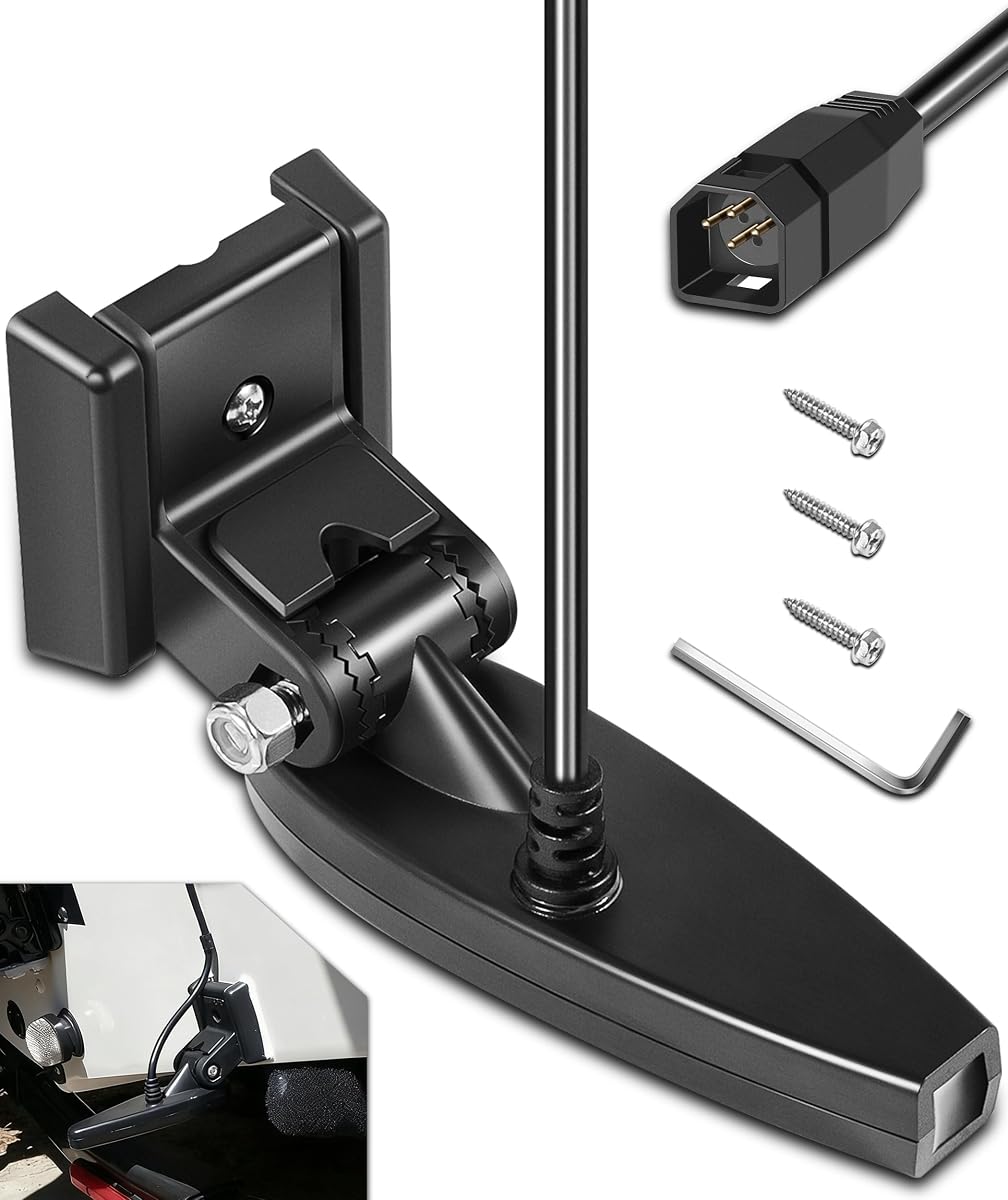
The transom mount design ensures secure placement and minimizes drag while underway. It provides clear returns that help locate fish holding structures effectively without the cost of advanced models.
While it lacks the ultra-high definition of MEGA imaging, it offers sufficient detail for recreational fishing. The 20-foot cable length allows for flexible routing on various boat sizes.
Budget-conscious buyers needing both down and side scans should consider this unit for its durability and ease of use. It serves as a solid entry into modern imaging sonar technology.
Side imaging scans extend across the water column to reveal objects beside the boat. This helps identify underwater channels and drop-offs quickly without slowing down.
The transom bracket is designed to stay in place during high-speed operations. This stability prevents the transducer from shifting and causing signal loss.
We may earn a commission when you buy through this link, at no additional cost to you.
The Humminbird XM 14 20 MSI T brings MEGA imaging capabilities to a range of fish finder models. It offers a clear picture of the underwater environment for accurate navigation and fishing.
We may earn a commission when you buy through this link, at no additional cost to you.
This transducer extends 125 feet out to each side of the boat which is ample for many applications. The included temperature sensor adds value by monitoring water conditions precisely during trips.
Compatibility is a key factor here as it works with XPLORE and SOLIX models but not all ONIX versions. You must verify your unit supports the specific frequencies listed before purchase.
Anglers seeking reliable imaging without needing the maximum 400-foot range will appreciate this model. It balances performance and compatibility well for mid-tier Humminbird systems.
DualBeam PLUS sonar combines two beams to provide generous coverage and detail. This helps identify bottom hardness and vegetation effectively for better bait selection.
The package includes all necessary hardware and a 20-foot cable for setup. This reduces installation time and ensures a clean connection to your fish finder.
We may earn a commission when you buy through this link, at no additional cost to you.
This bundle offers a comprehensive solution by including a transducer with MEGA Side Imaging alongside a capable fish finder. It provides 125 feet of detailed viewing on either side of the boat.
We may earn a commission when you buy through this link, at no additional cost to you.
The built-in Basemap covers thousands of lakes and coastlines for enhanced navigation. AutoChart Live allows you to create custom depth contour maps in real-time while on the water.
Although it is a full system rather than just a transducer it represents great value for new setups. The user-friendly keypad ensures reliable operation even in harsh weather conditions.
If you need an all-in-one device with powerful imaging capabilities this option is highly recommended. It simplifies the setup process while delivering premium features for serious anglers.
AutoChart Live records depth and vegetation data to generate custom maps instantly. This helps you find new fishing spots without relying on pre-existing charts.
The system uses wide mode for coverage and narrow mode for detailed scanning. This flexibility ensures you see both fish arches and holding structures clearly.
We may earn a commission when you buy through this link, at no additional cost to you.
Designed specifically for HELIX 7 models, this transducer delivers consistent CHIRP side and down imaging. It ensures clean returns with a wide frequency range for versatile fish finding.
We may earn a commission when you buy through this link, at no additional cost to you.
The Dual Spectrum CHIRP technology provides detailed scans while maintaining broad coverage. A 20-foot cable allows you to route connections easily on larger vessels without issues.
While it does not support MEGA imaging, it offers excellent clarity for standard side and down scanning. This makes it ideal for users who prioritize CHIRP sonar performance over maximum resolution.
Owners of HELIX 7 units looking for an all-in-one upgrade will find this package highly effective. It combines durability with essential sensors and mounting accessories for hassle-free installation.
The 150 to 220 kHz CHIRP range helps separate targets in both shallow and deep water. This ensures you see fish arches clearly without overlapping noise.
Mounting hardware and a temperature sensor come included in the package. This saves time and cost compared to buying separate accessories for your fish finder.
We may earn a commission when you buy through this link, at no additional cost to you.
This Active Imaging unit brings refined detail to your sonar screen with SideScan and DownScan capabilities. It provides a 6-foot cable which suits smaller setups but requires an adapter.
We may earn a commission when you buy through this link, at no additional cost to you.
The 9-pin connector is designed for HDS LIVE and Elite Ti2 displays ensuring stable data transfer. It offers unmatched clarity for identifying structures like weedbeds and ditches quickly.
While the cable is shorter, it simplifies installation on compact boats where transom space is limited. This allows for efficient routing without excess slack cluttering your console area.
Anglers with HDS Carbon or Elite Ti2 units who need a compact transducer should consider this model. It delivers top-tier imaging performance in a manageable package for easy setup.
Active Imaging provides high-level detail that helps distinguish fish from cover. This prevents false alarms and improves overall confidence in the sonar readout.
This model works with both Lowrance and Simrad NSS evo3 displays. This dual compatibility ensures you can integrate it into diverse marine electronics setups.
We may earn a commission when you buy through this link, at no additional cost to you.
While listed here for completeness this kit supports the installation of compatible Lowrance imaging transducers. It helps ensure stable placement and optimal sonar performance for your unit.
We may earn a commission when you buy through this link, at no additional cost to you.
It includes the necessary hardware to mount a transducer securely on the transom. This stability is critical for maintaining clear returns at high speeds or rough water conditions.
For owners upgrading their existing transducer this bracket ensures proper alignment. Correct alignment is essential for capturing the maximum amount of detail in your scans.
Consider this component if you are replacing a damaged mount or optimizing your current setup. It complements your Active Imaging system to deliver consistent results on the water.
The bracket design holds the transducer firmly in place to prevent movement. This ensures the sonar beam stays aligned correctly for accurate bottom mapping.
It is compatible with Side Scan and Down Scan bands. This ensures that you utilize the full potential of your 455 and 800 kHz frequencies.
We may earn a commission when you buy through this link, at no additional cost to you.
This transducer provides specialized Down Imaging and DualBeam PLUS sonar for a range of Humminbird models. It allows you to distinguish fish direction and species effectively.
We may earn a commission when you buy through this link, at no additional cost to you.
The impact-release installation bracket adds protection for the unit when launching or retrieving the boat. This feature minimizes damage risks and ensures long-term reliability in rough conditions.
It uses 75 and 45 degree beams to produce crisp underwater details. These high-resolution images help you see the terrain clearly for better bait placement.
Anglers targeting species that require precise bottom scanning will find this model highly useful. It offers a robust build and essential sensors for confident fishing.
The dual beam design combines 25 and 16 degree angles for wide coverage. This ensures you see a broad view of the underwater terrain without gaps.
High precision and hardness ensure the transducer withstands wear and tear. This long-term reliability means you spend less time worrying about equipment failure.
We may earn a commission when you buy through this link, at no additional cost to you.
The Humminbird XNT 9 DI T offers a fish-eye view of what lies directly beneath your boat. It combines Down Imaging with DualBeam PLUS sonar for reliable target separation.
We may earn a commission when you buy through this link, at no additional cost to you.
Its 20-foot cable ensures you have enough length for routing on most small to medium boats. The included temperature sensor adds essential data points for analyzing fish behavior.
This model is perfect for anglers prioritizing vertical detail over wide side scanning. It simplifies setup with a ready-to-use package for immediate use on the water.
If you need a dependable transducer for legacy Down Imaging units this is a great choice. It delivers consistent performance and a generous cable for flexible mounting options.
DualBeam PLUS sonar offers great detail and a wide coverage area. This helps you locate fish and key structures efficiently in any environment.
Includes a built-in temperature sensor and a 20-foot cable for setup. This ensures you have everything needed to start fishing quickly and easily.
We may earn a commission when you buy through this link, at no additional cost to you.
Selecting the correct transducer requires balancing imaging frequency, coverage area, and compatibility with your existing fish finder to ensure optimal performance.
Imaging frequency determines how much detail you can see on your screen. Higher frequencies like 800 kHz or 1.1 MHz provide finer resolution but have shorter ranges. Lower frequencies like 200 kHz cover more water but show less detail.
Choose high frequencies for detailed structure views in shallow water and lower frequencies for broader scanning in deep water.
Coverage range refers to how far the transducer can scan to the sides and below. A wider range allows you to find fish holding areas faster but requires more processing power from your unit.
Ensure the coverage range matches your typical fishing depth and speed requirements for efficient target location.
Transducers are often designed for specific brands like Humminbird or Lowrance. Using a mismatched unit will result in no data on your fish finder. Always check the official compatibility list before buying.
Verify your fish finder model supports the specific connector and sonar technology of the transducer you choose.
Mounting types include transom, trolling motor, or thru-hull. Transom mounts are easiest to install but may struggle at high speeds. Trolling motor mounts reduce drag but require a compatible motor.
Select the mounting style that fits your boat design and typical operating speed to maintain stable sonar signals.
Cable length affects where you can place the transducer relative to your fish finder. A cable that is too short limits your routing options while one that is too long creates clutter.
Measure the distance between your transom and console carefully to select the correct cable length.
Dual beam transducers send two sonar beams to cover a wider area and provide better detail. This technology helps separate targets in crowded areas better than single beam sonar.
Prioritize dual beam units for more accurate target separation in complex underwater environments.
Many modern transducers include built-in temperature sensors. These sensors provide real-time data on water conditions which is vital for seasonal fishing patterns.
Look for units with integrated sensors to save on extra accessories and simplify your wiring setup.
Transducers face harsh conditions like UV exposure and physical impact. Check the build material and warranty terms to ensure the unit can withstand your environment.
Opt for models with strong warranties and impact-resistant mounting brackets for long-term reliability.
Install the transducer on the transom as close to the centerline as possible to avoid turbulence from the propeller or trim tab. Ensure the face is fully submerged and parallel to the water surface for accurate readings.
Regularly clean the face of the transducer to remove algae or debris that can block sonar signals. Rinse it with fresh water after every use to prevent salt buildup on the surface.
Check the cable connections periodically for signs of corrosion or wear. Tighten any loose connectors to prevent signal loss and ensure the mounting hardware remains secure during operation.
Down imaging scans directly below the boat to reveal the bottom structure and fish in a narrow column. Side imaging scans a wide area to the left and right to locate objects outside your path.
No, Humminbird and Lowrance transducers are not interchangeable. They use different connector types and signal protocols. You must purchase a transducer specifically designed for your brand's ecosystem.
Air pinging happens when the transducer is not fully submerged or is moving through air. It can damage the internal elements. Ensure the transducer is deep enough in the water during operation.
Reduce boat speed when using side imaging for better detail. Ensure the transducer face is clean and aligned parallel to the water. Adjust the sensitivity settings on your fish finder to reduce noise.
Most transom mounts require between 20 to 25 feet of cable to route from the rear of the boat to the console. Measure the exact distance to avoid excess slack or insufficient reach.
Higher frequencies provide more detail but have shorter ranges. Lower frequencies penetrate deeper but show less clarity. The best choice depends on your typical fishing depth and target clarity needs.
The Humminbird XM 14 HW CMSI T, Lowrance Active Imaging 3-In-1, and Humminbird XNT 9 SI 180 T stand out for their exceptional clarity and value in this guide.
Prioritize compatibility with your existing fish finder to ensure seamless integration. Consider your typical fishing depth to select the right imaging frequency for your needs.
Check current availability and ensure you have the correct mounting hardware for your boat before making your final purchase decision today.