
JOYO Guitar Audio Interface for Phone
4.2Editor score
Direct monitoring with zero latency
Pocket-sized portable design
No batteries or drivers required
This guide compares the top audio interfaces for guitar recording, streaming, and mobile use based on fidelity, compatibility, and included software features.
Finding the right audio interface for guitar is essential for capturing your sound with clarity and precision. Whether you are recording at home or streaming live, the right hardware ensures your tone shines through without unwanted noise or latency issues.
We evaluated ten leading models based on input quality, software bundles, and connectivity options. Our comparison focuses on real-world performance for guitarists looking to elevate their recordings without breaking the bank or complicating their setup.
Each pick highlights key strengths and potential limitations to help you choose wisely. Keep in mind that availability and pricing may fluctuate, so checking current listings is recommended before making your final decision today.
4.2Editor score
4.6Editor score

5.0Editor score
The following table provides a side-by-side overview of all featured interfaces. It highlights core specifications and unique capabilities to help you identify the best fit for your recording needs and workflow preferences.



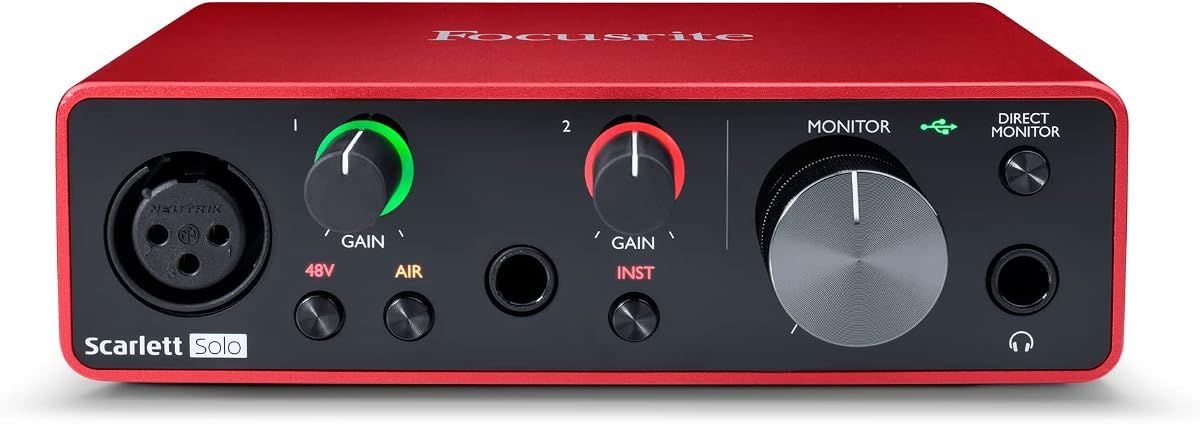
The Focusrite Scarlett Solo 3rd Gen stands out as a top choice for guitarists seeking professional sound quality. Its high-performance pre-amps ensure your recordings capture every nuance of your playing without unwanted noise or distortion.
We may earn a commission when you buy through this link, at no additional cost to you.
A standout feature is the Gain Halos indicator which lights up green when the input level is ideal and red when it is too high. This visual aid helps prevent clipping during recording sessions, making it easier to achieve consistent results.
While it offers excellent value and sound, it is limited to one instrument input which may restrict multi-instrument setups. Additionally, the lack of MIDI ports means you may need an external solution for connecting MIDI controllers.
This interface is ideal for solo artists and podcasters who prioritize clarity and ease of use. With its included software suite and reliable performance, it provides everything needed to start recording right away.
The high-performance converters enable recording at up to 24-bit/192kHz, retaining all sonic qualities for professional results.
Includes Pro Tools Intro and Ableton Live Lite, giving you powerful tools to edit and mix tracks immediately.
We may earn a commission when you buy through this link, at no additional cost to you.
The JOYO MOMIX CAB offers a highly accessible solution for guitarists who want to record on the go. Its compact design fits easily in a pocket or clips onto a strap, making it perfect for capturing ideas wherever inspiration strikes.
We may earn a commission when you buy through this link, at no additional cost to you.
This interface features direct monitoring that allows you to hear your guitar signal instantly through headphones with zero latency. This is essential for recording dry tracks or practicing with backing tracks without distracting delays.
However, the dry signal cannot be muted, which means it is not designed for real-time software amp simulations. It functions best as a straightforward recording tool rather than a complex effects processor for advanced setups.
For mobile musicians and content creators, this interface provides a practical way to capture performances without carrying bulky gear. Its plug-and-play simplicity ensures you can start recording immediately after connecting to your phone.
Smaller than a key, this unit clips securely to your pocket or strap for truly mobile recording sessions anywhere.
No batteries or driver installations are needed, allowing you to start recording right after connecting to your phone.
We may earn a commission when you buy through this link, at no additional cost to you.
The M-AUDIO M-Track Duo is designed to cover podcasting, recording, and live streaming with ease. Its two combo XLR inputs allow you to record a guitar and a microphone simultaneously, offering great flexibility for solo creators.
We may earn a commission when you buy through this link, at no additional cost to you.
Equipped with transparent Crystal Preamps, this interface delivers optimal sound quality from various microphone types. The USB/Direct switch ensures you can monitor your signal with zero latency, which is crucial for maintaining timing during live performances.
While the included MPC Beats software offers professional tools, it might be overwhelming for beginners. Additionally, the audio resolution maxes out at 48kHz, which is sufficient for most but not for high-resolution archiving.
This interface is an excellent choice for content creators who need a reliable and versatile setup. Its straightforward monitoring features and solid build quality make it a strong contender for home studio environments.
Two combo XLR/Line/Instrument inputs let you connect microphones, guitars, or keyboards for flexible recording.
Includes MPC Beats with essential production tools from Akai Professional to help you start producing tracks.
We may earn a commission when you buy through this link, at no additional cost to you.
The IK Multimedia iRig USB provides high-quality sound and universal compatibility for various devices. It is particularly useful for guitarists who use iPads or modern iPhones for recording, offering seamless integration with popular music apps.
We may earn a commission when you buy through this link, at no additional cost to you.
This interface features a dedicated amp out that lets you connect to your existing amp and pedal rig. You can switch between FX or THRU settings to tailor the output to your preference, keeping your tone consistent across setups.
Users should note that the lightning cable is not included with this specific USB-C version, which may require a separate purchase for older devices. Additionally, the included software can vary, so checking the current bundle is recommended.
Ideal for mobile musicians, this interface balances portability with professional features. Its robust build and versatile connectivity options make it a reliable companion for both practice sessions and live performances on the go.
Works with Mac, PC, iPad, and iPhone using the included USB-C cable for seamless connection across platforms.
The dedicated amp output lets you connect to your existing pedal rig with selectable FX or THRU settings.
We may earn a commission when you buy through this link, at no additional cost to you.
The MAONO PS22 Lite is built for streamers and content creators who need high-quality sound without compromising on flexibility. It supports 24-bit/192kHz recording, ensuring your audio is clear and realistic for any broadcast or recording project.
We may earn a commission when you buy through this link, at no additional cost to you.
A key feature is the included ProStudio Routing Software which allows for advanced channel routing and loopbacks. This makes it easy to mix game audio with your voice and guitar, perfect for interactive live streaming sessions.
While it offers great software capabilities, setting up the ASIO drivers can be challenging for some users. Also, the absence of a dedicated instrument input means you may need to adjust gain carefully to avoid noise with high-output guitars.
For creators focusing on live content, this interface provides the tools needed for professional broadcasting. Its intuitive modes and ergonomic design help streamline your workflow, letting you focus on creativity rather than technical hurdles.
ProStudio Routing Software offers virtual channels and loopbacks for flexible audio mixing during live streams.
Records at 24-bit/192kHz to ensure your sound remains as clear and realistic as the original performance.
We may earn a commission when you buy through this link, at no additional cost to you.
The PIYONE Audio Interface combines modern aesthetics with professional performance features. Its USB-C port eliminates the need for external power supplies, making it an ideal choice for laptop users who value a clean setup.
We may earn a commission when you buy through this link, at no additional cost to you.
The illuminated gain control knobs add a premium touch while ensuring visibility in dimly lit studios. This interface also includes direct monitoring, allowing for zero-latency tracking which is essential for precise recording sessions.
While the design is stylish, some users may find the build quality lighter than traditional metal interfaces. Additionally, as a class-compliant device, it relies on the OS drivers which might not suit those requiring specific low-latency configurations.
This interface suits home creators who prioritize style and simplicity alongside sound quality. Its high-fidelity conversion and flexible connectivity make it a practical choice for recording vocals and instruments with clarity.
Signature fixed LED light rings on gain knobs ensure visibility in dimly lit studios while adding style.
Direct Monitor feature allows for silent tracking, ensuring you hear your signal instantly without delay.
We may earn a commission when you buy through this link, at no additional cost to you.
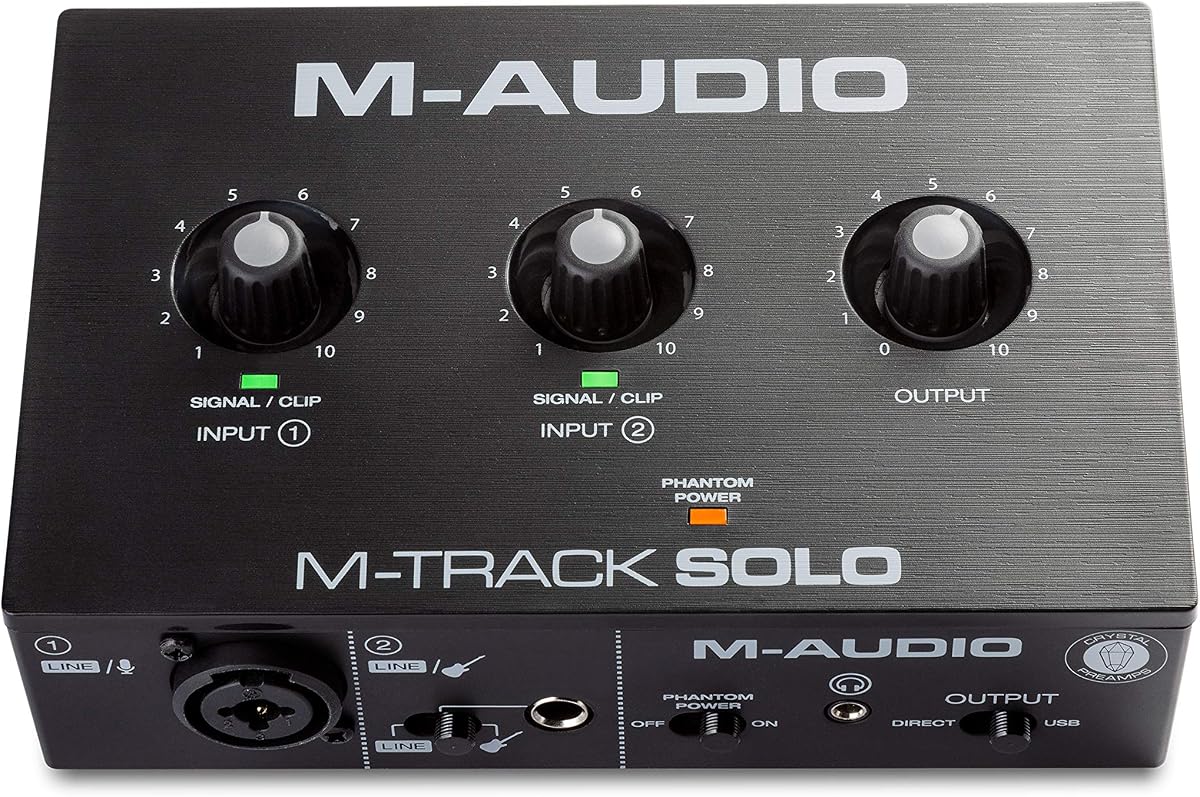
The M-AUDIO M-Track Solo is a compact solution for solo musicians who need reliable recording capabilities. Its single combo input allows you to record a guitar or microphone with clarity, making it ideal for songwriters on the go.
We may earn a commission when you buy through this link, at no additional cost to you.
Equipped with transparent Crystal Preamps, this interface ensures optimal sound quality from your microphones. The USB/Direct switch provides zero latency monitoring, allowing you to record with confidence without hearing distracting delays.
While it includes MPC Beats software for production, it is limited to one input which restricts multi-track recording. The headphone output is basic, so serious monitors might prefer a separate speaker setup for critical listening.
This interface is best suited for beginners or travelers needing a simple and sturdy solution. Its included software and clear sound quality offer a solid starting point for creating music without complex setups.
Transparent Crystal Preamps guarantee optimal sound from all microphones including condenser mics for clear recording.
The USB/Direct switch provides zero latency monitoring ensuring you hear your signal instantly while recording.
We may earn a commission when you buy through this link, at no additional cost to you.
The Arturia MiniFuse 1 stands out by including MIDI connectivity, which is rare at this price point. It allows you to connect synths and drum machines seamlessly, making it perfect for producers who work with virtual and physical instruments.
We may earn a commission when you buy through this link, at no additional cost to you.
A unique feature is the loopback capability which lets you capture app audio alongside your own tracks. This is incredibly useful for voiceovers or creating multimedia content without needing additional software routing or external hardware.
While the software bundle is extensive, beginners might find the sheer volume of tools overwhelming initially. The five-year warranty is excellent but the higher price point might be a consideration for those on a strict budget.
This interface is designed for musicians who want robust long-term support and MIDI integration. Its compact size and creative software bundle offer everything needed to produce professional tracks from anywhere.
Includes 5-pin MIDI input and output connections to sync with synths, controllers, and drum machines easily.
The loopback feature lets you capture in-app audio alongside your voice or guitar for complete production.
We may earn a commission when you buy through this link, at no additional cost to you.
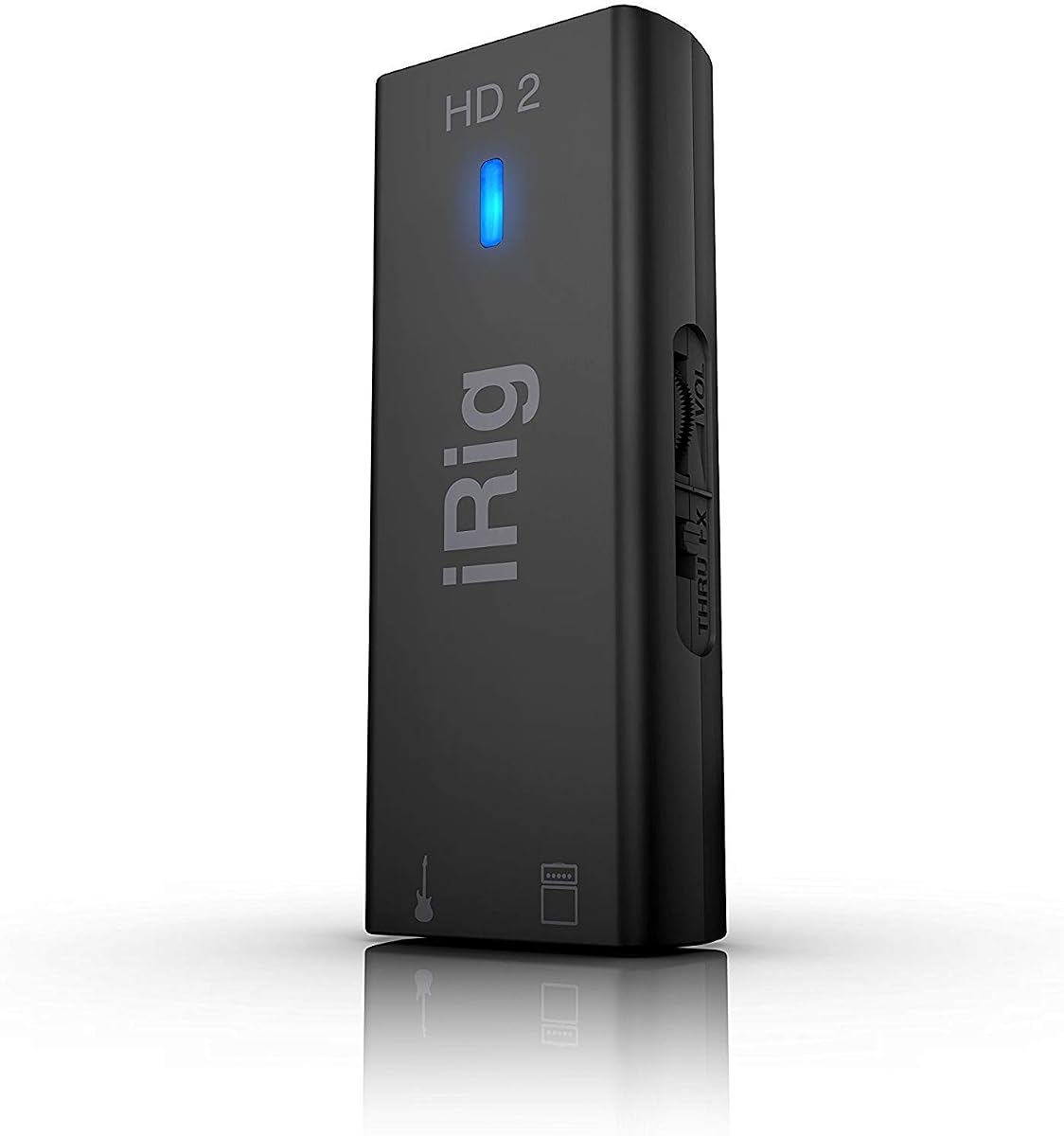
The IK Multimedia iRig HD 2 is renowned for its high-definition 96kHz sampling rate which is the highest in its class. It captures every note and nuance of your playing, ensuring that your digital recordings remain true to your performance.
We may earn a commission when you buy through this link, at no additional cost to you.
This interface features a dedicated amp out jack that lets you connect to your existing rig without additional accessories. You can switch between FX and THRU settings to control whether processed sound passes through or just the raw signal.
Although it offers high resolution, it does not include phantom power for condenser microphones which limits vocal recording options. The included cables are specific, so ensure you have the right connectors for your device type before purchasing.
For guitarists focused on mobile recording, this interface delivers premium sound in a pocket-sized package. Its simplicity and high resolution make it a top choice for capturing high-quality audio wherever inspiration strikes.
Renowned for its 96kHz sampling rate the highest in its class delivering high-definition results for musicians.
The 1/4-inch Amp Out jack lets you connect to line-level signals and pedals with switchable FX and THRU.
We may earn a commission when you buy through this link, at no additional cost to you.
The Fender Quantum HD 2 represents the pinnacle of high-fidelity audio interfacing for professional musicians. Its MAX-HD mic preamps ensure pristine vocal and instrument capture, making it ideal for studio-grade recordings that demand maximum clarity.
We may earn a commission when you buy through this link, at no additional cost to you.
This unit includes ADAT and S/PDIF I/O allowing for sixteen digital inputs and hybrid studio growth. The included Auto Gain button instantly sets perfect recording levels, saving time during setup and letting you focus on performance.
While it offers exceptional quality, the higher price point and larger physical size may not be suitable for all home setups. However, for serious producers, the included perpetual license for Fender Studio Pro adds immense value to the package.
This interface is designed for those who demand the best and require extensive connectivity options. With its robust features and premium build, it provides everything needed for professional music production and live streaming.
Ultra-high-fidelity MAX-HD mic preamps ensure pristine vocal and instrument capture for professional results.
Auto Gain button instantly sets perfect recording levels for fast, frustration-free recording sessions.
We may earn a commission when you buy through this link, at no additional cost to you.
Selecting the right interface depends on your recording goals, device compatibility, and budget. This section breaks down the key factors to consider for making an informed choice.
Ensure the interface has instrument inputs capable of handling high-impedance signals from your guitar. Some units offer combo XLR inputs while others provide dedicated Hi-Z jacks.
Choose an input type that matches your gear to prevent signal degradation or noise issues during recording.
Zero-latency monitoring is crucial for recording without hearing delays. Look for a Direct Monitor switch or feature that allows you to hear your signal instantly.
Prioritize models with hardware monitoring to maintain timing and feel during live recording sessions.
Higher sample rates like 96kHz offer more detailed audio capture. Ensure your computer can support the selected resolution without performance lag.
Select a resolution that balances quality and processing power for your specific workflow needs.
Verify the connection type matches your device ports. USB-C offers higher speed while Lightning or standard USB ensures compatibility with older hardware.
Confirm the interface uses a bus-powered port to avoid carrying extra power adapters.
Included software can provide essential tools for editing and effects. Check if the bundle suits your needs before investing in additional plugins.
Opt for units with reputable software to save on future production costs.
If you record on the go, choose a compact and durable design. Pocket-sized units are ideal for mobile musicians needing quick setup.
Balance size with durability to ensure your gear survives transport.
For growing studios, consider models with extra I/O options. ADAT or MIDI support allows future upgrades without replacing your interface.
Invest in a unit that can grow with your recording requirements over time.
Reliable customer service and warranty protection are vital for long-term use. Check the manufacturer policies before purchasing.
Choose brands known for responsive support to resolve technical issues quickly.
Connect your guitar to the Hi-Z or instrument input and plug headphones into the monitoring jack. Ensure your computer recognizes the device before opening recording software.
Use the gain knob to set levels that peak green but avoid red to prevent distortion. Adjust output volume to a comfortable listening level in your headphones.
Store the unit in a cool dry place away from liquids. Regularly update drivers to maintain optimal performance and compatibility with new operating systems.
Most modern interfaces are class-compliant and do not require drivers on Windows or macOS. However, some brands provide optional ASIO drivers for lower latency on Windows systems.
Yes if the interface has at least two combo inputs. This allows you to record vocals and guitar simultaneously with clarity and isolation.
USB-C offers faster data transfer and bidirectional power. It is becoming the standard for new devices and ensures compatibility with modern laptops.
Watch the gain indicators on the interface. If lights turn red, lower the input knob slightly until the signal stays within the green range.
Many models support iPad via USB-C or Lightning adapters. Verify that the device draws power from the iPad or has a separate power option.
You can use the included DAW software like Ableton or Pro Tools. Most interfaces also work with third-party programs like Logic or Cubase.
We reviewed ten top audio interfaces ranging from portable budget options to professional studio units. Each choice offers distinct strengths suitable for different recording and streaming needs.
Prioritize your recording goals and workflow compatibility when selecting a unit. Features like latency monitoring and software bundles often matter more than raw technical specifications.
Verify current availability and pricing before purchasing as these details change frequently. This guide provides a solid foundation for making an informed investment in your sound.