
RC Cellmeter 7
4.7Editor score
Supports LiPo and Li-ion cells
Compact and lightweight design
Shows cell voltage gaps
This guide compares the top 10 Lithium Ion Battery Tester models for accuracy, compatibility, and features to help you choose the right diagnostic tool.
Finding the right Lithium Ion Battery Tester is crucial for maintaining vehicle health and ensuring reliable power across various applications. Modern vehicles increasingly rely on advanced battery technologies, making accurate diagnostics essential for preventing unexpected failures and costly repairs. A quality tester provides clear insights into state of health, charge levels, and overall system performance.
We evaluated ten top-rated models based on accuracy, compatibility with different battery types, ease of use, and additional diagnostic features. Our analysis includes tools designed for automotive lead-acid systems as well as specialized testers for lithium cells. Each product was assessed for its ability to deliver reliable data under real-world conditions.
Each pick highlights key strengths and specific use cases to help you match a tester to your needs. Whether you manage a fleet or maintain a personal garage, these tools offer varying levels of detail and convenience. Please note that pricing and availability may change frequently, so verify current details before purchasing.
4.7Editor score

4.5Editor score

4.5Editor score
The following table provides a side-by-side overview of the ten selected models, highlighting their primary capabilities, compatible battery types, and key diagnostic features to streamline your selection process.


The ANCEL BT410 stands out as a comprehensive diagnostic tool for modern vehicles. It earned a 4.5 rating for its ability to handle both traditional lead-acid and emerging lithium-ion batteries in 12V and 24V systems. Its standout quality is the seamless transition between battery types without needing separate devices.
We may earn a commission when you buy through this link, at no additional cost to you.
Key strengths include the precision smart chip that ensures over 99.9% accuracy in readings. The device provides detailed insights into State of Health, State of Charge, voltage, and internal resistance. The color TFT screen with adjustable contrast makes results readable in any lighting condition, enhancing usability for professionals and DIYers alike.
While it excels in diagnostics, it does not include a battery charging function. This trade-off is acceptable given the focus on accurate health assessment and system checks. The QR report feature allows users to share data easily, which is valuable for professional advice or record-keeping.
This tester is ideal for anyone managing multiple vehicle types or working in environments with both lead-acid and lithium batteries. The robust safety features and long cables make it a reliable choice for routine maintenance and troubleshooting. We recommend it for those seeking a versatile and accurate battery health monitor.
Supports 12V and 24V systems with both lead-acid and lithium-ion batteries for broad vehicle coverage.
Delivers straightforward results and QR reports to simplify battery health tracking and sharing.
We may earn a commission when you buy through this link, at no additional cost to you.
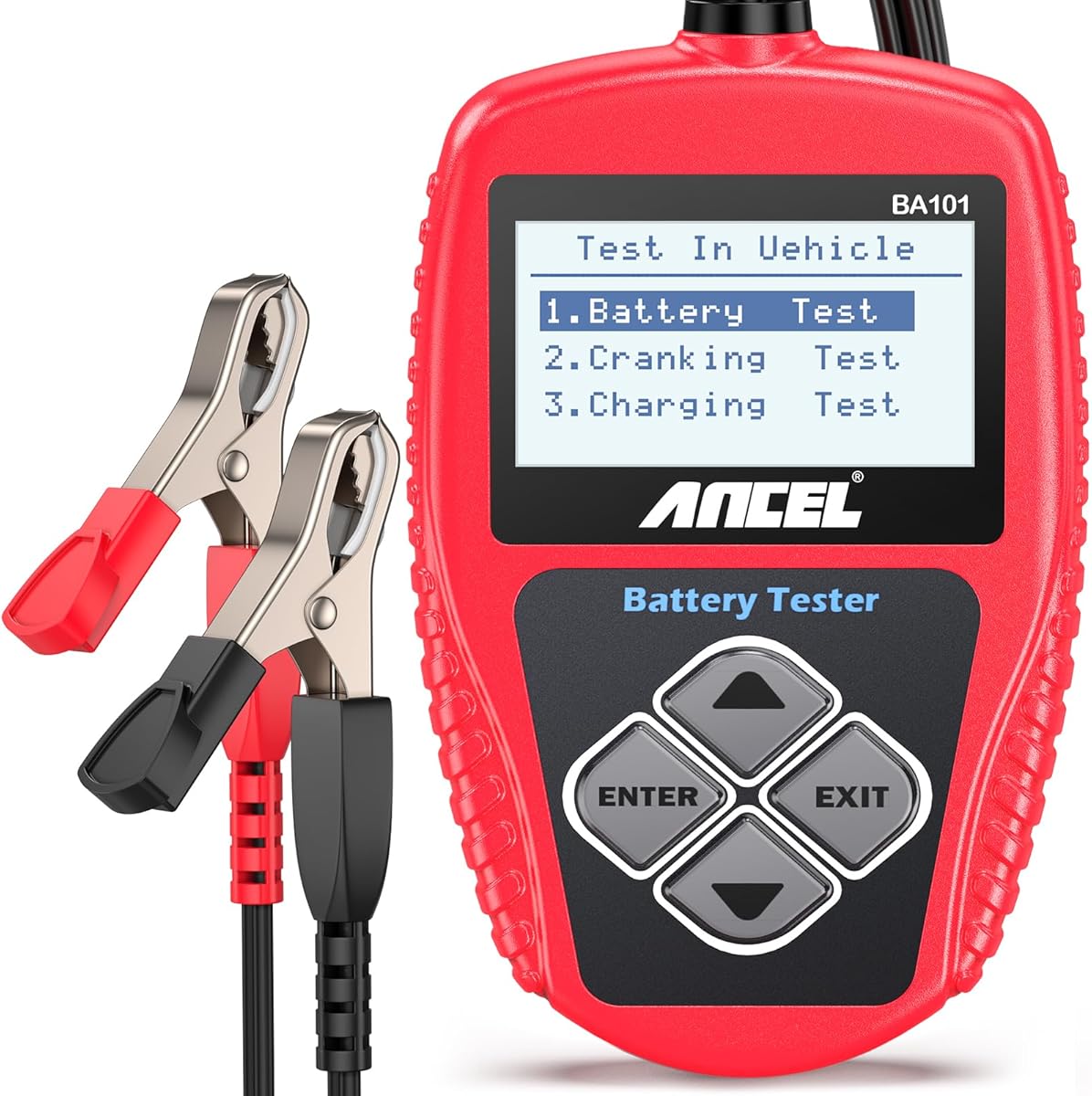
The ANCEL BA101 is a trusted tool for 12V battery diagnostics, featuring in popular automotive analysis content. It provides easy-to-understand readings for State of Health, State of Charge, and CCA capacity. Its focus on accuracy and reliability makes it a solid choice for routine checks.
We may earn a commission when you buy through this link, at no additional cost to you.
Strengths include high-quality copper clips and a precision smart chip that deliver dependable results. The classic black-and-white screen with white backlight ensures visibility in various environments. The device draws power directly from the vehicle battery, eliminating the need for internal batteries or charging.
It does not support lithium batteries or 24V systems, which limits its scope compared to more versatile models. However, for standard 12V automotive applications, it performs effectively. The multi-language support and protection features add value for diverse user bases.
This model is well-suited for users who primarily work with 12V lead-acid batteries in cars, trucks, and boats. Its affordability and ease of use make it a practical addition to any garage. We recommend it for those needing a straightforward, reliable battery tester.
Uses a precision smart chip to deliver accurate SOH, SOC, and CCA readings quickly.
Features reinforced ABS housing and protection against reverse polarity and short circuits.
We may earn a commission when you buy through this link, at no additional cost to you.
This module is designed specifically for testing 18650 lithium battery capacity and internal resistance. It supports four channels simultaneously, making it efficient for evaluating multiple cells. The device displays real-time voltage, power, and current, offering detailed insights for hobbyists and technicians.
We may earn a commission when you buy through this link, at no additional cost to you.
Its main strength lies in the ability to measure capacity in mAh and MWh while tracking internal resistance. This data is crucial for assessing battery health in portable electronics and custom battery packs. The Type-C port simplifies power input, and the compact design fits well in workspaces.
Limitations include its restriction to 18650 cells and the need to request a manual separately. While it does not cover automotive batteries, it excels in niche applications. The integration of charge and discharge functions saves time during testing.
This tool is ideal for users building or maintaining battery packs with 18650 cells. Its detailed metrics and multi-channel support make it a valuable asset for precise diagnostics. We recommend it for those focused on lithium cell performance and capacity verification.
Measures capacity in mAh and MWh with internal resistance checks for accurate cell analysis.
Supports four channels to test multiple batteries simultaneously for faster workflow.
We may earn a commission when you buy through this link, at no additional cost to you.
The ANCEL BT310 delivers high accuracy with up to 99.98% testing precision using a smart chip. It covers both 12V and 24V systems and supports lithium and lead-acid batteries. The device provides five clear result categories to guide decisions on battery replacement or recharging.
We may earn a commission when you buy through this link, at no additional cost to you.
Strengths include the built-in review data function, allowing users to track battery performance over time. The backlit LCD screen ensures readability, and the device operates without internal batteries. Its 4-way protection system safeguards against common testing mistakes.
While it lacks charging capabilities, its diagnostic depth compensates for this. The wide compatibility with multiple battery standards makes it versatile for various vehicles. The focus on accuracy helps users avoid unnecessary replacements.
This tester is ideal for mechanics or vehicle owners who need reliable data for maintenance. Its ability to monitor trends over time adds value for fleet management. We recommend it for those prioritizing accuracy and historical tracking in diagnostics.
Uses a precision smart chip to achieve up to 99.98% testing accuracy for reliable results.
Built-in review function lets you compare past tests to monitor battery health changes.
We may earn a commission when you buy through this link, at no additional cost to you.
The TOPDON BT100 is a compact tool designed for 12V lead-acid battery diagnostics. It provides clear data on State of Health, State of Charge, and voltage through an intuitive menu system. Its small size allows for easy storage in a glove box or console.
We may earn a commission when you buy through this link, at no additional cost to you.
Key strengths include the passive testing approach that powers on only when properly attached. The three-color LED system quickly indicates battery health. Premium copper clamps ensure secure connections, and the device is compatible with various vehicle types.
Its limitation is the lack of lithium and 24V support, but it excels within its scope. The rapid results enable quick decisions on battery replacement. This makes it suitable for auto shops and DIY users who frequently check batteries.
This tester is ideal for users needing a simple, reliable tool for standard automotive batteries. Its portability and ease of use make it a practical choice for everyday checks. We recommend it for those prioritizing convenience and compact design.
Small design fits easily in a glove box for on-the-go battery checks.
Uses a menu system and color LEDs to simplify battery health assessment.
We may earn a commission when you buy through this link, at no additional cost to you.
The RC Cellmeter 7 is a cost-effective tool for checking voltage in LiPo and Li-ion cells. It displays total voltage, individual cell voltages, and the gap between highest and lowest cells. This helps identify weak cells that could impact performance.
We may earn a commission when you buy through this link, at no additional cost to you.
Strengths include its compatibility with up to seven cells and support for various battery chemistries. The compact size makes it easy to carry for hobbyists and drone pilots. Its lightweight construction adds to its convenience.
It does not measure capacity, focusing only on voltage. This is a trade-off for its low price and simplicity. The display is clear but small, which may limit readability for some users.
This checker is ideal for users needing a quick voltage check for RC models or lithium packs. Its affordability and portability make it a practical addition for hobbyists. We recommend it for those seeking a budget-friendly voltage monitoring tool.
Displays the voltage gap between cells to quickly identify weak or unbalanced cells.
Compact and lightweight design fits easily in pockets or tool bags for portability.
We may earn a commission when you buy through this link, at no additional cost to you.
The FOXWELL BT705 is a trusted tool in automotive testing, known for consistent and accurate results. It checks battery health, cranking performance, and charging output with clear guided prompts on the screen. The device is designed for one-person testing with a long cable.
We may earn a commission when you buy through this link, at no additional cost to you.
Strengths include the 2.8-inch screen and protective housing that ensure durability. It helps users avoid replacing good batteries by providing clear results. The included carrying case keeps the tester organized and ready for repeated use.
It does not support lithium batteries, limiting its use to lead-acid systems. However, its reliability and ease of use make it valuable for professionals. The guided operation simplifies testing for first-time users.
This tester is ideal for repair shops or fleets needing reliable diagnostics for 12V and 24V systems. Its durability and clear results make it a dependable choice. We recommend it for those prioritizing professional-grade accuracy and usability.
Step-by-step prompts on the screen guide users through battery and charging tests.
Long test cable allows you to sit in the driver's seat and start the vehicle alone.
We may earn a commission when you buy through this link, at no additional cost to you.
The FOXWELL BT705Plus upgrades the original with up to 30% faster results and a color LCD. It performs three dedicated diagnostic tests for battery, cranking, and charging. The device offers detailed measurements to identify weak batteries or alternator issues before breakdowns.
We may earn a commission when you buy through this link, at no additional cost to you.
Strengths include the high-contrast display and extra-long cables for solo testing. It is compatible with a wide range of 12V and 24V systems. The refined algorithms improve accuracy, even on low-voltage or nearly dead batteries.
The higher price reflects its advanced features and speed, which is acceptable for professionals. It does not support lithium batteries, but excels in lead-acid diagnostics. The color readouts enhance usability compared to monochrome screens.
This tester is ideal for mechanics and fleet managers who need fast, reliable diagnostics. Its advanced features and speed make it a valuable investment. We recommend it for those seeking premium performance and efficiency in battery testing.
Delivers results up to 30 percent faster with a more powerful processor and refined algorithms.
A high-contrast color LCD ensures crisp visibility indoors or outdoors for easy reading.
We may earn a commission when you buy through this link, at no additional cost to you.
This magnetic battery tester supports a wide range of household battery sizes including AA, AAA, C, D, and 9V. It provides a precise digital display indicating voltage and health. The magnetic slider secures the battery firmly, allowing one-handed testing.
We may earn a commission when you buy through this link, at no additional cost to you.
Strengths include its USB-C rechargeable design and long battery life of up to 15 hours. The one-touch operation simplifies testing, and the compact size makes it portable. It supports multiple battery types with clear voltage indicators.
It is not designed for automotive batteries, focusing instead on household cells. This trade-off ensures versatility for everyday needs. The display shows whether voltage is good, weak, or poor for easy assessment.
This tester is ideal for managing home electronics and small devices. Its ease of use and rechargeable design make it a practical household tool. We recommend it for those needing a simple, reliable tester for small batteries.
A magnetic slider holds batteries firmly to prevent slipping during one-handed testing.
USB-C rechargeable with up to 15 hours of use on a full charge.
We may earn a commission when you buy through this link, at no additional cost to you.
The La Crosse 911 offers simple 3-step operation for testing a wide range of batteries. It features an orange tray that slides to connect the battery, with an LED display showing voltage and strength. This device is compatible with AAA, AA, C, D, N, and 9V batteries.
We may earn a commission when you buy through this link, at no additional cost to you.
Strengths include its straightforward design and clear LED indicators. Users can select voltage ranges based on battery type for accurate readings. The touch contacts on the side accommodate 9V batteries efficiently.
It lacks rechargeable features and advanced diagnostics, but this keeps costs low. The basic functionality is sufficient for household needs. Its reliability and simplicity make it a popular choice.
This tester is ideal for quick household battery checks without complexity. Its affordability and ease of use make it accessible for everyone. We recommend it for those seeking a simple, reliable tool for everyday battery testing.
Pulls the tray outward to insert the battery, then slide to close for positive connection.
Allows selection of 1.5V, 1.2V, or 3.0V based on the battery type used.
We may earn a commission when you buy through this link, at no additional cost to you.
Choosing the right Lithium Ion Battery Tester depends on your specific needs, from automotive diagnostics to household cell checks.
Ensure the tester supports your battery chemistry. Automotive tools often cover lead-acid and some lithium models, while specialized testers focus on cells like 18650 or LiPo.
Select a device that matches your primary battery types to avoid limited functionality.
Automotive systems vary between 12V and 24V. Verify the tester covers the voltages you encounter in your vehicles or equipment.
Choose a dual-voltage model if you work with mixed fleets or heavy-duty applications.
Look for testers with high accuracy ratings, often indicated by smart chips or precision technology. Accurate readings prevent unnecessary replacements and ensure reliable diagnostics.
Prioritize devices with proven accuracy to trust test results for critical decisions.
Clear displays with backlight or color options enhance usability in various lighting conditions. Large screens make it easier to interpret complex data quickly.
Opt for models with adjustable contrast or color screens if you test in bright or dark environments.
Advanced testers offer more than voltage checks, including internal resistance, state of health, and charging system analysis. These features help identify specific issues beyond simple failures.
Consider your need for detailed diagnostics when selecting a model.
Robust construction and safety features like reverse polarity and short-circuit protection protect both the tester and the battery. Reinforced housing and quality clamps extend device lifespan.
Choose a durable model with safety protections to ensure long-term reliability.
User-friendly interfaces with guided prompts or simple menus reduce the learning curve. One-handed operation and automatic power settings add convenience.
Prioritize intuitive designs if you share the tool with multiple users.
Some testers draw power from the vehicle battery, while others require internal batteries or USB-C charging. Passive testing models eliminate the need for separate power management.
Select a power source that aligns with your usage patterns and convenience needs.
Always inspect the battery terminals and tester clamps for dirt or corrosion before testing. Clean connections ensure accurate readings and prevent measurement errors.
Follow the manufacturer's instructions for selecting the correct battery type and voltage settings. Entering precise data like CCA or capacity improves result reliability.
Store the tester in a protective case away from extreme temperatures. Regularly check clamps for wear and recharge or replace batteries as needed to maintain functionality.
Some advanced models support both lithium and lead-acid batteries, but many specialized testers are designed for one chemistry. Check the product specifications to confirm compatibility with your battery type.
State of Health measures the overall condition of the battery compared to its original capacity. A high SOH percentage means the battery is healthy, while a low percentage suggests it may need replacement.
Internal resistance testing helps identify aging or damaged cells that may not show up in voltage checks. High resistance can reduce performance and indicate potential failure.
Most testers are for diagnostics only and do not charge batteries. You will need a separate charger to recharge a depleted battery after testing.
Many modern testers are pre-calibrated and do not require user calibration. However, following the manufacturer's guidelines for setup and testing ensures accurate results.
Always disconnect loads before testing and avoid touching metal terminals with bare hands. Ensure the tester has reverse polarity and short-circuit protection to prevent damage.
Specialized testers like cell meters work well for small lithium batteries, but automotive testers may not support them. Match the tester to the battery size and chemistry for best results.
Testing every six months or before extreme weather seasons helps catch issues early. Regular monitoring extends battery life and prevents unexpected breakdowns.
We highlighted ten models ranging from specialized cell testers to comprehensive automotive diagnostics. The ANCEL BT410 offers the best overall versatility, while the RC Cellmeter 7 provides an affordable option for small lithium cells.
Prioritize compatibility with your battery types and systems when making a decision. Accuracy and ease of use are also critical factors for reliable long-term performance.
Remember to check current prices and availability as they may vary. Investing in the right tester ensures you can maintain your batteries effectively and avoid costly surprises.