
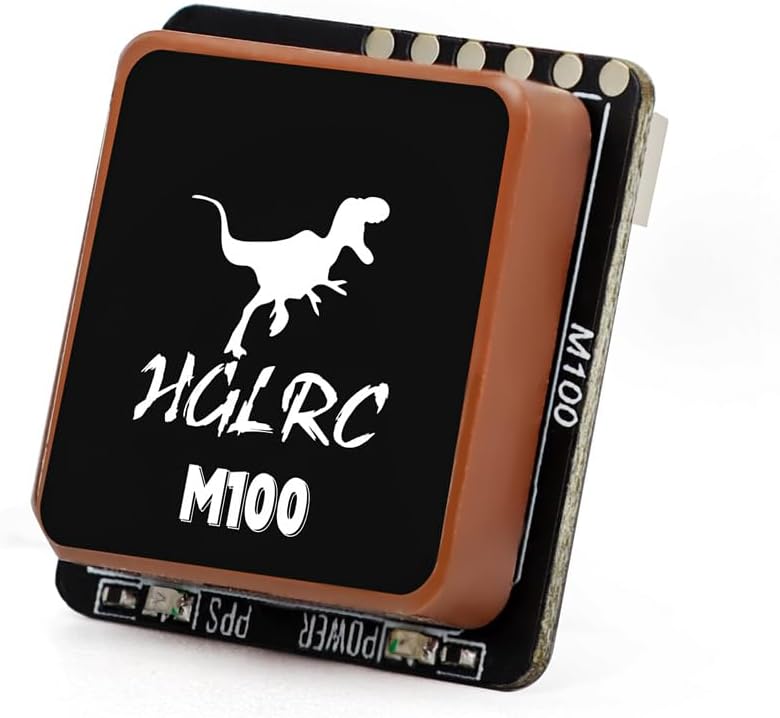
HGLRC Mini M100 GPS Module
4.6Editor score
Compatible with 2 to 7 inch drones
Ceramic antenna for signal stability
Onboard power and PPS indicators
This guide compares ten top GPS modules for drones to help you choose the right GNSS receiver for your FPV, fixedwing, or long range aerial aircraft needs.
Finding the right navigation hardware is critical for safe and reliable drone operations. A high quality module ensures precise positioning, accurate return to home functions, and stable flight paths even in challenging environments.
We evaluated ten leading products based on chip generation, antenna quality, protocol support, and compatibility with popular flight controllers. Each option offers unique strengths for different aircraft types and mission profiles.
Each pick highlights key specs, real world performance notes, and ideal use cases to help you decide. Keep in mind that availability and pricing may fluctuate over time so always verify details before purchasing.
4.6Editor score
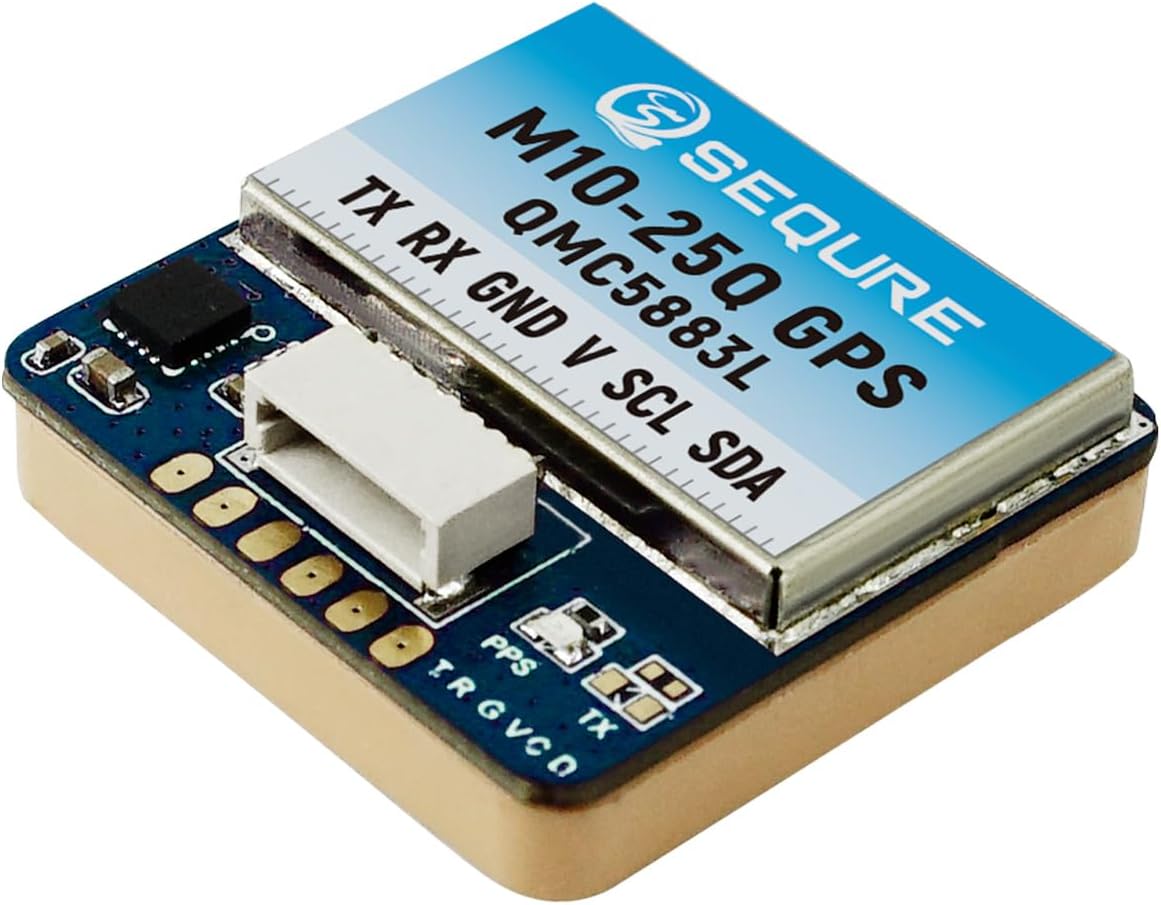
4.8Editor score

4.5Editor score
The following table provides a side by side overview of all ten selected modules. It highlights core specifications such as chipset generation, supported constellations, antenna type, and target aircraft compatibility to help you quickly identify the right fit.


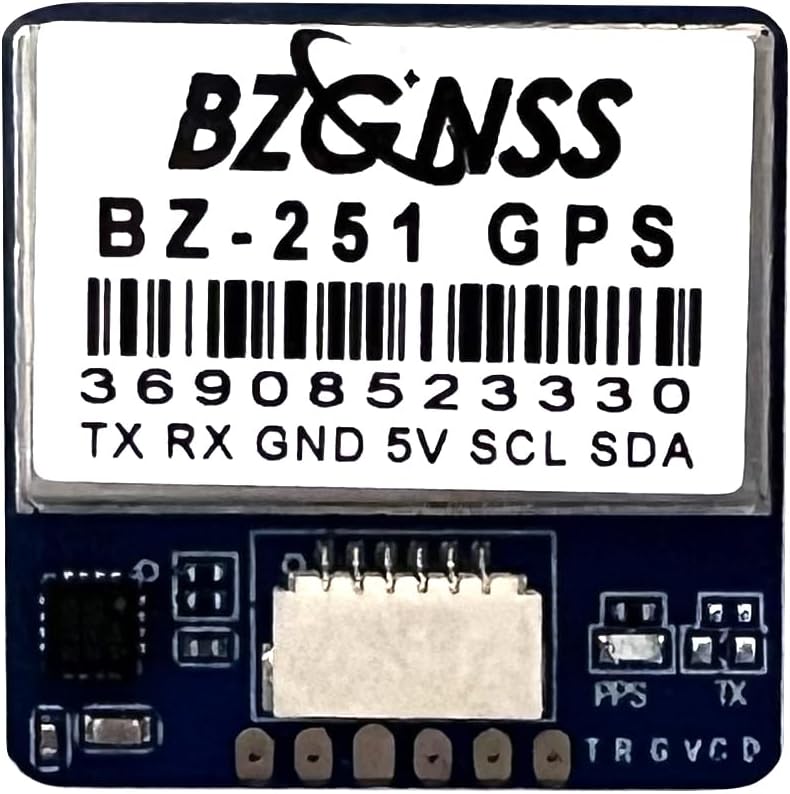


This module stands out as the top choice for FPV and racing drone builds due to its advanced 10th generation chip. It delivers rapid satellite locks and stable positioning across diverse environments including urban canyons or dense forests.
We may earn a commission when you buy through this link, at no additional cost to you.
The inclusion of six GNSS constellations ensures maximum satellite availability which is critical for maintaining a reliable fix during high speed maneuvers. The ceramic antenna design minimizes interference from the airframe and improves signal strength.
While the module offers a plug and play connection option some users may need to solder depending on their flight controller. This is a minor trade-off given the robust performance and broad compatibility with popular systems.
Pilots seeking a balance of speed accuracy and flexibility will find this module ideal for most FPV applications. It is particularly well suited for missions requiring consistent return to home functions or autonomous waypoint navigation.
Support for GPS GLONASS BDS GALILEO SBAS and QZSS enables the module to track more satellites simultaneously improving fix quality and reliability.
Both plug and play and soldering connection methods allow easy integration into various drone builds without requiring specialized tools or extensive wiring.
We may earn a commission when you buy through this link, at no additional cost to you.
The HGLRC Mini M100 offers excellent value for pilots building smaller FPV racing drones where space and weight are primary concerns. Its compact form factor fits easily into 2 to 7 inch airframes without adding bulk.
We may earn a commission when you buy through this link, at no additional cost to you.
This module uses a ceramic antenna and expanded PCB to maintain signal stability even when mounted close to other electronics. It supports 3.3V to 5V input making it simple to connect to standard flight controller power rails.
While it lacks a built-in compass this unit relies on the flight controller or an external sensor for heading data. This design choice helps keep costs low and weight minimal for agile racing applications.
Budget conscious builders will appreciate the straightforward installation and reliable performance for basic navigation needs. It is a practical choice for those prioritizing speed and affordability over advanced heading features.
Designed to work with 2 to 7 inch drones this module adapts well to various builds from mini quads to medium sized FPV platforms.
Onboard power and PPS indicator lights provide instant visual confirmation of module status helping users quickly verify proper operation during setup.
We may earn a commission when you buy through this link, at no additional cost to you.
This module targets professional and semi-pro users working with Pixhawk or PX4 flight stacks that demand high reliability and precise heading data. The integrated compass and robust 72 channel receiver ensure consistent performance in varied conditions.
We may earn a commission when you buy through this link, at no additional cost to you.
With support for GPS GLONASS BeiDou and QZSS this unit achieves fast satellite acquisition and maintains locks even in obstructed environments. The included mounting base and cable simplify installation on larger aircraft or ground robots.
The unit is not compatible with APM controllers and may require firmware updates for certain Pixhawk models. These limitations are acceptable given its specialized design for advanced autonomous missions and precise navigation tasks.
Users needing a turnkey solution with built-in heading support will find this module worth the investment. It is especially suited for long range or industrial applications where data integrity and stability are paramount.
The built-in compass provides accurate heading information without requiring an external sensor reducing wiring complexity and potential points of failure.
Operating across a wide temperature range and featuring durable construction this module is built to withstand demanding environments over extended periods.
We may earn a commission when you buy through this link, at no additional cost to you.
This module is engineered specifically for FPV fixed-wing aircraft where consistent heading and long range navigation are critical. The 10th generation chip paired with a QMC5883L compass delivers reliable directional data for autonomous missions.
We may earn a commission when you buy through this link, at no additional cost to you.
With an expanded 120 channel receiving capability it can lock onto more satellites simultaneously which is beneficial for maintaining accuracy over longer distances. This capability ensures stable positioning even when signal conditions fluctuate during flight.
Manufacturers support is available directly from the original factory providing users with reliable assistance for setup or troubleshooting. While focused on fixed-wing applications it may not be the optimal choice for multirotor builds.
Pilots flying fixed-wing platforms seeking dependable compass and GPS integration should consider this unit. It offers a balanced combination of precision and support tailored to longer flight profiles.
Optimized design for fixed-wing UAVs ensures the module meets the specific navigation and stability requirements of planing aircraft.
Support from the original HGLRC manufactory ensures quick resolution of technical questions or issues during installation and operation.
We may earn a commission when you buy through this link, at no additional cost to you.
The HGLRC M100-5883 offers a remarkably compact and lightweight solution for pilots minimizing weight. Its 21mm by 21mm size and 7.73g weight make it ideal for small fixed-wing or FPV builds where every gram counts.
We may earn a commission when you buy through this link, at no additional cost to you.
Despite its small size it supports GPS Galileo and BDS positioning modes to achieve rapid satellite locks. The carefully modulated ceramic antenna ensures strong signal reception without adding bulk to the airframe.
The module requires precise alignment due to its small dimensions but this trade-off is acceptable for weight-sensitive applications. The QMC5883L compass ensures accurate directional data is maintained during all flight phases.
Pilots prioritizing minimal weight without sacrificing navigation capability will find this module an excellent fit. It is particularly useful for racing or endurance applications where payload efficiency is essential.
At just 7.73g this module helps keep overall aircraft weight low improving flight time and agility for performance-oriented builds.
The combination of advanced chipset and ceramic antenna enables quick satellite acquisition reducing wait time before takeoff.
We may earn a commission when you buy through this link, at no additional cost to you.
This module is tailored for FPV racing drones requiring rapid position updates to support failsafe and return to home functions. Its 10Hz output frequency ensures real-time navigation data during high speed maneuvers.
We may earn a commission when you buy through this link, at no additional cost to you.
Using the new 10th generation chip design it achieves fast positioning in any location while keeping power consumption low. The ceramic antenna and expanded PCB protect signal integrity even in electrically noisy environments.
The module supports six GNSS constellations allowing pilots to choose the best fit for their region or mission needs. Although it may not be suitable for micro drones it excels in standard racing platforms.
Racing pilots needing reliable failsafe performance will appreciate the consistent lock quality and quick response. The flexible connection options make integration straightforward for most standard flight controllers.
A 10Hz update frequency provides position data ten times per second ensuring precise tracking during rapid changes in direction.
Available with both plug and play and soldering methods this module adapts to different wiring preferences and controller layouts.
We may earn a commission when you buy through this link, at no additional cost to you.
Built for professional and industrial applications this module provides reliable navigation for Pixhawk and PX4 flight controllers. Its high sensitivity receiver supports up to 26 satellites for consistent fixes in complex signal environments.
We may earn a commission when you buy through this link, at no additional cost to you.
The integrated compass delivers accurate heading data essential for autonomous mission planning and stable orientation during flight. LED indicators provide immediate feedback on lock status aiding quick diagnosis during field operations.
With an operating temperature range from negative 40 to 85 degrees this unit is designed for extreme conditions. The 5V power supply and included mounting hardware simplify installation on larger platforms.
Users requiring durable and accurate navigation for surveying or logistics missions will find this module highly effective. It offers the stability and precision needed for professional airborne tasks.
Ideal conditions allow for 0.5m CEP accuracy which is sufficient for most surveying and mapping applications requiring high spatial fidelity.
Seamless integration with Pixhawk and PX4 ensures compatibility with industry standard flight stacks used in commercial drone operations.
We may earn a commission when you buy through this link, at no additional cost to you.
This module is specifically designed for the Pixhawk 2.4.8 flight controller ensuring a seamless physical and electrical fit. Its onboard flash memory retains configuration settings across power cycles eliminating the need for repeated setup.
We may earn a commission when you buy through this link, at no additional cost to you.
The M10 chip offers low power consumption alongside high precision positioning with an ideal 1.5m CEP accuracy. The included external compass helps maintain heading stability even when the GPS unit is mounted on the airframe.
It cannot be used with other flight controllers limiting its versatility. However for Pixhawk owners this unit simplifies installation and ensures reliable navigation without compatibility concerns.
Pilots using the specified Pixhawk model will benefit from the optimized design and straightforward setup. It provides a dependable navigation solution tailored to that specific controller.
Built for Pixhawk 2.4.8 this module eliminates guesswork in wiring and mounting ensuring a perfect fit for that controller.
Onboard flash memory saves modified settings so configurations persist even after the power is turned off.
We may earn a commission when you buy through this link, at no additional cost to you.
This module supports both NMEA and UBX protocols offering flexibility for different flight controller configurations. It provides essential location data to enable reliable failsafe and automatic return to home functions.
We may earn a commission when you buy through this link, at no additional cost to you.
Using the advanced 10th generation u-blox M10 chipset it achieves faster satellite acquisition even in complex signal environments. The oil-sprayed ceramic antenna adds durability and helps prevent oxidation over time.
Support for multiple GNSS systems including GPS GLONASS and BDS delivers 1.5m accuracy. The unit is compatible with F4 and F7 flight controllers ensuring broad use in modern FPV platforms.
Pilots prioritizing reliable failsafe performance and flexible protocol options will find this module highly effective. It ensures critical navigation data is available for safe recovery during unexpected events.
Support for both NMEA and UBX allows the module to integrate with various software and hardware setups without limitations.
Oil-sprayed ceramic antenna prevents scratching and oxidation ensuring long-term signal stability and physical durability.
We may earn a commission when you buy through this link, at no additional cost to you.
The FK-D1 is optimized for drones and robotics needing reliable navigation with broad flight controller compatibility. It tracks up to 32 satellites from four major constellations to maintain accurate positioning in diverse environments.
We may earn a commission when you buy through this link, at no additional cost to you.
Integrated flash memory saves user settings so configurations persist after power cycles. A built-in magnetic compass enhances orientation accuracy which is essential for autonomous motion tracking and directional control.
At 12 grams the module is heavier than ultralight options but remains manageable for most platforms. Its high-gain antenna ensures performance in urban or naturally obstructed areas where signal reception is challenging.
Developers and pilots working with INAV Betaflight or ArduPilot will find this module a reliable choice. It balances robust features with straightforward integration for complex robotic or drone projects.
Support for GPS GLONASS Galileo and BeiDou enables tracking up to 32 satellites improving reliability in signal-poor environments.
Built-in flash memory ensures user settings remain saved eliminating the need for reconfiguration after each power cycle.
We may earn a commission when you buy through this link, at no additional cost to you.
Selecting the right GPS module involves evaluating several technical factors that impact flight safety navigation accuracy and system compatibility. Understanding these elements will help you make an informed decision tailored to your specific drone platform.
The chipset generation determines how quickly the module acquires satellites and how accurately it maintains a fix. Newer 10th generation chips offer lower power consumption faster lock times and better signal processing than older models.
Look for modern chipsets to ensure your drone can achieve navigation locks quickly even in challenging environments.
Modules supporting multiple constellations like GPS GLONASS Galileo and BeiDou can track more satellites simultaneously. This increases the likelihood of maintaining a reliable fix in urban canyons or dense forest areas.
Choose a module with multi-constellation support to maximize availability and positioning accuracy across different regions.
An integrated compass helps the flight controller determine heading without an external sensor. This simplifies wiring and reduces potential failure points especially for autonomous missions requiring directional stability.
Verify whether the module includes a built-in compass or if you will need to add one separately.
Ceramic antennas with external expansion PCBs provide better signal stability and reduced interference from airframe components. High-gain designs are particularly beneficial for long-range operations or environments with heavy signal attenuation.
Invest in modules with quality ceramic antennas to ensure consistent signal reception during flight.
Most modern flight controllers support either NMEA or UBX protocols. Some modules offer dual protocol support allowing flexibility to match your software stack without additional configuration.
Confirm that the module supports the protocol required by your flight controller to avoid compatibility issues.
For racing or lightweight builds every gram matters. Smaller modules like the 21mm by 21mm options help reduce payload without sacrificing navigation capability.
Check the dimensions and weight to ensure the module fits your airframe and does not negatively impact flight time or agility.
Some modules offer plug and play connectors while others require soldering. Plug and play options simplify installation for beginners whereas soldering provides a more secure connection for vibration-prone builds.
Evaluate your comfort level with wiring and the available cable length to ensure a safe installation.
Certain modules are designed for specific controllers like Pixhawk or F4 F7 boards. Others are universal and work with various systems including INAV and ArduPilot.
Verify that the module is explicitly compatible with your flight controller to prevent functional limitations.
When installing the module ensure it is mounted away from sources of electromagnetic interference like motors or power distribution boards. Use the provided mounting hardware or double-sided tape to secure it firmly without obstructing the antenna surface.
After connecting power and data wires verify the module is recognized by your flight controller software. Watch the status LEDs to confirm satellite acquisition and check that the compass calibration matches the flight controller's requirements.
Regularly inspect the antenna for physical damage and ensure cables remain tight during vibration testing. Keep firmware updated to maintain optimal performance and compatibility with newer flight stack versions.
If your flight controller already has an integrated compass you may not need another module with a built-in compass. However adding a dedicated compass can improve redundancy and accuracy especially for long range flights where signal integrity matters.
Yes most of these modules are compatible with Betaflight provided the controller supports GPS and the correct protocol is configured. Always check the flight controller's manual to confirm supported baud rates and data formats.
With modern 10th generation chips lock times are typically under thirty seconds in open skies. In obstructed areas like urban canyons it may take longer depending on satellite availability and antenna positioning.
NMEA is a widely supported text-based protocol while UBX is a binary protocol specific to u-blox chips offering faster data updates and lower bandwidth usage. Many controllers support both but UBX is often preferred for high performance needs.
Yes calibration is required to ensure accurate heading data. Most flight controllers provide an onboard calibration routine that requires moving the drone in a figure-eight pattern to map the magnetic field.
Yes a functional GPS module is essential for reliable return to home features. It provides the controller with the necessary location data to navigate back to a safe point automatically.
Most modules are not inherently waterproof so you should protect them with conformal coating or a waterproof housing for outdoor or adverse weather flights. Always check the product specifics for water resistance ratings.
Most modules operate between 3.3V and 5V DC which matches standard flight controller power outputs. Always confirm the input range in the product description to avoid overvoltage damage.
The top three picks offer a balance of performance value and specialization across different drone categories. The SEQURE module leads overall with fast locks and flexible connectivity while the HGLRC Mini is ideal for budget builds.
When selecting your module prioritize chipset generation constellations and flight controller compatibility to ensure reliable navigation. For industrial applications consider modules with integrated compasses and robust temperature ranges.
Keep in mind that pricing and availability change frequently so always verify current specs before purchasing. Review the detailed comparison and user notes to confirm the module fits your specific mission requirements.