
Proster LCR Meter
4.5Editor score
Rotatable LCD screen
9V battery powered
Wide component ranges
This guide compares the top Lcr Meter models for accurate electronic component testing including inductance capacitance and resistance across various budgets.
Finding the right tool for electronic component testing is essential for hobbyists and professionals. A quality Lcr Meter ensures precise measurements of inductance capacitance and resistance for reliable circuit repairs.
We evaluated ten top-rated models based on accuracy frequency options and ease of use. Each product was selected for its ability to handle diverse testing scenarios from basic repairs to advanced lab work.
Each pick highlights key strengths and ideal use cases for different users. Please note that product availability and pricing may change so verify details before purchasing to ensure you get the best value.
4.5Editor score

4.7Editor score

4.4Editor score
This side-by-side comparison outlines the core specifications and capabilities of each selected Lcr Meter to help you choose the best fit for your specific electronic testing needs.

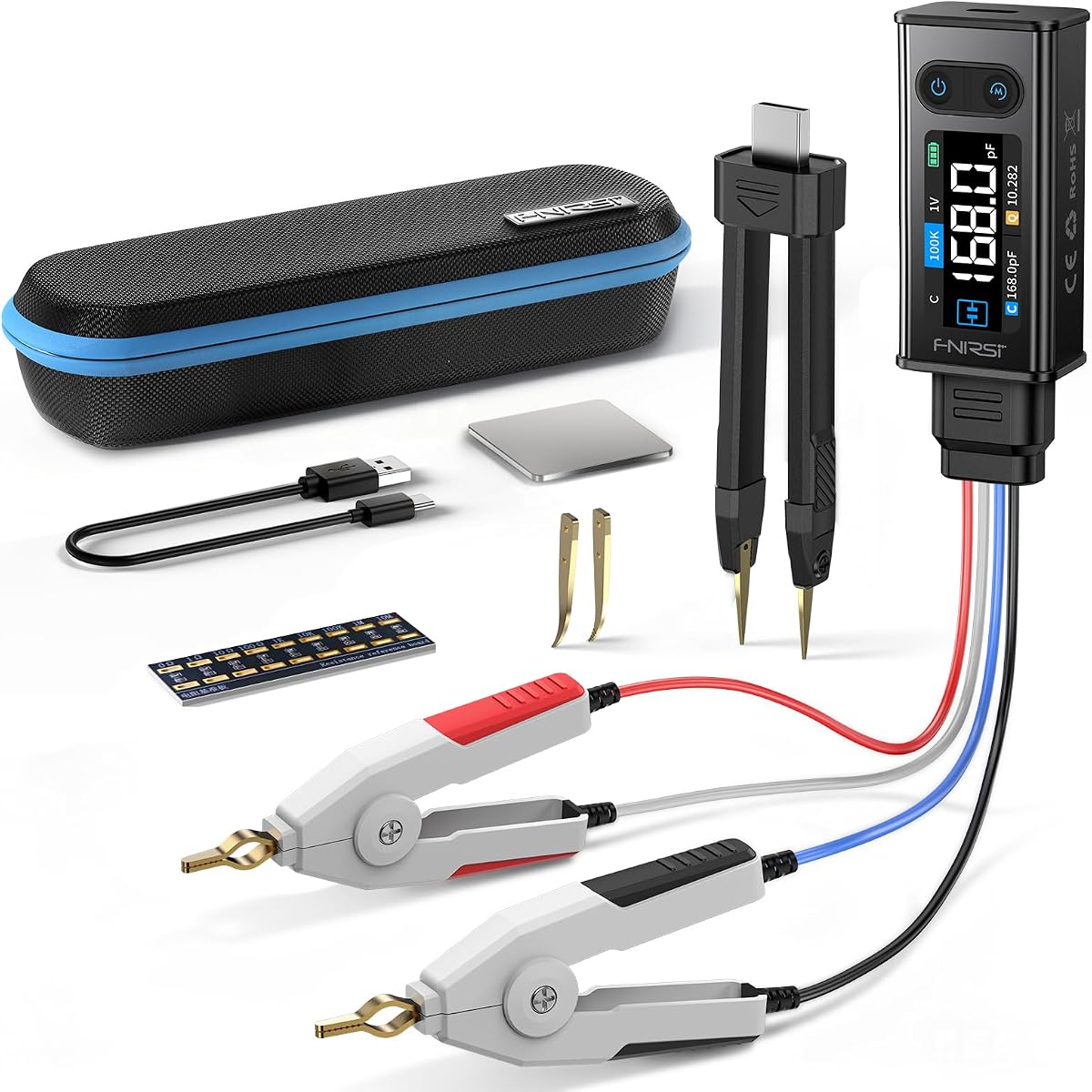


The FNIRSI LC1020E stands out as a top contender for serious electronics work. With a 4.7 rating users praise its dual parameter display and robust testing capabilities.
We may earn a commission when you buy through this link, at no additional cost to you.
This unit offers 19999 counts for high precision. The 100kHz frequency allows testing of components often missed by lower end meters. It supports sorting modes which are vital for production runs.
Setup requires calibration which might be a hurdle for casual users. The interface is dense but becomes intuitive with practice. Battery life is excellent for field work.
Ideal for technicians needing reliability and speed. If you need accurate ESR and Q readings regularly this meter delivers professional results without a benchtop price tag.
View main and secondary parameters simultaneously to save time during diagnostics.
Automatically flags components outside tolerance to speed up inventory checks.
We may earn a commission when you buy through this link, at no additional cost to you.
The DE-5000 is a staple in many workshops for good reason. It provides consistent readings across a wide range of component values.
We may earn a commission when you buy through this link, at no additional cost to you.
Auto ranging simplifies the process by removing manual selection. The dual display shows primary and secondary metrics clearly. It includes a full set of test leads for immediate use.
The casing is robust but adds bulk to your toolkit. Display contrast is lower than modern color screens but readable in most light.
Best for field service where durability is paramount. Its simplicity and robust design make it a trusted choice for decades.
Eliminate manual switching for faster component identification and testing.
We may earn a commission when you buy through this link, at no additional cost to you.
This benchtop meter sets a high standard for lab environments. The 0.1% accuracy ensures trust in critical measurements.
We may earn a commission when you buy through this link, at no additional cost to you.
The 200kHz frequency capability covers RF applications well. Data saving via USB allows detailed logging and analysis on a PC.
Lack of portability limits use to fixed locations. The price reflects its precision features which are not needed for basic hobbyists.
Perfect for production lines or R&D labs where precision is non-negotiable.
Save test results directly to a PC or USB stick for reporting.
We may earn a commission when you buy through this link, at no additional cost to you.
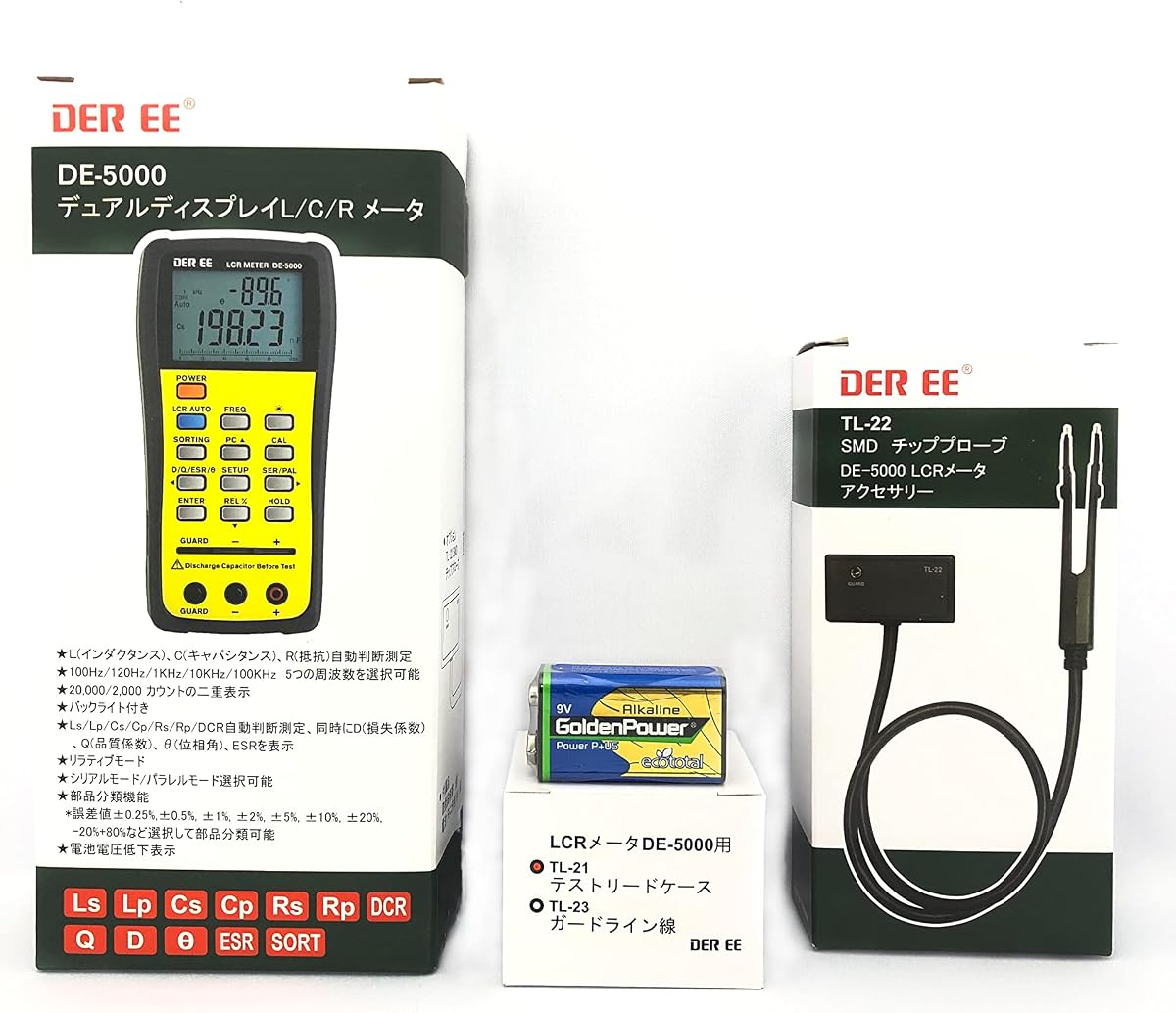
This version of the DE-5000 comes with all necessary tools out of the box. It adds value through included tweezers and test leads.
We may earn a commission when you buy through this link, at no additional cost to you.
The 20000 count display offers better resolution than standard units. Backlighting helps in low light environments without extra accessories.
Weight is a consideration if you carry it daily. The included accessories are high quality but the total bulk is substantial.
Ideal for users who want a one-stop solution without buying separate leads.
Save money by getting test leads and tweezers in one package.
We may earn a commission when you buy through this link, at no additional cost to you.
The Proster meter is excellent for hobbyists starting out. It covers essential measurements without complexity.
We may earn a commission when you buy through this link, at no additional cost to you.
The rotatable screen is a unique feature allowing better viewing angles. It uses a standard 9V battery which is easy to replace.
Sampling speed is slower than advanced units. Accuracy is sufficient for basic repairs but not for precision lab work.
Perfect for students or casual users needing basic functionality at a low cost.
Adjust the display angle for comfortable reading in any position.
We may earn a commission when you buy through this link, at no additional cost to you.
This model is tailored for modern surface mount work. The built-in tweezers make testing tiny components quick and easy.
We may earn a commission when you buy through this link, at no additional cost to you.
Type-C charging ensures you can charge it with modern cables. The magnet on the back keeps it secure on a workbench.
The display is small which can make viewing difficult in bright light. Battery life is moderate and requires frequent charging.
Best for mobile repair shops dealing with smartphones and laptops.
Test small SMD parts without needing separate probe tools.
We may earn a commission when you buy through this link, at no additional cost to you.
The Peak Atlas LCR45 has a high user rating due to simplicity. It avoids unnecessary complexity for faster daily use.
We may earn a commission when you buy through this link, at no additional cost to you.
Manual frequency selection offers flexibility for experienced users. The hold function is easy to access for recording values.
It lacks automatic sorting which limits production use. Menus are basic which means learning curve is minimal.
Great for home workshops where simplicity is valued over advanced features.
Customize settings via an easy menu system.
We may earn a commission when you buy through this link, at no additional cost to you.
This model brings a premium feel to handheld testing. The dual display makes reading both values easy.
We may earn a commission when you buy through this link, at no additional cost to you.
An included AC adapter means it can run indefinitely on a bench. The USB interface is convenient for data transfer.
It is priced higher than similar handheld units. Frequency options are standard but not expanded for specialized RF.
Ideal for users needing a large display and reliable power options.
Read values easily in low light conditions with the built-in backlight.
We may earn a commission when you buy through this link, at no additional cost to you.
The Extech model is known for reliability. The built-in fixture is a major plus for quick checks.
We may earn a commission when you buy through this link, at no additional cost to you.
Limit settings allow for Hi/Lo checks without extra calculation. Calibration features help maintain accuracy over time.
The fixture can take up storage space. It is a robust tool that covers essential needs well.
Recommended for general electronics service and repair shops.
Use the built-in fixture for consistent component placement and testing.
We may earn a commission when you buy through this link, at no additional cost to you.
This model has a perfect user rating for its accuracy. It offers premium specs at a competitive price point.
We may earn a commission when you buy through this link, at no additional cost to you.
The 0.1% accuracy puts it in higher performance tiers. Lifetime support is an appealing promise for long-term users.
User support experiences may vary. It is a strong contender for those seeking accuracy without benchtop cost.
Best for precision users who need reliable data without breaking the bank.
Achieve 0.1 percent basic accuracy for precise component verification.
We may earn a commission when you buy through this link, at no additional cost to you.
Selecting the right Lcr Meter requires balancing precision frequency range and ease of use against your budget and workflow.
Accuracy defines how close the measured value is to the actual component value. For general hobby use 1 percent accuracy is often sufficient. Professionals may need 0.1 percent or better for strict tolerance checks.
Look for basic accuracy specifications that match your project needs to ensure reliable readings.
Different components behave differently at various frequencies. A meter with 100kHz capability can test inductors that 1kHz meters cannot. Higher frequency ranges open up RF and high speed digital testing.
Choose a frequency range that covers the highest impedance components you typically encounter.
A clear display is essential for reading small values and decimal points. Color TFT displays offer better contrast than monochrome screens but cost more. Backlighting helps in dim environments.
Ensure the display is easy to read in the conditions where you work.
Batteries allow portable use but require replacement or charging. Rechargeable options like Type-C are convenient. Benchtop units often run on AC power only which limits location flexibility.
Consider your mobility needs when selecting between rechargeable and replaceable power sources.
Features like sorting mode data hold and calibration help speed up testing workflows. Sorting is critical for bulk checks. Calibration ensures long term accuracy by correcting for test lead effects.
Prioritize features that directly improve your daily testing tasks.
Field work demands a rugged case and robust test inputs. Benchtop units are often less rugged but more precise. Check for warranty terms and build quality indicators.
A sturdy build extends the life of your tool in demanding environments.
USB or RS232 connections allow data transfer to a PC. This is vital for archiving test results and analyzing trends over time. Some models offer software support for deeper logging.
Data connectivity is useful if you need to document test results for reporting.
Included test leads and fixtures add value. Tweezers for SMD components are often sold separately. A complete kit saves extra purchases and ensures quality accessories.
Check what is included in the box to avoid hidden costs.
Begin every session by calibrating the meter using the open and short function. This removes stray capacitance and resistance from test leads ensuring accurate measurements.
Use the appropriate test frequency for your component type. Inductors usually require higher frequencies while capacitors may be measured at lower rates for best results.
Store the meter in a dry place with clean test tips. Avoid measuring live circuits and discharge capacitors before testing to prevent damage to the meter.
LCR stands for Inductance, Capacitance, and Resistance. These are the three primary parameters measured by an LCR meter to assess passive electronic components. Understanding these values helps in verifying component health.
Different frequencies reveal different electrical behaviors in components. High frequencies help test inductors for skin effect and impedance. Low frequencies are better for capacitor leakage and stability checks.
Measuring in circuit is possible but less accurate due to surrounding paths. For best results, remove components or power down the board to avoid false readings from parallel paths.
ESR is Equivalent Series Resistance which indicates how much resistance a capacitor has internally. High ESR often signals a failing capacitor even if capacitance seems normal.
Calibrate using the open and short functions before measuring. Open calibration sets the baseline with no connection and short calibration accounts for test lead resistance for accurate results.
Parallel mode is typically used for capacitors. This configuration mimics how capacitors function in parallel circuits. Always check the manufacturer recommendation for specific capacitor types.
The FNIRSI LC1020E, Proster, and MATRIX MCR5200 offer top performance across different categories. Each has unique strengths that cater to budget, versatility, and precision needs respectively.
Prioritize accuracy and frequency range if you work with inductors and high impedance parts. For general repairs, a handheld model with a clear display will suffice for most tasks.
Prices and availability change frequently so verify current listings before purchasing. Check the latest model reviews to ensure you are getting the most up to date hardware and support.