
JHS Pedals 3 Series Reverb
4.7Editor score
Versatile room to wash effects
EQ and pre-delay controls
Made in Kansas City USA
This guide compares the top hardware reverb units for studios and stages, evaluating sound quality, controls, and build to help you choose the perfect effect
Hardware reverb units bring natural space and depth to audio without relying solely on software. Whether you need pedalboard flexibility or rackmount power, these devices offer tangible control and sonic character that plugins often miss.
We evaluated ten standout units based on sound quality, control layout, build durability, and versatility. From budget-friendly pedals to premium multidimensional processors, this list covers the most effective tools for adding professional reverb to your signal chain.
Each pick highlights key strengths and ideal use cases for different musicians and engineers. Prices and availability can shift, so verify current details before purchasing to ensure you get the best value for your specific audio setup.
4.7Editor score

4.9Editor score

4.8Editor score
The following table provides a side-by-side comparison of all ten hardware reverb units, highlighting their core specifications to help you quickly identify the right fit for your audio needs.
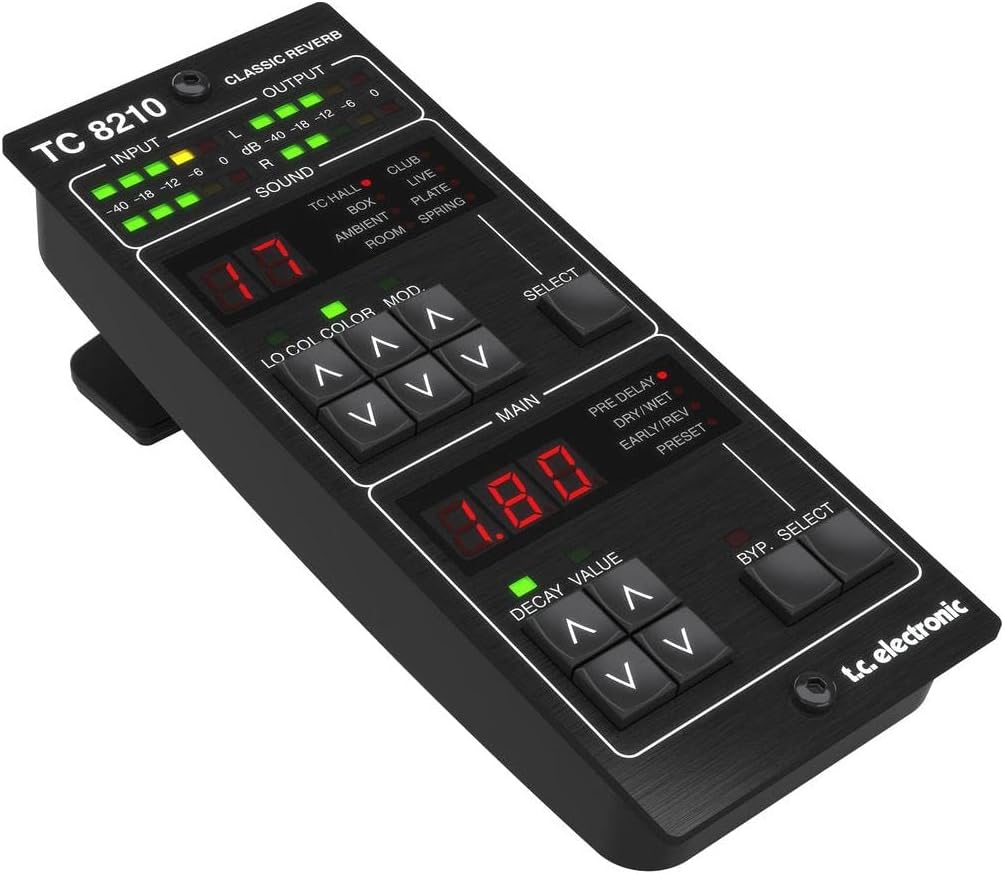




The TC Electronic TC8210-DT delivers the classic TC reverb sound directly to your digital audio workstation. With a rating of 4.7, it is celebrated for its ability to preserve the natural characteristics of your original audio source while adding depth.
We may earn a commission when you buy through this link, at no additional cost to you.
Its dedicated desktop interface offers intuitive hands-on control that mimics hardware feel without taking up rack space. The unit includes custom-built signature presets from favorite artists, ensuring you can access professional tones quickly for vocals or drums.
While it requires a computer connection and the controller is optional, the trade-off is worth it for desktop producers. The wide variety of reverb types ensures you can find the perfect fit for any track you are mixing.
This unit is ideal for engineers who want classic hardware tones with modern convenience. It balances software flexibility with tactile control, making it a top choice for desktop mixing setups.
The TC8210-DT brings the signature TC sound into your DAW with precise digital accuracy and hardware-style control.
Custom-built presets allow you to instantly access professional reverb tones crafted by well-known musicians.
We may earn a commission when you buy through this link, at no additional cost to you.
The Behringer Spring Reverberation 66 brings authentic analog spring reverb to your modular or rack setup. Rated at 4.0, it provides a classic tone that is essential for vintage-inspired guitar or vocal tracks.
We may earn a commission when you buy through this link, at no additional cost to you.
This 72HP module features a dual-spring reverb engine that creates rich, natural decay patterns. It includes two mute footswitch jacks and multiple line and mic inputs for flexible routing in complex audio systems.
While it has a standard rating and basic connections, the analog signal path offers a warmth that digital units often struggle to replicate. It fits well into setups looking for specific spring textures without breaking the bank.
Buy this if you need a dedicated analog spring unit for live or studio use. It is a practical solution for adding authentic texture to your signal chain affordably.
The dual-spring design ensures you get the authentic, mechanical reverb character associated with classic amplifiers.
Multiple inputs and outputs allow this module to integrate smoothly into various professional audio configurations.
We may earn a commission when you buy through this link, at no additional cost to you.
This Audio Effects Processor offers high-precision 24-bit digital processing for clear sound reproduction with minimal noise. It has a perfect 5.0 rating for its ability to preserve audio nuances during live performances and recordings.
We may earn a commission when you buy through this link, at no additional cost to you.
It boasts 199 pre-programmed effect modes including reverb, delay, and chorus, allowing quick selection for various styles. The dual channel design supports parallel processing so you can apply different effects to separate sources simultaneously.
Built in a standard 19-inch rack chassis with sturdy metal construction, it is designed to withstand touring rigors. Adjustable knobs for input and output levels give you direct control over your signal chain.
This unit is ideal for live sound engineers and studios needing a versatile rackmount processor. Its high rating and extensive presets make it a reliable choice for professional audio setups.
The 24-bit processing ensures detailed sound reproduction that keeps your audio signal clean and free from noise.
Parallel processing lets you manage complex sound setups with separate effects for different audio sources at once.
We may earn a commission when you buy through this link, at no additional cost to you.
The Donner Reverb Guitar Pedal brings seven reverb modes including Room, Hall, and Spring to your pedalboard. With a rating of 4.3, it is praised for its transparent tone and stable aluminium-alloy construction.
We may earn a commission when you buy through this link, at no additional cost to you.
Its digital circuit design ensures a true bypass signal path that preserves your guitar's natural sound when the effect is off. The mini size makes it easy to fit onto crowded boards while providing a robust build for stage use.
While the power supply is sold separately, the pedal offers excellent value for its price range. The LED indicator clearly shows the working state, making operation straightforward during live performances.
This pedal is perfect for guitarists needing reliable reverb without taking up too much space. Its durability and variety make it a solid choice for both practice and stage.
From small room sounds to large halls, the seven modes cover the essential reverb types needed for various genres.
True bypass technology ensures your dry signal remains unchanged when the pedal is not active.
We may earn a commission when you buy through this link, at no additional cost to you.
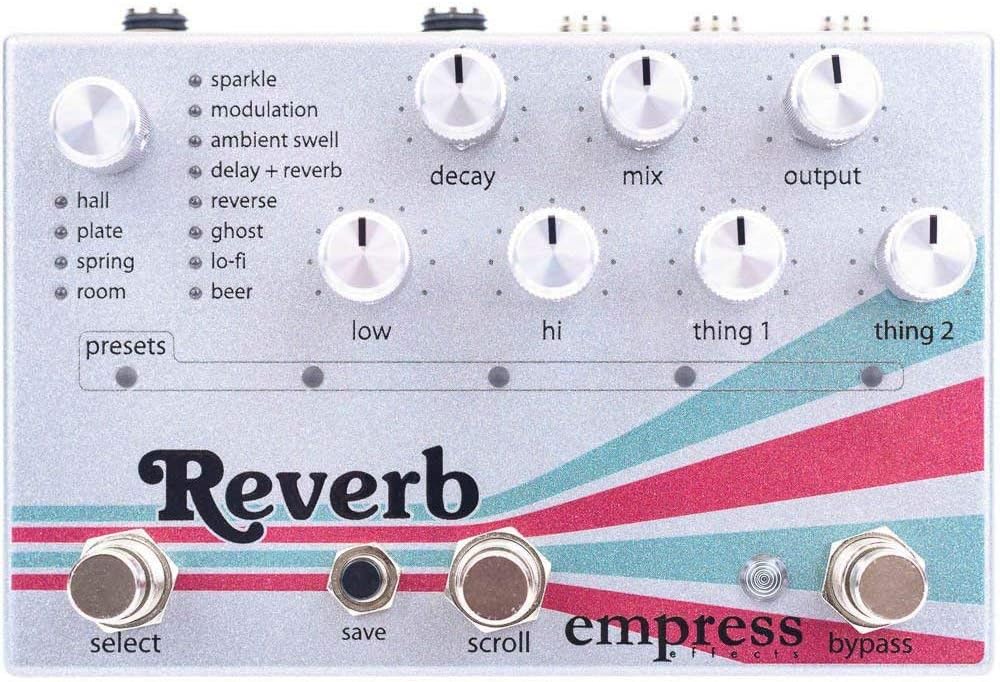
The Empress Effects Reverb offers 24 studio quality algorithms that deliver pristine classic and ambient sounds. Rated 4.4, it is known for being easy to use and fast to dial in for professional results.
We may earn a commission when you buy through this link, at no additional cost to you.
Its tap functions allow for intuitive control over timing and effects, making it a strong choice for live musicians. The unit focuses on clarity and depth, ensuring your guitar or voice sits perfectly in the mix.
While the price is higher than budget options, the sound quality and feature set justify the investment. It provides a level of sonic detail that is hard to find in standard pedals.
This pedal is ideal for players who demand studio-quality reverb on the road. Its balance of usability and high-fidelity sound makes it a top-tier option for serious guitarists.
With 24 studio quality algorithms, you get access to high-end reverb textures directly from your pedalboard.
Easy controls and tap functions ensure you can adjust your sound quickly without interrupting your performance.
We may earn a commission when you buy through this link, at no additional cost to you.
The Strymon BigSky is a multidimensional reverb pedal known for its extensive control and superior sound design. It holds a rating of 4.8 and is considered an industry standard for professional guitarists and producers.
We may earn a commission when you buy through this link, at no additional cost to you.
Its platform allows for deep manipulation of reverb parameters, enabling you to craft unique spatial effects. The pedal is built for stability, ensuring consistent performance during live shows and recording sessions.
While it comes at a premium price and has a steeper learning curve, the versatility is unmatched. Musicians appreciate the ability to go beyond standard reverb into immersive soundscapes.
This pedal is perfect for artists seeking the ultimate in reverb versatility and quality. It stands as a benchmark for high-end effects processing on the modern pedalboard.
The multidimensional engine lets you sculpt reverb tones with a level of control that rivals rackmount units.
Built to withstand rigorous use, the BigSky offers consistent stability for touring musicians worldwide.
We may earn a commission when you buy through this link, at no additional cost to you.
The Strymon blueSky V2 offers a digital stereo reverb experience with precise control over shimmer and decay. With a 4.9 rating, it is a favorite for players seeking rich space and clarity.
We may earn a commission when you buy through this link, at no additional cost to you.
Key features include pre-delay adjustments and high and low decay switches that tailor the tail of your sound. This allows for a wide range of textures from subtle ambience to large washes.
While it is priced higher than entry-level pedals, its performance justifies the cost. The stereo output ensures your reverb fills the mix without muddying the center frequency.
Ideal for soloists and bands needing high-quality stereo effects, this pedal delivers consistent results. Its reputation for reliability makes it a safe choice for professional use.
True stereo processing expands your reverb sound across the mix for a more immersive listening experience.
Decay switches let you switch between short and long tails to fit different musical contexts easily.
We may earn a commission when you buy through this link, at no additional cost to you.
The Walrus Audio Mako R1 MKII features high-fidelity reverb with all six programs rebuilt for vast tonal improvement. Rated 4.3, it offers new ducking and swelling features that add dynamic control to your effect.
We may earn a commission when you buy through this link, at no additional cost to you.
It includes size and diffuse controls for each program to customize the texture of your sound. With 128 onboard presets accessible via the menu, you have plenty of stored tones ready for different songs.
While menu navigation is required for secondary controls, the interface remains simple for adjustments. The feedback EQ control allows you to fine-tune the tone to match your amp or mix.
This unit is best for players who want deep customization and high-fidelity sound. Its updated features make it a strong contender for modern reverb needs.
The ducking feature automatically manages reverb levels to keep your dry signal clear during fast playing.
Access 128 onboard presets to store and recall your favorite reverb settings instantly during performances.
We may earn a commission when you buy through this link, at no additional cost to you.
The Universal Audio Galaxy '74 provides the most authentic emulation of the classic mid-70s analog ambience device. Rated 4.3, it features a full modeling of the classic multi-head tape delay mechanism and spring reverb.
We may earn a commission when you buy through this link, at no additional cost to you.
Silent switching and buffered bypass ensure your signal stays clean, while spillover trails let effects sustain naturally when switched off. You can download the UAFX Control app to tweak footswitch functionality and customize oscillation sounds.
It includes doubled delay times for effects that go beyond the original hardware, giving you more versatility. The USB Type-C connection allows for easy updates via computer to keep the unit current.
This pedal is ideal for tone chasers seeking vintage tape textures with modern flexibility. It captures the iconic analog preamp section and is a great choice for retro-inspired music.
The Galaxy '74 captures the warmth of classic 70s analog gear with precise digital modeling.
App connectivity allows you to customize parameters like footswitch functionality and oscillation effects easily.
We may earn a commission when you buy through this link, at no additional cost to you.
The JHS Pedals 3 Series Reverb is an extremely versatile unit that allows any reverberation effect from small rooms to endless washes. With a 4.7 rating, it is praised for its bright or dark texture adjustment via the EQ.
We may earn a commission when you buy through this link, at no additional cost to you.
The pre-delay knob lets you explore effects ranging between slap-like singing sounds and spacey spring-like tones. It runs on standard 9V DC negative center power and is made in Kansas City USA for quality build.
While it lacks some modulation modes found in expensive pedals, it covers all essential reverb needs. The versatility and build quality make it a standout value for any guitar pedalboard.
This pedal is perfect for musicians needing a reliable, versatile reverb without breaking the bank. Its USA manufacturing and high rating ensure you are getting a quality tool.
The dedicated EQ section allows you to match the reverb texture to your specific guitar and amp.
Adjusting pre-delay lets you change the impact of the effect from tight to spacious.
We may earn a commission when you buy through this link, at no additional cost to you.
Selecting the right hardware reverb unit depends on your budget, available space, and specific sonic goals. This section breaks down the key factors to consider.
Digital reverb units offer a wide range of algorithms and preset options, making them ideal for diverse genres. Analog units, like spring modules, provide warmer, more organic tones but with fewer options.
Choose digital for flexibility and analog for specific vintage textures.
If you have limited space on your pedalboard, a compact pedal like the Donner or JHS Series is essential. Ensure the chassis is metal and sturdy enough to withstand touring demands.
Prioritize durability and size compatibility with your current layout.
Stereo outputs allow the reverb to fill the space around the listener, which is crucial for live sound. Mono units are simpler but can lack width in a mix.
Look for stereo outputs if you want a wide ambient soundstage.
Units with dedicated knobs for decay, mix, and pre-delay are easier to tweak live. Complex menus might offer more features but slow down your workflow.
Ensure the control layout matches your preference for hands-on interaction.
Most pedals run on 9V DC but check if the power supply is included or sold separately. Some rack units require higher voltage or current, so verify your power supply capacity.
Always confirm power needs before purchasing to avoid extra costs.
If you switch between many songs, look for units with onboard presets. This saves time and ensures consistent tones across different performances.
Choose models with memory features if you need recall options.
Check the input and output jacks to ensure they match your gear. Some units offer USB for updates or MIDI control, which adds future-proofing to your purchase.
Verify connectivity options to avoid adapter issues.
Connect the unit in the middle of your signal chain, usually after modulation and before delay. This ensures the reverb captures the tone of your effects rather than preceding them.
Start by setting the mix control to a low level and increase it until the effect is noticeable but not overwhelming. Use the decay parameter to match the tempo of your song.
To maintain your unit, store it in a dry place and avoid extreme temperatures. Regularly check cables and jacks for wear to ensure consistent signal quality during use.
Digital reverb units use algorithms to create artificial space, offering more flexibility and sound types. Hardware reverb units are physical devices that process your audio signals and often provide better control over parameters.
While many units come with a power adapter, some do not. Always check the product description to see if a power supply is included or needs to be purchased separately.
Yes, most hardware reverb units can be integrated into a home studio setup. You can route your audio through the unit and record the processed signal directly into your DAW.
It depends on your needs. Hardware units offer tactile control and unique analog character that plugins can't perfectly replicate. However, plugins may be more cost-effective for complex setups.
For live use, choose a pedal with reliable footswitch functionality and preset storage. Models like the Strymon blueSky or JHS 3 Series are popular for their stability and sound quality.
Many advanced units have onboard memory slots for saving settings. Refer to the manual to learn how to access the menu and save your specific reverb configurations.
Stereo reverb provides a wider soundstage which enhances the listening experience. While not strictly necessary, it is highly recommended for full-band mixes and professional setups.
We explored ten hardware reverb units ranging from compact pedals to rackmount processors. Each offers distinct advantages depending on your specific workflow and budget constraints.
Prioritize units that match your control needs and output requirements. Whether you value stereo width or simplicity, the right choice will elevate your audio presence.
Remember that prices and availability can change frequently. Verify current details before purchasing to ensure you are getting the best value for your specific setup.