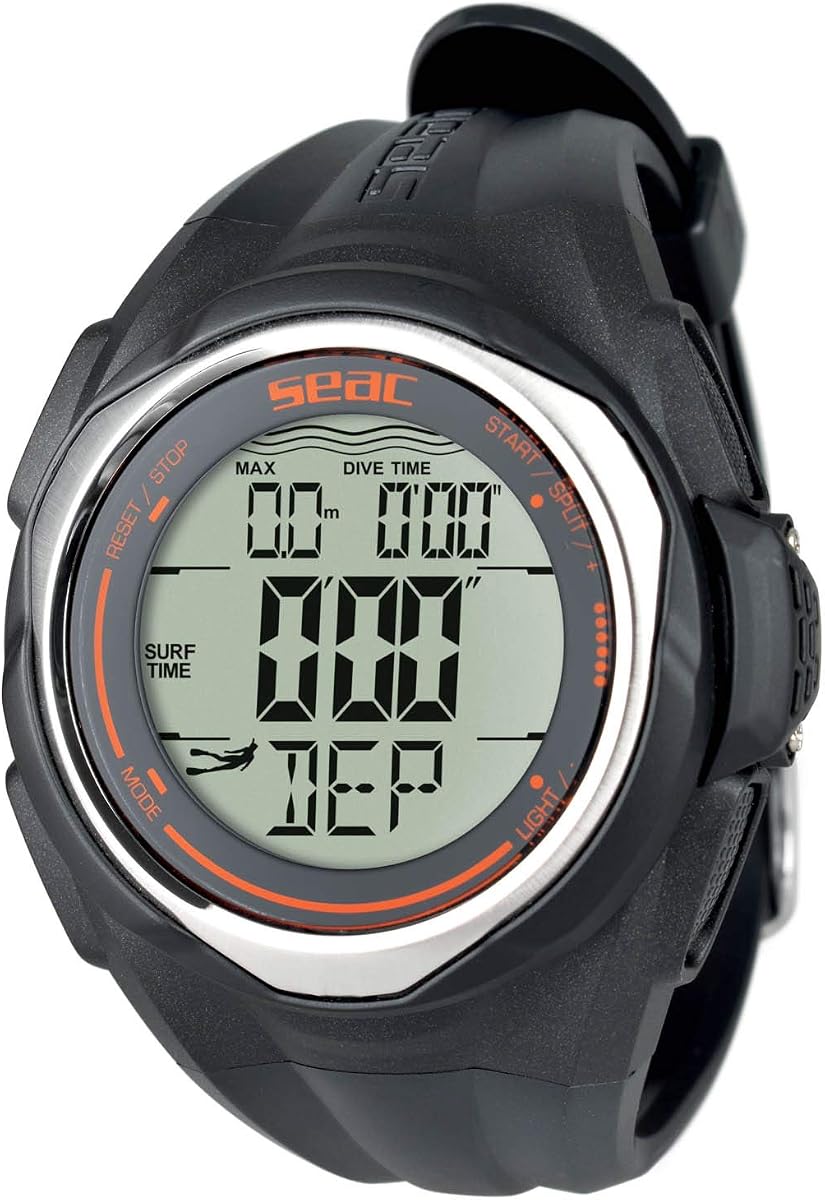
SEAC Partner
4.0Editor score
Records up to 99 dives
100 meter water resistance
Backlit display for visibility
This guide compares the top dive watch for freediving options available in October 2026 to help you choose the best computer for your underwater adventures and
Selecting the right dive watch for freediving is crucial for safety and performance underwater. A quality device tracks depth, time, and surface intervals to prevent issues like decompression sickness. It ensures you can focus on your breath and movement without worrying about monitoring vital dive data manually.
We analyzed ten leading models based on durability, features, and user ratings to create this comprehensive list. Each product offers unique strengths tailored to different skill levels and diving styles. Our comparison highlights key specifications and real-world usability to help you make an informed decision for your next expedition.
Every pick includes detailed reviews of pros, cons, and specific capabilities to match your needs. Prices and availability can change frequently so always verify the latest details before purchasing. This guide serves as a reliable resource to find the perfect tool for your freediving journey today.
4.0Editor score

4.6Editor score

4.8Editor score
This side-by-side comparison outlines the core capabilities of each featured dive watch to simplify your selection process. Review these specifications to understand how depth tracking, battery life, and extra features vary across models.


The SEAC Partner is a straightforward wrist-mounted computer designed for budget-conscious freedivers. It holds a solid 4.0 rating from users who appreciate its simplicity and reliability. This device focuses on the essentials like timing and depth without complicating the experience.
We may earn a commission when you buy through this link, at no additional cost to you.
Its standout quality is the ability to record up to 99 dives on a single CR2032 battery. The backlit display ensures you can read data in low light conditions. The 100 meter water resistance rating provides sufficient protection for most recreational freediving activities.
While it lacks advanced connectivity like Bluetooth or smartphone syncing, this keeps the device affordable and easy to use. Divers who prefer analog-style tracking without digital distractions will find this trade-off acceptable. It delivers core functionality without unnecessary bloat.
You should buy this if you are new to freediving and need a basic timer and depth tracker. It is ideal for those who want a reliable backup or entry-level tool. The simplicity ensures you spend less time fumbling with menus underwater.
This computer offers essential freediving tracking at a fraction of the cost of high-end models.
Using a common battery type means you can easily replace power without specialized equipment.
We may earn a commission when you buy through this link, at no additional cost to you.
The SALVIMAR One Plus functions as a watch-style computer that blends daily wear with underwater utility. Rated 4.2 by users, it stands out for its clear EL backlight display which aids visibility in deep water. It is designed to support both freediving and spearfishing sessions.
We may earn a commission when you buy through this link, at no additional cost to you.
Key strengths include comprehensive dive tracking such as surface recovery monitoring and temperature readings. The device also includes multi-function features like world time and programmable alarms for everyday use. This versatility makes it a strong companion for divers who also travel or train.
The trade-off is that it does not offer advanced decompression modeling or smartphone connectivity found in pricier units. However, for snorkeling and basic freediving, the depth gauge and timer provide adequate safety margins. The lightweight design ensures comfort during long sessions.
Buy this if you need a versatile watch that transitions easily from land to sea. It suits freedivers who value readability and basic metrics over complex data analysis. The alarm functions also help you manage surface intervals precisely.
The EL backlight technology ensures you can read depth and time even in dark waters.
Beyond diving, world time and alarms make this a practical accessory for daily activities.
We may earn a commission when you buy through this link, at no additional cost to you.
The SUUNTO D5 is recognized for its full color display which makes data easy to interpret underwater. It has a 4.0 rating reflecting its utility for divers who want visual clarity. The device supports wireless tank pressure monitoring and vibration alarms for discreet alerts.
We may earn a commission when you buy through this link, at no additional cost to you.
A major strength is the integration of a digital compass and wireless mobile connection. This allows for seamless data sharing and navigation without needing extra gear. The vibration alarms are particularly useful when noise levels need to be minimized during sensitive dives.
Some users have noted inconsistencies in the interface or battery life which may require maintenance. While the color screen is attractive, it might drain power faster than monochrome alternatives. These issues are manageable for those who prioritize visual feedback.
Choose this model if you prefer a modern look with color coding for dive modes. It is suitable for divers who want a single device for both scuba and freediving needs. Ensure you check firmware updates to maintain performance standards.
The color display helps distinguish between different dive modes and warnings quickly.
Connects to tanks and phones wirelessly to reduce cable clutter and setup time.
We may earn a commission when you buy through this link, at no additional cost to you.
The Cressi Nepto is engineered specifically to protect divers from Taravana and pulmonary edema risks. It holds a 4.1 rating for its focus on safety algorithms and customizable settings. The compact 48mm case fits well on most wrists while housing advanced protection features.
We may earn a commission when you buy through this link, at no additional cost to you.
Key strengths include the proprietary algorithm designed by Cressi to monitor safe ascent rates. The high-contrast 35mm display ensures readability even in murky conditions. Being made in Italy adds a layer of quality assurance and design heritage that enthusiasts appreciate.
The compact size may be a trade-off for those who prefer larger screens or buttons. Additionally, the price reflects its specialized safety features which might be higher than generic models. However, for health-conscious freedivers, this investment is often justified.
You should buy this if preventing shallow water blackout and edema is your top priority. It is ideal for serious freedivers who want tailored safety algorithms. The customizable settings allow you to adapt the device to your specific training routine.
Specialized algorithms warn you about risks like Taravana and pulmonary edema during dives.
Designed and manufactured in Italy, ensuring high build quality and durable materials.
We may earn a commission when you buy through this link, at no additional cost to you.
The CRESSI Leonardo 2.0 offers versatile dive modes including Air, Nitrox, and Gauge for varied setups. With a 4.2 rating it is praised for its simple single-button interface that reduces distraction. It also pairs with iOS and Android for seamless data management.
We may earn a commission when you buy through this link, at no additional cost to you.
Key strengths include the ability to switch between modes easily and the inclusion of critical visual alerts. The infrared data transfer allows you to manage logs on your computer without cables. Italian craftsmanship ensures durability for regular underwater use.
The infrared transfer can be slower compared to modern Bluetooth options which might frustrate tech users. Additionally the design is functional rather than flashy compared to newer watches. These trade-offs are acceptable for those prioritizing core function over style.
Buy this if you need a reliable computer that supports different gas mixes and devices. It suits divers who want simple navigation without complex menus. The smartphone pairing ensures you can track progress over time efficiently.
A single button interface simplifies menu navigation so you stay focused underwater.
Connects to devices to keep your dive history organized and accessible for review.
We may earn a commission when you buy through this link, at no additional cost to you.
The Garmin Descent G1 is our top pick for its rugged build and comprehensive health features. It has a 4.6 rating from users who value its reliability. The sapphire lens and 24/7 heart rate monitoring make it more than just a dive tool.
We may earn a commission when you buy through this link, at no additional cost to you.
Key strengths include GPS marking for entry exit points and support for over 30 sports apps. The device tracks HR Pulse Ox and sleep to give insights into your overall wellness. It also stores up to 200 dives for easy upload and review.
While it is more expensive than entry-level computers the added health features justify the cost for many. The battery life in dive mode is up to 25 hours which is excellent for long trips. Some users find the menus slightly complex at first.
Choose this if you want an all-in-one watch for fitness and diving. It suits active individuals who track their health metrics regularly. The freediving support ensures you get accurate data regardless of your dive style.
Monitors heart rate and sleep to help you understand your body's readiness for diving.
The sapphire lens and silicone bands provide long lasting durability against scratches and wear.
We may earn a commission when you buy through this link, at no additional cost to you.
The Garmin Descent Mk3i is a premium dive-first design with a stunning AMOLED display and titanium bezel. It holds a 4.6 rating for its advanced capabilities like SubWave sonar for group dive support. The dive readiness tool offers guidance on how stress affects your safety.
We may earn a commission when you buy through this link, at no additional cost to you.
Key strengths include the built-in LED flashlight and multi-band GPS for accurate surface tracking. It supports diving up to 200 meters and stores 200 dive logs. The high-contrast display ensures readability in any lighting condition above or below water.
The 51mm size may be too large for smaller wrists and the price is significantly higher. It might be overkill for casual snorkelers who just want basic depth tracking. For technical divers however the features are unmatched.
Buy this if you require top-tier technology for technical or deep diving. It is ideal for professionals who need precise GPS and flashlight features. The readiness tool helps optimize your training and recovery schedule effectively.
The AMOLED screen delivers vibrant colors and high contrast for clear data underwater.
Analyzes factors like sleep and stress to advise if you are ready for a dive.
We may earn a commission when you buy through this link, at no additional cost to you.
The Cressi Raffaello is a versatile computer featuring a built-in digital compass for precise navigation. It has a 4.4 rating for its reliable performance and mixed-gas planning capabilities. The long battery life of 4 years reduces maintenance needs for frequent divers.
We may earn a commission when you buy through this link, at no additional cost to you.
Key strengths include the RGBM planning system which is useful for divers using mixed gas. It also offers dual data transfer options via Bluetooth and USB for easy log management. The apnea mode supports freediving alongside scuba activities.
The design is somewhat bulky compared to slim watch computers which may affect comfort for some. Additionally the interface is heavily optimized for scuba which might limit freediving specific features. These are minor issues for those needing robust planning tools.
You should buy this if you want strong navigation tools and battery efficiency. It suits divers who move between freediving and scuba frequently. The compass eliminates the need for separate gear improving your comfort underwater.
The built-in compass helps you stay oriented during complex dives without extra gear.
A user-replaceable battery lasts years so you spend less time maintaining your device.
We may earn a commission when you buy through this link, at no additional cost to you.
The Shearwater Teric is a high-performance wrist computer with a 4.8 rating for its precision. It supports Bühlmann ZHL-16c algorithms and configurable gradient factors for complex dive planning. The device is built with 316 stainless steel and offers vibration alerts.
We may earn a commission when you buy through this link, at no additional cost to you.
Key strengths include support for Open-Circuit and fixed PO2 modes which are vital for technical dives. The firmware is upgradeable to ensure you get the latest features without buying new hardware. Wireless tank pressure transmitters allow monitoring up to eight divers.
The interface may be too technical for beginners who just want simple timing. The stainless bezel adds weight which some divers might find heavy for long treks. However serious technicians find these features indispensable for safety.
Choose this if you are an advanced freediver or technical diver needing accurate algorithms. It is ideal for those who need to track complex gas mixes. The upgradeable firmware ensures the device grows with your skills.
Configurable gradient factors allow precise control over decompression safety margins.
Upgradeable firmware ensures your computer stays current with the latest safety protocols.
We may earn a commission when you buy through this link, at no additional cost to you.
The Shearwater Peregrine is a compact dive computer praised for its simple two-button interface. It holds a 4.7 rating for its straightforward state-aware menu structure. The device includes a wireless charging station and durable stainless steel buttons.
We may earn a commission when you buy through this link, at no additional cost to you.
Key strengths include a battery life of up to 30 hours on medium brightness which covers long expeditions. The interface is designed to be intuitive reducing the risk of errors during a dive. It provides essential metrics without overwhelming complexity.
It lacks some of the advanced features like GPS or wireless pressure monitoring found in higher-end models. The screen size is also smaller which might be a challenge for those with vision issues. For basic diving however it is highly effective.
Buy this if you want a reliable no-frills dive computer that is easy to use. It is ideal for divers who prefer manual control over automated features. The wireless charging makes it convenient to power up before a trip.
The two-button layout keeps navigation simple so you stay focused on the dive.
Extended battery life supports long trips without worrying about recharging mid-expedition.
We may earn a commission when you buy through this link, at no additional cost to you.
Choosing the right dive watch requires understanding features that impact safety and usability. This guide outlines key factors to consider before making a purchase.
Water resistance determines the maximum depth your device can handle safely. For freediving you need a minimum of 100 meters to ensure reliability during deep dives. Always check the rating to confirm it suits your specific dive plans.
Look for models rated at least 100 meters for freediving activities.
A clear display is critical for reading data in dark water conditions. Backlit or EL screens help you monitor stats without distractions. High contrast ensures numbers remain visible regardless of light levels.
Choose a backlit display for better visibility in low light environments.
Battery performance affects how often you must maintain your gear. Some units offer weeks of usage while others need frequent changes. Wireless charging options simplify recharging for modern devices.
Prioritize devices with long battery life to reduce maintenance frequency.
Different models support various diving modes like freediving or gauge. Ensure the watch aligns with your specific training or recreational needs. Versatile units can also support scuba if you diversify your activities.
Select a computer with modes that match your primary diving style.
Connectivity options like Bluetooth allow you to upload logs to your phone. This feature helps track progress over time and review stats easily. Consider if you value digital data management.
Opt for Bluetooth or USB transfer if you want detailed dive logs.
Advanced computers include algorithms to protect against shallow water blackout. Features like Taravana risk protection can be vital for safety. Ensure the device provides necessary alerts for surface intervals.
Check for specific safety alerts to enhance your protection underwater.
A durable build ensures the watch survives harsh underwater environments. Materials like sapphire or stainless steel add longevity. A rugged design resists scratches and pressure changes.
Choose models with robust materials like sapphire or steel for durability.
Simple menus reduce the chance of errors during critical moments. A watch with intuitive navigation keeps you focused on your dive. Avoid overly complex systems if you prioritize ease of use.
Prefer simple button interfaces to keep operations straightforward.
Before your first dive ensure the watch is fully charged or has fresh batteries. Check that all seals and buttons are secure to prevent water intrusion. Familiarize yourself with the menu layout to avoid confusion underwater.
During use monitor your depth and time limits carefully to stay safe. Use surface interval tracking to allow your body to recover properly. Record each session to help you track progress over time.
After diving rinse the watch with fresh water to remove salt and debris. Dry it thoroughly before storing it in a cool dry place. Regularly check the strap and seals to ensure continued performance.
Yes many dive watches are designed specifically for freediving and support breath-hold modes. They track depth and time without requiring decompression calculations which suits breath hold dives. Just ensure the unit explicitly states freediving support to avoid using a scuba only model.
Most models in this guide are rated for 100 meters or more which is sufficient for advanced freediving. Some units offer up to 200 meters for technical diving scenarios. Always verify the specific depth rating before purchasing to match your needs.
Many dive watches include built-in temperature sensors so a separate thermometer is unnecessary. This feature helps you monitor water conditions during your session. Check the product specs to confirm if temperature monitoring is included.
Most modern computers use Bluetooth or USB to connect to smartphones or PCs. You can then upload logs to an app to review your statistics. Ensure your device is compatible with your phone's operating system before syncing.
Taravana protection warns divers about shallow water blackout risks during repeated deep dives. It tracks surface intervals to ensure you wait long enough between dives. This feature adds a layer of safety for frequent deep freedivers.
Battery life varies widely ranging from 30 hours of continuous use to several years for standard cells. Advanced smartwatches offer up to 25 hours in dive mode. Check the specs to see the estimated usage time for your model.
Most units allow battery replacements and seal checks by certified technicians. However internal electronic issues may require sending the device back to the manufacturer. Always consult the warranty terms to understand repair options before buying.
Several models support both freediving and scuba diving modes for versatility. However dedicated freediving units may lack decompression features needed for scuba. Ensure the watch supports your specific activity before purchasing to avoid limitations.
We reviewed ten top rated dive watches ranging from affordable budget options to premium technical models. Each pick offers unique strengths suited to different levels of diving experience and safety needs.
Prioritize features like water resistance display readability and battery life when selecting a unit. Safety features like Taravana protection are valuable for those pushing depth limits regularly.
Prices and availability change often so check current listings before making a final decision. Always verify the latest specs to ensure the device meets your current diving standards.