
THUSTAR 8MP Document Camera & Webcam 4K
4.4Editor score
Adjustable image reversal function
3-level LED lights for visibility
Foldable design for portability
Document cameras have become essential tools for modern educators and professionals who need to share visual content clearly. These devices capture real-time images of physical objects and display them on screens or projectors. Choosing the right one depends on your specific workflow and budget constraints.
We have analyzed ten leading models based on resolution, connectivity options, and ease of use. Each product offers unique strengths for distance learning, remote teaching, or live demonstrations. Our evaluation focuses on performance, compatibility, and value to ensure you find a reliable solution.
Each pick highlights key features and ideal use cases to simplify your decision process. Please note that prices and availability may change frequently on retail platforms. We recommend verifying current offers before making your final purchase decision today.
4.4Editor score
4.5Editor score

4.6Editor score
As an Amazon Associate we earn from qualifying purchases.
This side-by-side comparison highlights the core specifications and capabilities of each model to help you identify the best fit for your environment.


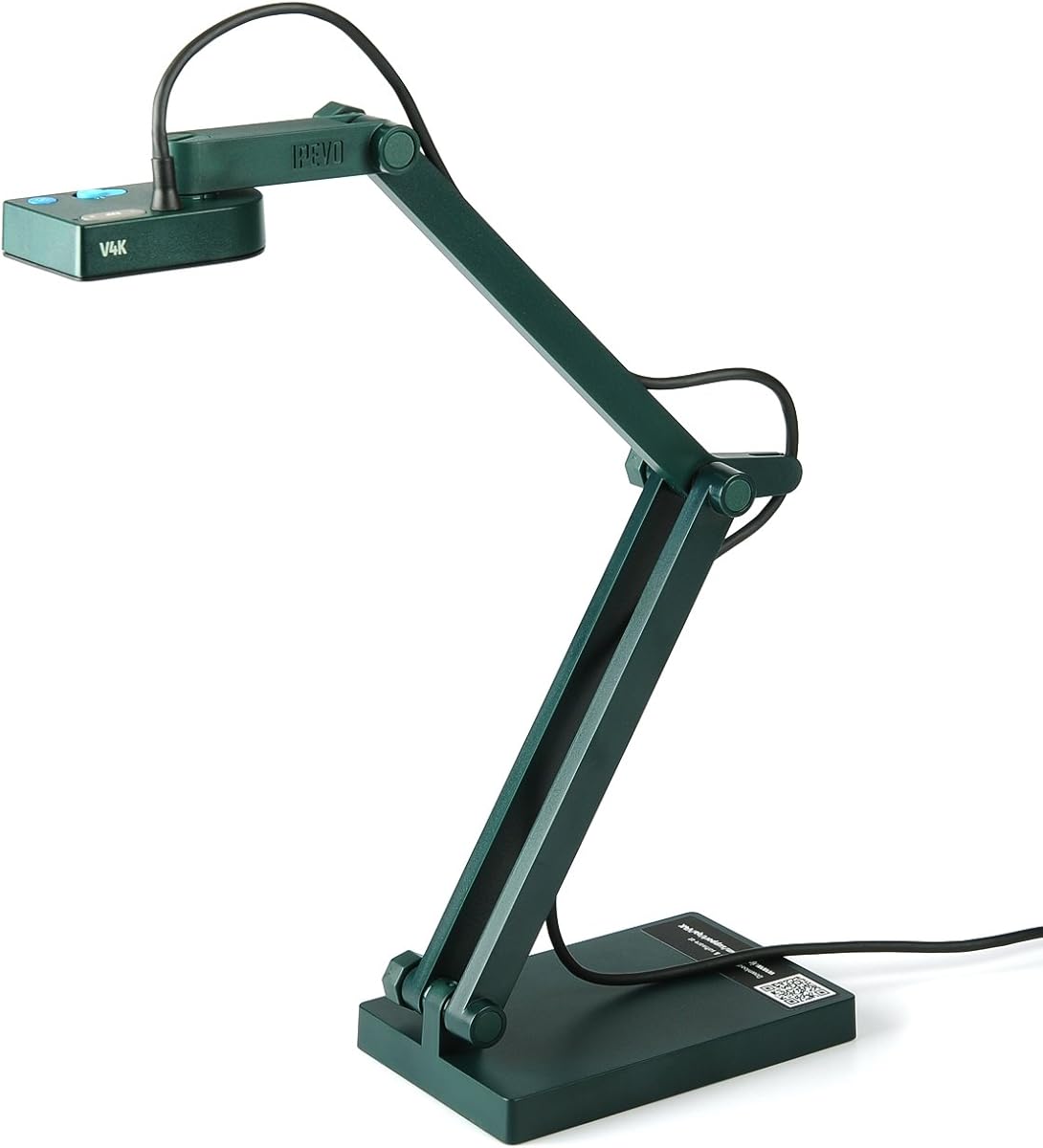
The IPEVO V4K stands out as a top choice for educators needing high-definition visuals. With an 8MP camera and Sony sensor, it delivers crisp images for documents and 3D objects. Its rating of 4.5 stars reflects consistent performance in classroom settings.
We may earn a commission when you buy through this link, at no additional cost to you.
Key strengths include lag-free streaming at 30fps and rapid focusing that minimizes downtime during lessons. The multi-jointed stand allows flexible positioning for various materials. Compatibility with Mac, Windows, and Chromebook ensures seamless integration into existing tech setups.
Trade-offs involve system requirements like dedicated video memory for optimal performance. The viewing area is smaller than A3 models. These are acceptable given the superior image clarity and build quality offered for the price point.
This camera suits teachers and presenters prioritizing visual fidelity and reliability. It excels in live demos and remote teaching. For those seeking a balanced mix of quality and functionality, this model is a strong recommendation.
The 8MP sensor captures Ultra High Definition images up to 3264 x 2448 pixels for detailed presentations.
The multi-jointed stand supports various angles and simplifies setup for different teaching scenarios.
We may earn a commission when you buy through this link, at no additional cost to you.
The INSWAN INS-1 offers robust features at a competitive price. Its 8MP camera and built-in LED ensure clear visuals in varied lighting. With a 4.6 rating, it is praised for ease of use and included software tools.
We may earn a commission when you buy through this link, at no additional cost to you.
Strengths lie in the anti-glare sheet and digital zoom capabilities via Documate software. The 14.72 x 11 inches viewing area accommodates larger documents. Plug-and-play functionality reduces setup time for immediate classroom use.
Some users may find hardware controls limited compared to models with physical buttons. iPad compatibility requires a USB-C port. These are minor issues given the strong performance and value proposition for standard teaching needs.
Ideal for educators wanting a complete package without extra accessories. It works well for distance learning and web conferencing. The balance of features and cost makes it a practical choice for many users.
The bundled Documate software supports annotation, recording, and snapshots for interactive presentations.
Sony camera sensor delivers high-definition images with smooth streaming across all resolutions.
We may earn a commission when you buy through this link, at no additional cost to you.
The THUSTAR 8MP delivers essential features at a low cost. Its adjustable image reversal and dual microphones support flexible teaching scenarios. A 4.4 rating highlights reliability for budget-conscious buyers seeking functionality.
We may earn a commission when you buy through this link, at no additional cost to you.
Strengths include 3-level LED lights for brightness control and a foldable design for portability. The A3-size coverage handles standard documents well. Plug-and-play operation ensures quick setup on Windows, Mac, and Chromebooks.
Build materials are simpler than premium models, which may affect long-term durability. Lack of physical zoom buttons requires software reliance. These trade-offs are acceptable given the price and core performance for basic needs.
Best suited for teachers or small offices needing a cost-effective visualizer. It performs well for standard document sharing and live demos. For those on a tight budget, this offers strong value without major compromises.
Manual reversal buttons allow left/right and up/down adjustments without requiring software intervention.
The foldable embedded design saves desk space and makes transport between rooms easy.
We may earn a commission when you buy through this link, at no additional cost to you.
This 4K USB Document Camera offers a compact solution for teaching. Its manual reversal and brightness buttons provide immediate control. With a 4.5 rating, users appreciate the ease of use and clear output quality.
We may earn a commission when you buy through this link, at no additional cost to you.
Key strengths include the USB-C cable for modern devices and multi-angle rotation for 3D objects. The autofocus keeps moving items sharp without delay. Dual microphones improve audio during video conferences effectively.
Trade-offs involve the max coverage size and lack of dedicated zoom hardware. Software reliance for zoom may slow workflow slightly. These are minor given the portability and responsive controls for standard classroom tasks.
Ideal for educators with limited desk space needing quick setup. It works well for distance education and web conferencing. For those prioritizing compactness and manual controls, this model is a solid choice.
Physical buttons allow instant adjustment of brightness and image reversal without navigating menus.
The included USB-C cable ensures compatibility with modern laptops and devices easily.
We may earn a commission when you buy through this link, at no additional cost to you.
This camera focuses on simplicity and hardware controls for classrooms. Its image reversal button and exposure levels allow quick tweaks. A 4.3 rating reflects solid performance for basic teaching tasks and demonstrations.
We may earn a commission when you buy through this link, at no additional cost to you.
Strengths include the selfie fill light function for dark rooms and foldable design for storage. Multi-angle rotation supports 2D and 3D object capture. Compatible with major platforms like Zoom and Teams.
Users must manually select USB Camera in system settings as it is not auto plug-and-play. Lack of HDMI limits direct projector connection. These steps add minor setup time but do not hinder core functionality.
Best for teachers needing straightforward controls without software dependency. It serves well for standard document sharing. For those prioritizing hardware buttons and simple setup, this fits the need.
Buttons for reversal and exposure reduce reliance on software menus during active teaching sessions.
3-level LED with 10 exposure levels adjusts to varied classroom lighting conditions.
We may earn a commission when you buy through this link, at no additional cost to you.
The OKIOCAM S-4K introduces AI tracking for engaging presentations. With an 8MP sensor and OKIOPoint, it zooms on pointers automatically. A 4.5 rating highlights innovation and reliability for tech-savvy teachers.
We may earn a commission when you buy through this link, at no additional cost to you.
Key strengths include lag-free streaming and a durable design tested for 10,000 rotations. The portable size saves desk space. Low-light performance reduces need for extra lamps during dim sessions.
AI features depend on software installation, which adds setup time. Viewing area is limited to letter size landscape. These are acceptable trade-offs for the interactive capabilities and build quality offered.
Suits educators seeking interactive tools to boost student engagement. It excels in live demos and distance learning. For those valuing smart features and portability, this model stands out.
OKIOPoint tracks your pointer to automatically zoom and focus on key presentation elements.
Hinges tested for 10,000 rotations ensure long-term reliability in daily classroom use.
We may earn a commission when you buy through this link, at no additional cost to you.
This wireless model enables mobility without cables. Its Wi-Fi HDMI and USB modes support flexible setups. With a 4.6 rating, it is praised for reliability and battery endurance during full class sessions.
We may earn a commission when you buy through this link, at no additional cost to you.
Strengths include up to 12 hours of battery and 33-feet wireless range. Near 4K in USB mode delivers sharp detail. Compatible with Apple TV and mobile devices for diverse environments.
Higher cost reflects advanced features; budget users may find it steep. Viewing size is moderate for A3 needs. These are acceptable given the freedom of movement and robust connectivity options offered.
Ideal for mobile teachers or professionals needing room movement. It excels in web conferencing and remote teaching. For those prioritizing wireless flexibility, this is the top choice.
Up to 33-feet range lets presenters walk freely while displaying content seamlessly.
9-12 hours of battery ensures uninterrupted presentations or classes without charging.
We may earn a commission when you buy through this link, at no additional cost to you.
The S2 Pro delivers true 4K resolution for detailed visuals. Its 13MP sensor captures images with minimal grain. A 4.2 rating reflects performance with some setup learning curves for advanced features.
We may earn a commission when you buy through this link, at no additional cost to you.
Strengths include fast autofocus and OKIOPoint tracking for interactive lessons. Built-in light ensures clarity in dim areas. Compatible with major platforms including Canvas and Teams.
Trade-offs involve smaller viewing area and software reliance for full benefits. Build quality is high but viewing space limits large docs. These are minor given the resolution advantages for precision work.
Best for users needing high-detail imaging like blueprints or maps. It works well for web conferences. For those prioritizing resolution and clarity, this model is a strong contender.
True 4K up to 3840×2160 captures fine details for professional presentations.
Fast focusing after a press ensures smooth switching between materials without delay.
We may earn a commission when you buy through this link, at no additional cost to you.
This camera specializes in capturing large materials like ledger sheets. Its Exmor R sensor ensures vibrant colors. With a 4.5 rating, users praise the large view area and streaming smoothness.
We may earn a commission when you buy through this link, at no additional cost to you.
Strengths include capturing open books fully and lag-free streaming up to 25fps. OKIOPoint tracks pointer movement. Compact design saves space while maintaining high resolution.
Trade-offs involve software dependence for zoom and fixed orientation limits. These are minor compared to the large view capability. It remains effective for standard and large document needs.
Suits users working with large maps or books regularly. It is ideal for online teaching. For those needing large format coverage, this delivers the necessary performance.
Capable of capturing full Ledger-size materials or open books entirely in one shot.
Sony Exmor R sensor enhances low-light performance and color accuracy significantly.
We may earn a commission when you buy through this link, at no additional cost to you.
This model excels in low-light conditions without extra lamps. Its sensor doubles light sensitivity for sharp images. A 4.3 rating highlights clarity and engagement features for modern classrooms.
We may earn a commission when you buy through this link, at no additional cost to you.
Strengths include OKIOPoint tracking and 10x digital zoom. Near-Ledger capture handles standard large docs. Supports USB-C iPad and interactive displays seamlessly.
Trade-offs include software reliance for AI features and fewer physical buttons. These are minor given the superior light performance and compatibility. It remains effective for varied environments.
Ideal for educators in dim rooms or needing mobile support. It works well for hybrid setups. For those prioritizing low-light clarity and smart features, this is a top choice.
Exmor R sensor provides vibrant color and sharp images even under faint light.
OKIOPoint AI-tracking zooms in real-time on pointer movements for engaging lessons.
We may earn a commission when you buy through this link, at no additional cost to you.
Selecting a document camera requires evaluating several key factors to ensure it meets your teaching or professional needs.
Resolution determines how clear your documents and objects will appear on screen. Look for 8MP or higher to ensure text and fine details are legible during live presentations. High-resolution sensors reduce grain and improve color accuracy in low light. For detailed work like maps or blueprints, aim for 4K or higher resolution options.
Prioritize models with high megapixel counts to maintain clarity when zooming in on specific areas.
Connectivity impacts how easily the camera integrates with your existing devices. USB is standard for direct computer connections but wireless options like Wi-Fi offer more freedom of movement. HDMI support allows direct connection to projectors without a computer. Ensure the model supports your primary platform such as Windows, Mac, or Chromebook.
Choose connectivity that aligns with your setup to avoid compatibility issues during use.
Built-in lighting is crucial for capturing documents in various classroom conditions. LED lights with adjustable levels help reduce glare and shadows on glossy paper. Some models use advanced sensors to handle low light without extra lamps. Ensure the lighting allows clear visibility without washing out text or images.
Adjustable lighting ensures consistent image quality regardless of room conditions.
If you move between classrooms or work remotely, a foldable and lightweight design is beneficial. Portability also affects storage space on crowded desks. Check the maximum viewing area to ensure it accommodates your typical documents like A3 or ledger sizes. Compact units are easier to transport between rooms or events.
Balance portability with coverage area to meet both mobility and presentation needs.
Additional software can enhance functionality with features like annotation, video recording, and digital zoom. Some models include smart pointers or tracking tools to engage students interactively. Ensure software is compatible with your operating system and web conferencing tools. Basic plug-and-play models reduce dependency on complex setups.
Look for software that supports your teaching style and presentation requirements.
Frequent use in classrooms demands robust construction to withstand daily handling. Multi-jointed stands should have durable hinges tested for many rotations. Metal bases and reinforced arms improve stability during adjustments. A solid build minimizes repairs and extends the lifespan of the device.
Invest in sturdy models to ensure long-term reliability for busy environments.
Built-in microphones are useful for video conferencing and distance learning. Dual mic setups reduce background noise for clearer audio capture. If you rely on external speakers, check microphone quality to avoid feedback issues. High-quality audio ensures students hear explanations alongside visual content.
Prioritize clear audio features for effective remote teaching and presentations.
Prices vary widely based on features like wireless capability and resolution. Budget models offer core functionality for basic document sharing. Premium options provide advanced tools like AI tracking and longer battery life. Evaluate which features are essential versus optional to match your financial constraints.
Select a model that offers the best value for your specific requirements.
Begin by connecting the camera to your computer via USB or Wi-Fi. Install any required software and configure settings like resolution and brightness. Position the camera over your materials to ensure the entire document is within the frame.
Adjust lighting and focus manually if needed to eliminate shadows or blurriness. Use the zoom or rotation buttons to tailor the view for students. Test the output on your presentation software before starting your session.
Store the camera in a protective pouch when not in use to prevent damage. Clean the lens with a soft cloth to maintain image clarity. Regularly update firmware and software to access new features and improvements.
A document camera is designed specifically to capture objects placed beneath it, offering better focus for flat materials and 3D items. Regular webcams are optimized for capturing faces and upper bodies. Document cameras typically have higher resolution and flexible stands for top-down viewing.
Most models connect directly to computers via USB but some support HDMI or wireless connections to projectors and TVs. If you use HDMI or wireless modes, you may not need a computer. However, a computer is often required to access full software features.
Many models are compatible with iOS and Android devices via Wi-Fi or adapters. You may need specific apps to access full features like streaming. Check the product details to confirm mobile support and connection methods.
Yes, document cameras are highly effective for remote teaching as they allow teachers to share physical materials clearly. They integrate with platforms like Zoom and Google Meet for seamless presentations. Built-in microphones and cameras support two-way communication.
Most devices include proprietary software for annotation and recording. They are also compatible with common conferencing apps like Zoom and Teams. For advanced features, ensure your operating system supports the required drivers.
Use a soft, lint-free microfiber cloth to wipe the lens gently. Avoid using harsh chemicals or abrasive materials that could scratch the glass. Clean periodically to ensure optimal image quality during presentations.
We have reviewed ten top document cameras offering a range of features for teachers and professionals. The IPEVO V4K stands out for overall quality while the THUSTAR offers great budget value. The IPEVO VZ-X leads in wireless flexibility for mobile needs.
Consider your primary use case and environment when prioritizing features. Resolution and connectivity are key for professional results while portability matters for shared spaces. Ensure the model supports your devices and software requirements.
Prices and availability vary so verify current offers before purchasing. These guides help you find a reliable solution for presentations and teaching. Choose the model that best fits your workflow to enhance your visual communication.