
M-AUDIO M-Track Duo USB Audio Interface
4.4Editor score
Two combo XLR Line Instrument Inputs
Crystal Preamps for clear microphone sound
Includes MPC Beats Software production tools
Compare top external sound cards for guitar in 2026. We review interfaces for recording, streaming, and live performance to help you choose the right gear.
Finding the right external sound card for guitar is essential for musicians who want crisp recordings and low latency. These devices bridge your instrument and computer, offering professional audio quality that built-in sound cards simply cannot match.
We evaluated ten top-rated audio interfaces based on input types, sample rates, software bundles, and build quality. Our goal was to find versatile options that work well for guitarists, vocalists, and content creators alike.
Each pick highlights unique strengths like dedicated instrument inputs, phantom power, or portable designs. Note that availability and pricing can change frequently, so check current listings before making your final decision today.
4.4Editor score
4.6Editor score

This side-by-side comparison highlights key features across all ten selected audio interfaces. Look at input options, sample rates, and included software to see which model fits your studio or mobile setup.


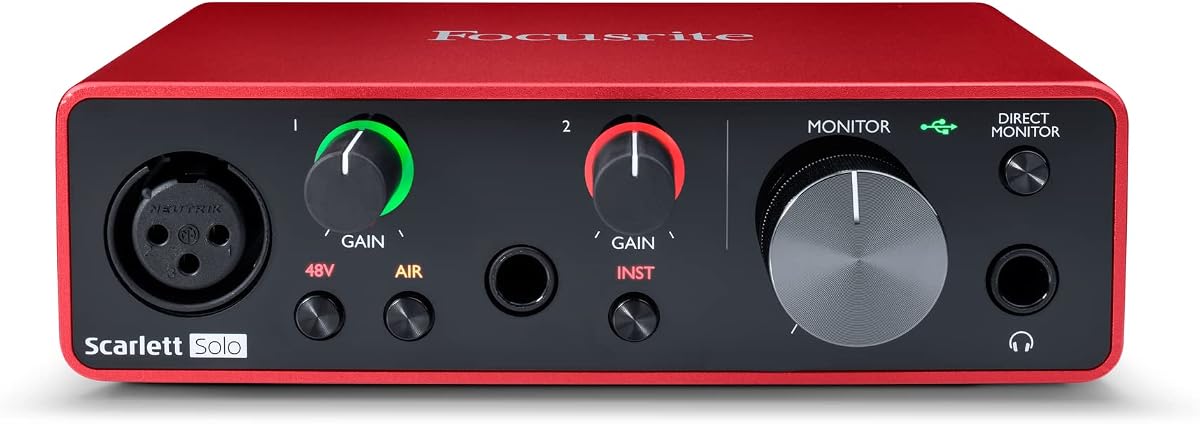
The Focusrite Scarlett Solo 3rd Gen stands out as a top choice for musicians seeking reliable recording quality. Its high-performance pre-amps ensure your guitar signals remain clean and detailed without unwanted noise.
We may earn a commission when you buy through this link, at no additional cost to you.
With two high-headroom instrument inputs, you can plug in your guitar directly without distortion. The Air mode adds clarity to acoustic recordings, while Gain Halos help you set levels accurately.
While it lacks advanced expansion features found in larger interfaces, its focus on simplicity and quality makes it perfect for home studios. The included software suite offers everything needed to start recording immediately.
If you need a trustworthy interface for guitar and vocals, this model delivers professional results at an accessible price point. It remains a standard recommendation for both beginners and experienced producers.
The high-performance mic pre-amps with Air mode enhance clarity for acoustic instruments and vocals significantly.
The package includes Pro Tools Intro, Ableton Live Lite, and other mastering tools for a complete start.
We may earn a commission when you buy through this link, at no additional cost to you.
The Fender Quantum HD 2 offers ultra-high-fidelity audio capture suitable for professional studios and serious creators. Its MAX-HD mic preamps provide pristine quality for both vocals and instruments.
We may earn a commission when you buy through this link, at no additional cost to you.
Front-facing instrument inputs are optimized for transparent guitar recording, ensuring your tone stays intact. You also get ADAT expansion and S/PDIF I/O to grow your studio setup over time.
Although it commands a higher price, the included Fender Studio app unlocks authentic amp models and effects. This integration makes it an exceptional choice for guitarists who value tone shaping.
Invest in this interface if you need maximum fidelity and expandability. It bridges the gap between portable gear and full rack systems effectively.
ADAT expansion and S/PDIF I/O add sixteen digital inputs for hybrid studio growth and versatility.
Front-facing Fender instrument inputs are optimized for transparent guitar and bass recording specifically.
We may earn a commission when you buy through this link, at no additional cost to you.
The M-AUDIO M-Track Duo delivers solid performance at a budget-friendly price point for home recordists. It covers podcasting, recording, and streaming needs with ease.
We may earn a commission when you buy through this link, at no additional cost to you.
Its versatile M-AUDIO interface features two combo XLR and instrument inputs with phantom power. This allows you to record guitar, vocals, or line signals without buying extra gear.
While it may lack premium features like high sample rates, the transparent Crystal Preamps ensure optimal sound quality. The included MPC Beats software provides essential production tools to get started.
This interface is perfect for beginners or those on a tight budget. It proves you do not need to spend a lot to capture good audio.
Record guitar vocals or line input signals with two combo XLR and instrument inputs with phantom power.
Includes MPC Beats Software complete with essential production tools from Akai Professional for immediate use.
We may earn a commission when you buy through this link, at no additional cost to you.
The Fender AudioBox GO is an ultra-compact USB-C interface designed for musicians on the go. It fits easily into a backpack and pairs perfectly with laptops and tablets.
We may earn a commission when you buy through this link, at no additional cost to you.
It features a dedicated TS instrument input optimized for guitar and bass, ensuring your signal remains clean. The XLR mic input also supports phantom power for better vocal quality.
While it lacks multiple outputs, its simple design focuses on portability and ease of use. The included Fender Studio app helps you access amp models and effects quickly.
Choose this if you travel frequently or need a quick solution for capturing ideas. It simplifies the recording process without sacrificing basic quality.
Bus-powered design for effortless portability and simple plug-and-play operation anywhere you go.
Unlock the Complete Fender Amp and FX Pack in the Fender Studio app for authentic tones.
We may earn a commission when you buy through this link, at no additional cost to you.
The MAONO PS22 Lite captures every detail of your sound with high-resolution recording at 24-bit/192kHz. It is designed for both recording enthusiasts and streamers.
We may earn a commission when you buy through this link, at no additional cost to you.
It handles condenser and dynamic microphones well with up to 56 dB of preamp. The ProStudio Routing Software helps control live streams with additional virtual channels and loopbacks.
While it is compact and light, it packs a sound punch for its size. The dynamic light ring gives visual feedback on input status without needing software.
This interface suits creators who need a versatile tool for streaming and music. Its intuitive modes make switching between setups easy and fast.
ProStudio Routing Software opens up possibilities with virtual channels and loopbacks for live broadcasts.
Handles condenser and dynamic microphones with up to 56 dB of preamp for versatile use.
We may earn a commission when you buy through this link, at no additional cost to you.
The Sound Blaster Play! 3 is an easy audio adapter that boosts sound quality for laptops without internal audio. It works straight out of the box with no drivers needed.
We may earn a commission when you buy through this link, at no additional cost to you.
It supports all analog headsets from standard earbuds to studio-grade headphones. The control panel software provides powerful enhancements and optimized profiles for multiple earphone brands.
While it is not designed for professional music recording, it improves listening quality for casual users. It is a cheap fix for poor computer audio performance.
This adapter is useful for listening to music or casual recording. It is perfect if you just need better sound without a complex setup.
No drivers needed as it works straight out of the box for immediate use.
Compatible with all analog headsets and easily connects without Y-splitter cables.
We may earn a commission when you buy through this link, at no additional cost to you.
The StarTech 7.1 USB Audio Adapter adds up to 7.1 channels of audio through a single USB port to your computer. It upgrades existing integrated audio effectively.
We may earn a commission when you buy through this link, at no additional cost to you.
It supports 7.1, 5.1, and 2 channel output using 3.5mm jacks. This allows for immersive audio experiences in gaming and media consumption.
While it supports 44.1KHz and 48KHz sampling rates, it may not match modern high-fidelity needs. It is a reliable upgrade for basic multimedia needs.
This adapter is best for users needing surround sound on older hardware. It is easy to install with plug and play support in Windows.
Supports 7.1, 5.1 and 2 channel output using 3.5mm jacks for immersive sound.
The digital audio adapter is easy to install with plug and play support in Windows.
We may earn a commission when you buy through this link, at no additional cost to you.
The Synido A10 Portable USB-C Audio Interface delivers pristine 24-bit/48kHz resolution capturing every nuance of your performance. It is ideal for guitarists and DJs on the move.
We may earn a commission when you buy through this link, at no additional cost to you.
It features seamless integration with wireless backing tracks so you can stream from one phone to another. This makes practice and composition sessions much more creative and flexible.
Built with a sturdy aluminum alloy body, it is portable and durable for travel. The secure buckle-design USB-C connector ensures a stable connection during critical recording sessions.
Choose this if you need portability without sacrificing audio quality. It supports recording while charging which is great for long sessions.
Stream backing tracks directly from one phone to the recording phone without cables for focus.
With continuous power support via USB-C you can record while charging your phone or tablet.
We may earn a commission when you buy through this link, at no additional cost to you.
The Cubilux CB5 converts your laptop USB port into 2 stereo microphone jacks, 1 line-in, 1 line-out, and 1 headphone jack. It acts as a versatile 5-in-1 Audio Hub.
We may earn a commission when you buy through this link, at no additional cost to you.
Its built-in advanced chip captures crisp sound with decent clarity up to 96 KHz/24-bit. The Hi-Res DAC fully drives studio monitors for clean sound.
While you cannot use line-out and audio output simultaneously, it offers multi-track recording by assigning independent names. This allows flexibility for complex projects.
This interface is ideal for on-the-go recording without external power. It lets you connect mics, instruments, and speakers as needed efficiently.
Converts the USB port of your laptop into 2 stereo microphone jacks and other outputs.
Built-in advanced chip enables Cubilux CB5 to capture crisp and precise sound clearly.
We may earn a commission when you buy through this link, at no additional cost to you.
The Cubilux 7.1 USB Surround Sound Card immerses you in a rich audio experience with 7.1 and 5.1 output. It supports sampling rates up to 384KHz/24-bit for Hi-Res music.
We may earn a commission when you buy through this link, at no additional cost to you.
Its full aluminum alloy housing enables full isolation of electronic interference. This ensures loss transmission of audio signals without static or ground noise.
While it does not support older Windows versions, it works seamlessly with modern PCs and MacBooks. The compact design fits easily anywhere without external power needs.
Choose this for enjoying Hi-Res music or gaming on computers without built-in 7.1 sound. It enhances your listening experience significantly for a low cost.
Headphones output supports sampling rates and resolution from 44.1Khz/16-bit to 384Khz/24-bit.
Full Aluminum alloy housing enables full isolation of electronic interference and ensures no-loss transmission.
We may earn a commission when you buy through this link, at no additional cost to you.
Selecting the right audio interface requires considering inputs, sample rates, and software needs. This guide breaks down the most important factors to help you make an informed decision.
For guitarists, a dedicated instrument input is crucial. It ensures your electric guitar or bass signal is processed correctly without clipping or noise. Look for combo XLR and instrument inputs if you plan to record vocals as well.
Ensure your interface has the right connection type for your computer. USB-C is becoming standard for faster data transfer, but USB-A still works for most setups.
Higher sample rates like 48kHz or 96kHz capture more detail in your audio. Bit depth affects dynamic range, with 24-bit being the standard for professional recording.
Most beginners will find 48kHz/24-bit sufficient for great quality. High-resolution formats are useful if you plan to mix complex projects or export to high-fidelity platforms.
Low latency is essential for recording guitar without delay. Look for interfaces with direct monitoring switches or zero-latency hardware monitoring features.
This allows you to hear your playing in real time while recording. It prevents the frustration of playing to a delayed playback track.
Many interfaces come with software that adds value. Some include DAWs like Ableton or Pro Tools, while others offer amp modeling plugins.
Check if the software is permanent or a trial. Fender interfaces, for example, offer access to authentic amp packs through their dedicated app.
Bus-powered interfaces draw energy from your computer, making them ideal for mobile use. If you need more power for multiple devices, consider external power options.
Portability is key if you record in different locations. Ensure the power source matches your typical setup environment.
Interfaces made of metal or aluminum alloy are more durable than plastic ones. They also offer better protection against electronic interference.
Look for robust connectors like USB-C buckles or shielded inputs. A sturdy build ensures your equipment lasts longer under regular use.
Depending on your studio, you may need balanced outputs for studio monitors or multiple headphone jacks. Check if the interface supports surround sound if needed.
Line-out jacks allow connecting to external speakers or amps. Some interfaces also support digital outputs like S/PDIF for expansion.
Prices range from budget-friendly to premium professional models. Determine what features you truly need versus nice-to-haves to stay within your budget.
Even cheaper models can sound great if they have quality preamps. Focus on core performance rather than just the brand or extra features.
Connect your guitar directly to the instrument input using a standard 1/4-inch cable. Avoid using a microphone unless you specifically want to capture amp speaker tone.
Install any required drivers or software before recording. Use the included DAW to set up a track and select your interface as the input device in settings.
Clean the device with a dry cloth and store it in a safe place. Keep connectors free of dust and avoid bending cables to maintain signal quality over time.
Yes, most of these interfaces have dedicated instrument inputs for electric guitars. Ensure you plug directly into these inputs rather than line inputs to avoid distortion and get the best tone.
Many models are plug-and-play on modern systems, but some professional interfaces require specific drivers for low latency. Always check the manufacturer's website for the latest driver compatibility.
USB-C offers faster data transfer and reversible connections. While USB-A works for most tasks, USB-C is better for high-sample-rate recording and future-proofing your setup.
Yes, many interfaces support zero-latency monitoring which is essential for live use. Just ensure your computer has enough processing power to handle the audio workload smoothly.
Some interfaces like the MAONO PS22 Lite and Synido A10 are compatible with iPads. You may need an adapter if the interface does not have a native iPad connector.
Static often comes from ground loops or electromagnetic interference. Use balanced cables and ensure your interface is connected to a clean power source to reduce noise.
Most models support recording two inputs simultaneously. This allows you to record guitar and vocals at the same time with proper setup in your recording software.
Phantom power is necessary only if you use condenser microphones. For electric guitars and dynamic mics, it is not needed but having the option adds versatility for vocal recording.
We highlighted top picks like the Focusrite Scarlett Solo for its balance of features and quality. The M-AUDIO M-Track Duo serves as an excellent budget option for those starting out.
Prioritize what matters most to your workflow, such as low latency or included software. Choosing the right interface can transform your home recording experience significantly.
Remember that prices and availability change frequently. Check current listings before purchasing to ensure you get the best deal for your specific needs.