
Newentor Weather Station Wireless Indoor Outdoor Thermometer
4.3Editor score
Large color LCD display
Atomic clock and date
Three channel wireless sensors
Discover the top large screen weather station models for 2026. We compare features, accuracy, and display quality to help you choose the perfect home monitor.
Finding the right large screen weather station can transform how you track daily conditions at home. These devices offer clear visibility of temperature, humidity, and forecasts without squinting at tiny digits on a bedside table or kitchen counter.
We evaluated ten top-rated models based on display size, sensor accuracy, connectivity options, and ease of use. Each product was analyzed for its ability to provide reliable data across various indoor and outdoor environments throughout the year.
Every pick in this guide highlights specific strengths like color screens, smart home integration, or budget-friendly designs. Prices fluctuate regularly, so check current listings before purchasing to ensure you get the best value for your needs.
4.3Editor score

4.4Editor score

4.1Editor score
This side by side comparison highlights key specifications across all ten models to help you quickly identify which device fits your specific monitoring requirements and budget constraints.


The Newentor Weather Station offers a vibrant color LCD screen at a very accessible price point. It stands out for its ability to show essential home weather data like temperature humidity and forecasts without breaking the bank.
We may earn a commission when you buy through this link, at no additional cost to you.
Its large display makes it easy to glance at conditions from across the room. The atomic clock ensures accurate timekeeping while the dual power modes let you choose between continuous plug-in use or battery saving operation.
While it supports up to three remote sensors only one is included in the package. This means expanding coverage to multiple rooms requires additional purchases which might add to the total cost over time.
This model is ideal for budget conscious buyers who want a modern look and basic forecasting without complex setup. It serves well as a bedside clock or kitchen monitor for daily planning.
The screen uses bright colors to differentiate between temperature ranges and forecast icons making it readable even in low light conditions without straining your eyes.
You can keep it plugged in for a always-on display or switch to battery mode where the screen dims after fifteen seconds to save energy during overnight hours.
We may earn a commission when you buy through this link, at no additional cost to you.
The AcuRite Iris delivers one of the most comprehensive data sets available in a consumer weather station. It provides over fifty five data points including heat index dew point and wind speed direction for a complete picture.
We may earn a commission when you buy through this link, at no additional cost to you.
Setup is straightforward with simple battery installation and mounting on a pole. The console features a large color display that presents current conditions and forecasts clearly making it suitable for family use in common areas.
While it offers extensive information users must ensure they have the right mounting hardware for outdoor sensors. The calibration period takes up to ten days which might delay initial forecast accuracy but pays off later.
This unit is perfect for weather enthusiasts who want detailed metrics without professional gear. It balances ease of use with advanced tracking capabilities for those who love monitoring trends.
Beyond basic temp and humidity it tracks pressure trends with arrows wind direction and rainfall so you can see how conditions are changing in real time.
The process involves installing batteries attaching the outdoor sensor to a post and plugging in the indoor unit so you can start monitoring within minutes.
We may earn a commission when you buy through this link, at no additional cost to you.
La Crosse Technology brings its legacy to this model with a focus on user comfort and alerts. The display shows dynamic forecast icons and colorful bars that indicate humidity comfort levels for both indoor and outdoor zones.
We may earn a commission when you buy through this link, at no additional cost to you.
Users can set custom high low alerts for temperature and humidity to stay notified of significant changes. The atomic clock handles daylight savings automatically ensuring your time stays accurate without manual intervention.
The backlight can be adjusted for brightness but battery operation only illuminates it on demand which might be less convenient for those wanting constant visibility. Setting up alerts requires navigating menus that take time to learn.
This station works well for households needing to monitor conditions for health or safety reasons. It offers a balance of smart features and traditional weather tracking in a familiar black design.
Colorful bars visually represent humidity levels so you can instantly see if your environment is too dry or too humid for optimal comfort.
Custom alerts notify you when temps or humidity hit your set limits allowing proactive adjustments to fans or humidifiers.
We may earn a commission when you buy through this link, at no additional cost to you.
The WS-5000 stands out with its ultrasonic technology that eliminates moving parts for wind measurement. This design reduces maintenance needs and ensures reliable performance in harsh weather conditions over long periods.
We may earn a commission when you buy through this link, at no additional cost to you.
It provides real-time updates every five seconds and connects to smart home platforms like Alexa and Google Home. The enhanced WiFi lets you transmit data to the Ambient Weather Network for sharing with the community.
The price point is significantly higher than standard stations and initial setup requires careful calibration of the sensor array. The included rain cup and thermo-hygrometer-barometer offer a complete package for serious monitoring.
Ideal for tech savvy users who want a durable and connected station this model offers advanced features that justify the cost for those needing reliable data for home automation.
Using sound waves instead of spinning cups makes the sensor more durable and faster to respond to wind changes without mechanical wear.
You can program your home devices to react to weather conditions using IFTTT integrations for truly automated living.
We may earn a commission when you buy through this link, at no additional cost to you.
The WS-2000 integrates wind speed temperature and rainfall into one array for simplified mounting. It displays data on a TFT color screen and supports both imperial and metric units for global usability.
We may earn a commission when you buy through this link, at no additional cost to you.
Enhanced WiFi connectability allows data transmission to the personal weather station network helping you track local trends over time. The included adapter powers the console while sensors run on AAA batteries for flexibility.
Users should note that sensor batteries are not included which adds to the initial cost. The calibration process might be tricky for those without technical experience but the long-term accuracy rewards patience.
This station is a solid choice for homeowners who want smart features without the high-end price of the ultrasonic model. It bridges the gap between basic and advanced weather tracking.
An all-in-one array means less clutter on your roof since wind rain and temp are measured in a single unit.
Switching between Fahrenheit and Celsius or miles and kilometers is easy to accommodate different preferences in the household.
We may earn a commission when you buy through this link, at no additional cost to you.
La Crosse Advanced emphasizes wireless reach with a transmission range of 300 feet. This allows placement of sensors in distant yards or detached buildings without signal loss issues that plague shorter-range models.
We may earn a commission when you buy through this link, at no additional cost to you.
The display features dynamic color icons with tendency indicators so you can see if weather is improving or worsening. Customizable alerts keep you informed of extreme conditions for safety and comfort.
The backlight settings allow adjustment but battery power only illuminates it temporarily to save energy. This might be inconvenient for nighttime checks unless the unit is kept plugged in continuously.
This model suits larger properties where signal strength is a priority. It balances reliable range with standard features like atomic time and snooze for practical daily use.
A three hundred foot range ensures that even if your outdoor sensor is far away you still get consistent data without dropouts.
Tendency arrows show pressure shifts so you can anticipate changes before they appear in the forecast.
We may earn a commission when you buy through this link, at no additional cost to you.
Tempest uses solar power for its outdoor sensor which reduces maintenance and extends lifespan. The sensor transmits data wirelessly up to 1000 feet and updates every three seconds for near real-time accuracy.
We may earn a commission when you buy through this link, at no additional cost to you.
It integrates with Amazon Alexa and IFTTT to automate home tasks based on weather. The lack of moving parts means it handles wind and rain without mechanical wear issues common in traditional anemometers.
While the sensor is self-powered the console still requires a power source. Initial setup involves calibration to ensure accuracy which might take a few days to perfect in all conditions.
This station is excellent for eco-conscious users who want a low-maintenance solution. It combines sustainability with smart home capabilities for a modern weather monitoring experience.
Solar power eliminates the need for battery replacements on the outdoor sensor ensuring continuous operation even during long stretches.
Integrating with Alexa lets you ask for weather updates by voice or trigger actions like closing windows automatically.
We may earn a commission when you buy through this link, at no additional cost to you.
The S84107 offers a straightforward approach to weather monitoring with dynamic forecast icons and a seasonal foliage background. It provides essential data like temperature humidity and pressure with a clean display.
We may earn a commission when you buy through this link, at no additional cost to you.
Historical graphs for barometric pressure help you track trends over 24 hours. The atomic time ensures accurate scheduling for daily routines without manual adjustments throughout the year.
Setup instructions require careful reading for best results and the range might be limited compared to higher-end models. It remains a cost-effective option for basic indoor outdoor tracking.
This station is suitable for those wanting a decorative yet functional device. It blends utility with a nice aesthetic that fits well on any shelf or table.
The display changes its background image every three months to match the seasons keeping the look fresh and inviting.
A 24-hour graph helps you visualize pressure shifts to understand upcoming weather patterns more clearly.
We may earn a commission when you buy through this link, at no additional cost to you.
The V42-PRO-INT offers professional grade features with Wi-Fi connectivity for remote access. You can monitor conditions from anywhere using the free app and access extended forecasts and air quality data.
We may earn a commission when you buy through this link, at no additional cost to you.
Wind and rain gauges provide specific metrics with a compass rose for direction. The extended Wi-Fi connection allows for enhanced background scenes and up to twelve-hour detailed forecasts.
Battery replacements for sensors are needed periodically and Wi-Fi setup can be tricky for some users. However the ability to track data remotely adds significant value for busy households.
This model is ideal for those who want to keep an eye on their property while away. It combines local weather data with cloud-based insights for a complete view.
Access your data via mobile app to check weather when traveling or away from home without needing to be near the console.
Wi-Fi connection unlocks longer forecast windows and richer background scenes for better visual planning.
We may earn a commission when you buy through this link, at no additional cost to you.
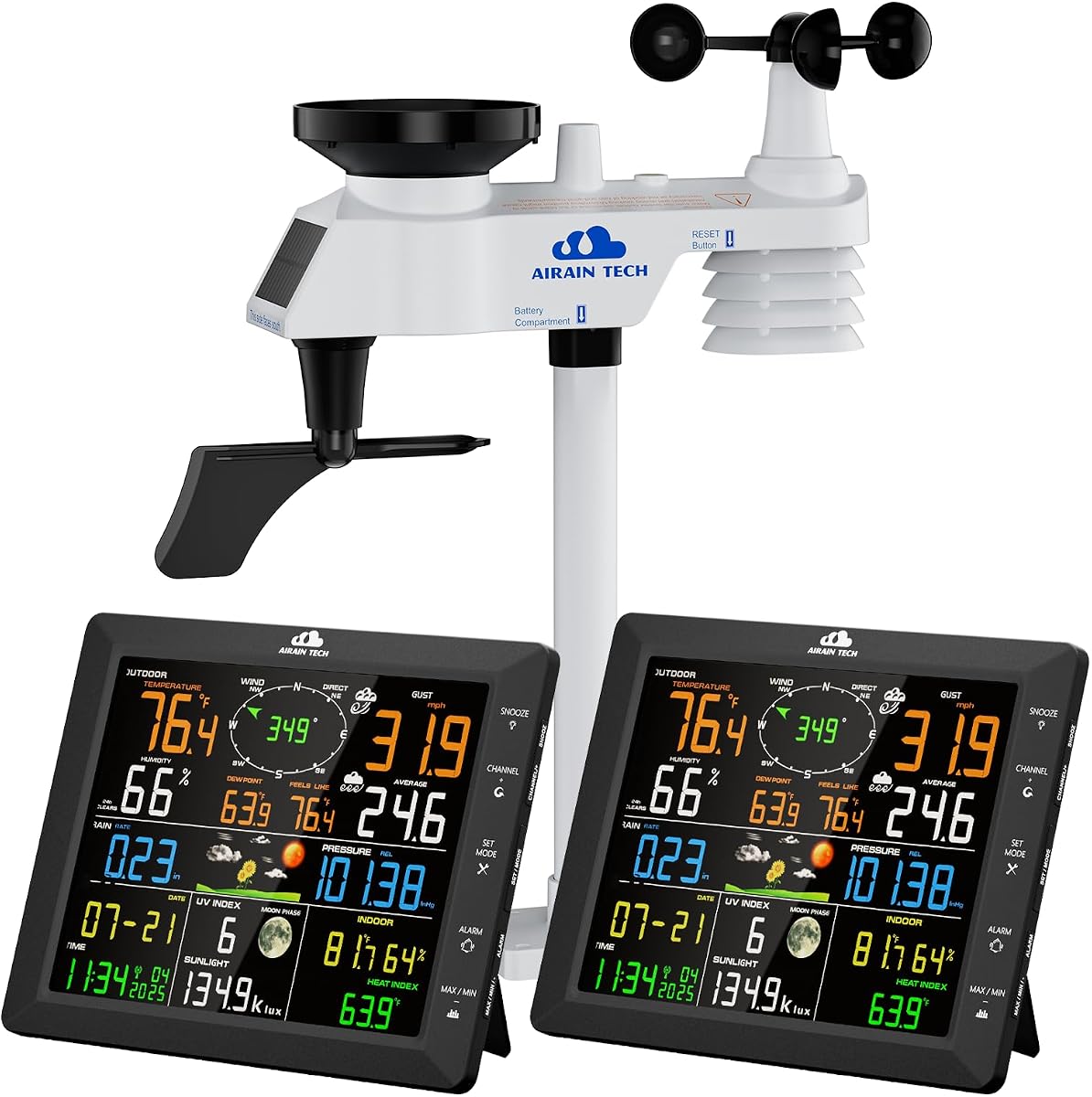
This model stands out with dual display units and an 8.5-inch large screen for enhanced visibility. It features Swiss temperature and humidity sensors for high precision data suitable for educational or research needs.
We may earn a commission when you buy through this link, at no additional cost to you.
The outdoor sensor includes rain gauge and wind direction tools to collect hydro-meteorological data. With a transmission range of 328 feet it covers most residential yards effectively without wiring.
The absence of WiFi limits remote access but the local display quality is exceptional for in-home use. It also includes a US based warranty which adds to its reliability.
This station is best for those who prioritize screen size and sensor accuracy over smart connectivity. It serves well as a teaching tool or central monitoring hub in a common area.
An 8.5 inch display makes reading data possible from across the room reducing eye strain during checks.
Swiss sensors ensure that your temperature and humidity readings are accurate for precise monitoring.
We may earn a commission when you buy through this link, at no additional cost to you.
Selecting the right weather station requires evaluating several factors to ensure it meets your specific needs and environment.
A large screen is essential for readability without squinting. Look for color LCDs or TFT displays that offer clear contrast and backlight adjustments for night viewing.
Prioritize models with displays that are easy to see from a distance and in different lighting conditions.
Accurate sensors are the heart of any weather station. Check for high precision temperature humidity and wind sensors that have been calibrated for reliability.
Ensure the wireless range covers your yard without signal loss by matching the distance to your property size.
Some stations offer WiFi for remote access and smart home integration while others work standalone. Decide if you need to view data on a phone or control home devices automatically.
If smart features are not important a standalone unit saves cost and simplifies setup.
Consider how the unit gets power. Some need constant outlet connection while others run on batteries or solar. Battery backup ensures data retention during outages.
For continuous use prioritize models that can stay plugged in or have efficient power modes.
Different stations track different metrics like wind speed rainfall UV index or dew point. Determine which data points are most relevant for your daily activities or garden care.
Choose a unit that measures all the specific conditions you need to track regularly.
Look for models with clear instructions and straightforward mounting options. Some require complex calibration which can delay accurate forecasting.
Pick a system that pairs automatically to reduce frustration during installation.
Outdoor sensors must withstand rain wind and sun. Check for weatherproof ratings and a solid warranty to protect your investment over time.
Opt for brands with proven track records for longevity and support.
Prices range from affordable to premium. Balance the features you need with what you are willing to spend to avoid overpaying for unnecessary tech.
Focus on value by comparing features per dollar across different models.
Start by mounting the outdoor sensor in an open area away from direct sunlight or heat sources to ensure accurate readings.
Place the indoor console where it is easily visible and plug it into a power source to prevent battery drain during calibration.
Regularly clean the sensor housing and check battery levels to maintain consistent performance throughout the year.
Calibration typically takes seven to ten days for barometric pressure to stabilize. During this time the forecast may be less accurate but will improve over time.
Many modern models offer WiFi connectivity allowing you to view data via a mobile app. Check the product specs to confirm if your chosen model supports remote access.
Most sensors require standard AA or AAA batteries. Some higher-end models include solar panels to reduce or eliminate the need for battery replacements.
Yes many stations provide forecasts up to twelve hours ahead which can help with daily decisions. However local microclimates may vary slightly from general predictions.
Most units sync automatically with atomic time signals. If not you can manually adjust the clock through the menu using buttons on the console.
Color displays with adjustable brightness are designed to be visible in various light. However direct sunlight may reduce visibility compared to indoor shaded conditions.
We have highlighted ten models that cover various needs from budget options to premium smart units with large screens.
Consider your priority features such as range accuracy or smart connectivity when making your final decision to ensure satisfaction.
Check current prices and availability as deals can change quickly to get the best value for your home.